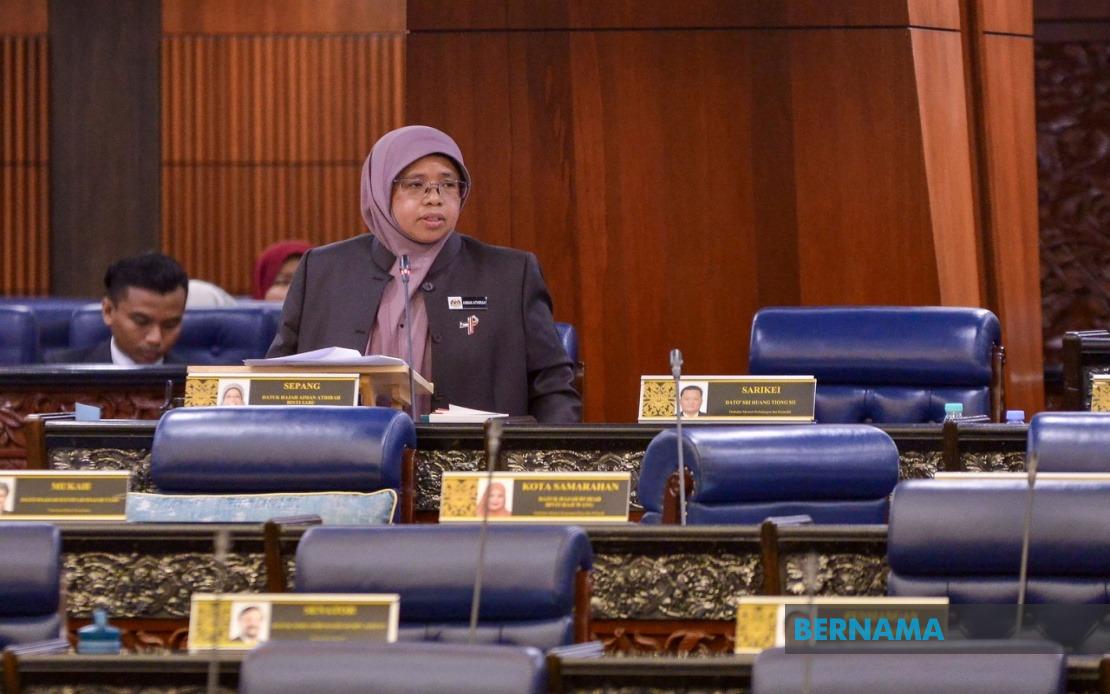
The Malaysian government is pursuing a more strategic approach to housing development, leveraging statistical evidence and market data to align construction with actual population needs rather than speculative building. Deputy Housing and Local Government Minister Datuk Aiman Athirah Sabu disclosed that officials are working to stabilise the sector through sophisticated planning mechanisms that draw on comprehensive information from multiple sources, including census data, property registries, and household income surveys. This pivot away from reactive construction toward evidence-based development represents a significant shift in how authorities manage one of Malaysia's most economically and socially sensitive sectors.
The government's framework integrates information from the Department of Statistics Malaysia, the National Property Information Centre, and the Malaysian Urban Observatory to establish what is genuinely required in each locality. By examining household affordability alongside demographic patterns and regional economic conditions, planners can make informed decisions about the type, scale, and location of residential development. This granular approach allows officials to distinguish between areas facing genuine housing shortages and those where overbuilding has created excess inventory, a distinction that has often been lost in Malaysia's fragmented housing landscape where national policies can obscure vastly different local conditions.
Coordination across federal and state governments has proven historically challenging in Malaysia's housing sector, where overlapping jurisdictions and competing interests frequently undermine cohesive strategy. The establishment of the National Affordable Housing Council, chaired by the Prime Minister, aims to overcome such fragmentation by creating a unified policy framework and providing senior-level oversight of implementation. This institutional arrangement signals recognition that housing affordability cannot be addressed through isolated ministerial efforts but requires whole-of-government coordination to manage price pressures and ensure equitable access across income groups.
The scale of project revival demonstrates the extent of Malaysia's housing sector dysfunction. Since establishing a Special Task Force on Delayed, Sick and Abandoned Private Housing Projects in December 2022, authorities have successfully rescued 1,615 developments representing 190,422 housing units. The combined gross development value of RM150.8 billion underscores that these are not marginal failures but represent significant capital tied up in incomplete or stalled construction. Buyers in these projects, often first-time homeowners who have paid deposits and committed to mortgages, have faced years of uncertainty and financial exposure. The scale of revival work reflects both the severity of the underlying problems and the resources now being mobilised to address them.
Rising house prices remain a persistently intractable challenge across Malaysia, with nominal values in major urban centres having grown faster than household incomes for over a decade. The government's response focuses on redefining affordability not as an absolute price point but as a ratio relative to local median household income. The forthcoming National Housing Policy 2026-2035 will adopt this dynamic approach, allowing affordable housing definitions to vary by state and district based on income data from the Department of Statistics Malaysia's 2024 Household Income and Basic Amenities Survey. This methodology acknowledges that a property considered affordable in Perlis may be entirely unattainable in Kuala Lumpur or Selangor, allowing policy targets to reflect regional economic realities rather than imposing uniform national benchmarks.
Access to financing remains a critical dimension of housing affordability that price controls alone cannot resolve. The Housing Credit Guarantee Scheme provides government backing for up to 120 per cent of a property's value, with the additional 20 per cent cushion specifically designed to cover renovation, furnishing, and related expenses that first-time buyers often underestimate when calculating total ownership costs. This recognition that affordability extends beyond the purchase price to encompass the full range of expenses associated with occupying a home represents more sophisticated policy design than earlier programmes that focused narrowly on acquisition costs. By reducing the capital barriers facing young and lower-income households, the scheme attempts to widen homeownership access while managing the contingent liabilities involved in extending guarantees across a broad portfolio.
The emphasis on data-driven planning reflects international best practice in urban policy, though implementation in Malaysia's context presents distinct challenges. Coordinating across federal, state, and local governments while managing competing interests—developers seeking profitable sites, residents wanting neighbourhood stability, and local authorities balancing growth with infrastructure capacity—requires sustained political commitment and technical capacity. The accumulation of delayed and abandoned projects suggests that earlier planning frameworks failed to adequately anticipate market dynamics, manage developer obligations, or respond quickly enough when projects encountered difficulties. Institutional learning from these failures will be critical to ensuring that the new approach generates better outcomes rather than simply rearranging policy machinery.
The timing of these announcements, with the National Housing Policy refresh scheduled for 2026-2035, indicates that the government is treating housing affordability as a priority requiring systematic recalibration rather than incremental adjustment. For Malaysian households—particularly in younger age cohorts facing the prospect of never owning property at current price trajectories—the success of this approach will determine whether homeownership remains achievable across income spectrum or becomes increasingly concentrated among high-income groups and investors. The revitalisation of 1,615 projects and the proposed policy framework suggest recognition that market forces alone have not produced socially acceptable outcomes and that more active government intervention is necessary to ensure equitable access to residential property.
Southeast Asian governments across the region confront similar housing challenges as rapid urbanisation, limited land supply, and foreign investment flows drive prices beyond the reach of median-income workers. Malaysia's pivot toward data-driven planning and greater government coordination potentially offers a model for peers wrestling with comparable affordability crises. The emphasis on matching supply to demonstrated demand rather than speculative construction, combined with financing mechanisms designed to reduce barriers to ownership, represents a comprehensive approach that addresses multiple dimensions of housing policy simultaneously. Success in implementation would validate this multi-pronged strategy and potentially influence housing policy discussions across the region, while failure would suggest that structural constraints—land availability, construction costs, and investor demand—may ultimately overwhelm policy interventions designed to manage rather than fundamentally reshape housing markets.

