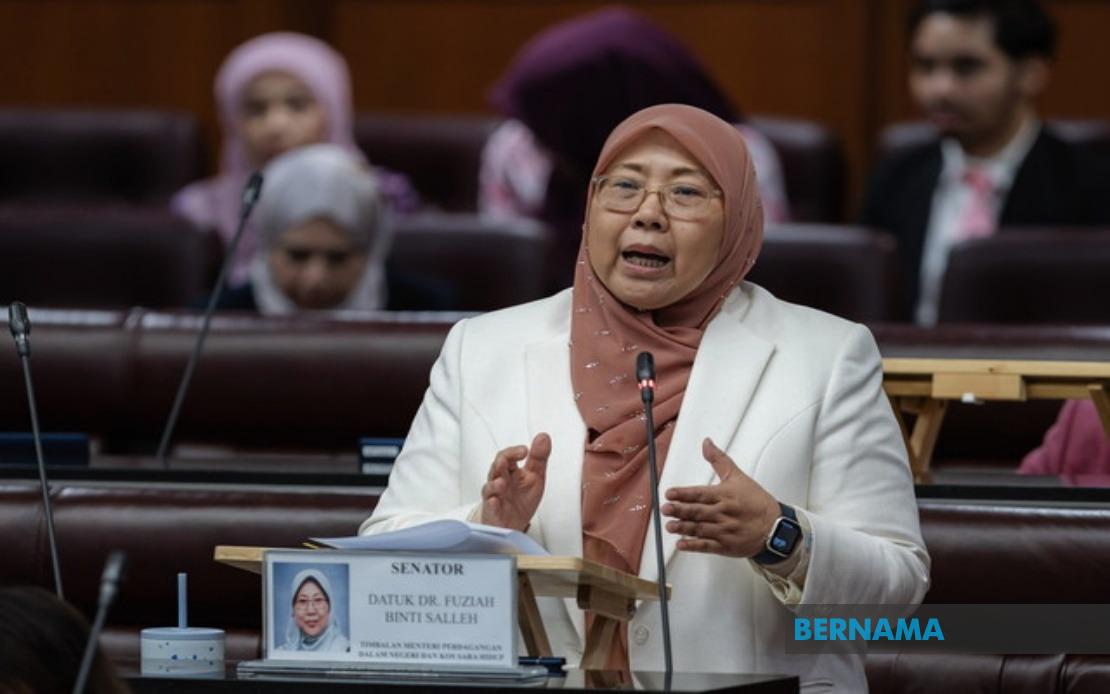
Malaysia's legal framework treats copyrighted material used for artificial intelligence training the same as any other commercial use—permission from copyright owners is mandatory, the government clarified this week in Parliament. Datuk Dr Fuziah Salleh, Deputy Domestic Trade and Cost of Living Minister, confirmed during a Dewan Negara session that the Copyright Act 1987 applies squarely to AI applications, rejecting any notion that training algorithms on creative works might fall into a grey zone. This definitive stance addresses mounting uncertainty in Malaysia's creative industries, where local artists, writers, musicians and publishers have grown increasingly concerned about whether their work could be harvested for machine learning without compensation.
The minister's response came in reply to Senator Datuk Wu Him Ven, who specifically asked whether the government mandates approval from copyright owners when their works feed into AI models, and whether formal licensing and royalty mechanisms would be established to protect Malaysian creators. Fuziah confirmed that all such arrangements must follow existing provisions in the Copyright Act 1987, which stipulates that compensation terms are determined through direct negotiation between parties. These agreements can take multiple forms: traditional licensing deals where creators grant limited rights for a fee, outright assignment of intellectual property rights, or involvement of Collective Management Organisations (CMOs) that represent multiple creators and negotiate licensing on their behalf.
The Copyright Act 1987 currently recognises only works demonstrating originality achieved through human effort, skill and intellectual contribution as eligible for protection. This definition creates a fundamental distinction in Malaysia's copyright regime: creative works produced by people qualify for legal safeguarding, whereas content generated entirely by AI systems without significant human creativity input does not. The minister acknowledged this gap, explaining that fully AI-generated works fall outside the current protective framework. However, she did not indicate whether the government intends to modify copyright law to address AI-generated content, suggesting that Malaysia's legislative approach remains in flux as the technology develops.
Curiously, Malaysia has yet to witness any litigation centring on copyright violations tied to AI technology. This absence is striking given the global wave of lawsuits filed by authors, artists and media companies against AI developers who allegedly trained their models on unlicensed creative works. Major cases in the United States and Europe have pitted creative industries against tech companies, resulting in substantial settlements and triggering regulatory initiatives. Malaysia's lack of contested cases may reflect either limited awareness among local creators, insufficient legal infrastructure to pursue such claims, or simply that the practice has not yet become widespread in the Malaysian context.
Yet the government has not conducted any dedicated impact assessment examining how AI-generated content affects employment and income for Malaysian creative professionals. When Senator Wan Martina Wan Yusoff pressed the minister on this point, Fuziah acknowledged the research gap. She explained that the government is instead pursuing ongoing consultations with various stakeholders—presumably creators, tech companies, industry bodies and educational institutions—while studying regulatory models adopted internationally. This deliberate pace reflects concern that AI policy decisions made too hastily could either stifle innovation or fail to protect local creative workers effectively.
The rationale for cautious engagement is sound: artificial intelligence technology is evolving at remarkable speed, and what constitutes best practice in copyright governance today may be obsolete within months. Fuziah cited this rapid technological change as justification for the government's unwillingness to introduce new policies or legal frameworks prematurely. Malaysia's approach thus mirrors strategies adopted by several Southeast Asian governments that prefer to observe how developed economies handle AI regulation before implementing their own rules. This wait-and-see posture has advantages and risks: it avoids regulatory missteps and allows policymakers to learn from other jurisdictions' experiences, but it also leaves Malaysian creators temporarily unprotected against potential exploitation of their work by AI developers.
For Malaysia's creative industries, the minister's clarification provides some reassurance that current copyright law already provides a foundation for protecting their interests. Any Malaysian author, musician, artist, filmmaker or publisher whose work is used to train AI models without permission can theoretically pursue legal action for infringement. However, this protection functions only if creators become aware that their work has been misused and possess the financial resources and legal expertise to mount a challenge. Small independent creators and local artists may struggle with these practical obstacles, particularly when facing well-resourced technology companies or international AI developers.
The involvement of Collective Management Organisations offers a potential pathway for scaling protection. CMOs aggregate the rights of many creators, enabling them to negotiate licensing agreements with major users—including AI developers—and collect and distribute royalties. Malaysia has several CMOs operating in music, performance and literary rights, but their capacity to address the novel challenges posed by AI training datasets remains untested. Expanding or strengthening these organisations' mandates to cover AI applications could provide Malaysian creators with greater leverage in negotiations.
Regionally, Malaysia's stance differs somewhat from approaches emerging in other parts of Southeast Asia and the broader Asia-Pacific. Some governments have begun introducing specific AI governance frameworks, while others propose amendments to copyright law to address algorithmic training explicitly. The Philippines, Singapore and Thailand are all grappling with similar policy questions. Malaysia's current position—relying on existing copyright law without new AI-specific provisions—places it in the moderate camp, neither as restrictive as some European approaches nor as permissive as certain technology-friendly jurisdictions.
Looking ahead, the government's commitment to ongoing stakeholder engagement suggests that formal policy evolution remains possible. The Copyright Act 1987, though foundational, was drafted in an era before machine learning emerged as a dominant commercial technology. Its provisions around licensing and rights assignment, while technically applicable to AI training, may not adequately address the scale, opacity and complexity of modern algorithmic data consumption. As the government studies international best practices—whether from the European Union's emerging AI Act, the United States' ongoing legislative debates, or approaches taken by countries like Canada and Australia—Malaysian policymakers will accumulate evidence to inform future decisions.
For now, the minister's clarity on the current legal position serves an important function: it establishes that Malaysia does not permit a copyright-free zone for AI development. This principle, however, requires consistent enforcement and public awareness. Unless Malaysian creators understand their rights and can access mechanisms to assert them, the legal framework remains merely symbolic. The government's engagement process must therefore extend beyond studying foreign models to building local capacity—whether through CMOs, industry standards or legal infrastructure—that enables Malaysian creators to participate meaningfully in AI licensing negotiations and capture fair compensation.

