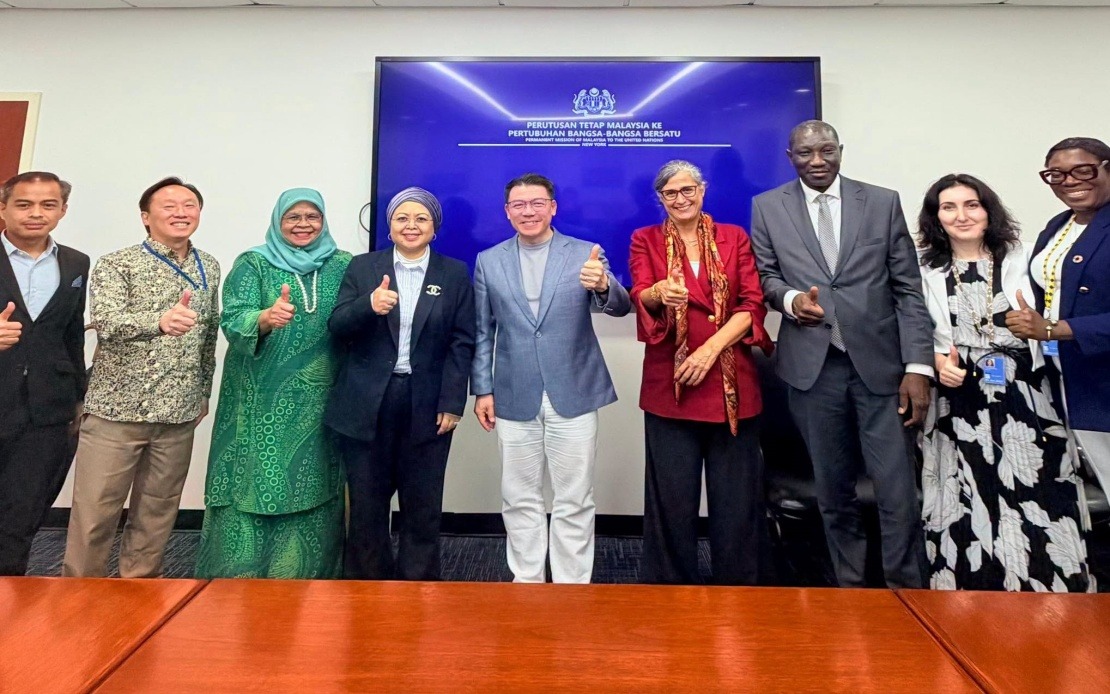
Malaysia has issued a forceful call for the world to move beyond rhetoric and meaningfully implement the New Urban Agenda before the 2030 deadline, warning that time is rapidly running out to address critical urban challenges affecting billions globally. Housing and Local Government Minister Nga Kor Ming made the appeal at a United Nations High-Level Meeting in New York, where he highlighted the urgency of translating international commitments into tangible progress on the ground. Speaking as President of the UN-Habitat Assembly, Nga emphasized that merely documenting failures through reviews is insufficient when only four years remain to achieve the ambitious sustainability targets set by the global community.
The midterm review of the New Urban Agenda represents a pivotal moment for member states to recalibrate their approach and prioritize delivery over assessment, according to the Malaysian minister. Rather than conducting another round of stocktaking exercises, nations must pivot toward implementing solutions that directly benefit the urban poor and vulnerable populations living in rapidly expanding cities across the developing world. Nga's intervention underscores growing frustration among developing nations that wealthy countries often make generous pledges at international forums without corresponding financial commitments or policy reforms to enable their poorer counterparts to meet sustainability objectives.
Malaysia has identified three critical areas requiring immediate and sustained global attention in the urban development sphere. The first involves tackling the acute global housing shortage, which continues to force millions into informal settlements and substandard living conditions, particularly in Asia and Africa. Second is bridging the digital divide in urban areas, where residents in marginalised neighbourhoods lack adequate access to broadband infrastructure and digital services essential for economic participation in increasingly technology-dependent economies. Third is building climate-resilient urban infrastructure capable of withstanding extreme weather events, flooding, and other environmental shocks that disproportionately threaten low-income populations in vulnerable developing cities.
As a concrete demonstration of Malaysia's commitment, Nga highlighted the nation's progress in advancing green building standards across its urban landscape. The country has constructed more than 500 million square feet of certified green index buildings, with ambitious plans to expand this figure substantially before 2030. This achievement reflects Malaysia's belief that sustainable urbanisation requires sustained domestic investment alongside international cooperation, and that developing nations can pioneer practical models that other countries in similar circumstances can adapt and replicate.
A key component of Malaysia's approach involves the Asia-Pacific Urban Action Platform, an innovative regional mechanism that Malaysia has championed alongside neighbouring governments. This platform serves multiple functions within the Southeast Asian context: it helps translate the abstract global Sustainable Development Goals into concrete local actions tailored to specific regional and national circumstances. The platform also facilitates knowledge exchange between cities and countries facing comparable urban challenges, reducing the need for each nation to reinvent solutions independently. Additionally, it mobilizes green infrastructure financing mechanisms specifically designed for Asia-Pacific economies, addressing a persistent gap in climate finance availability for urban adaptation projects.
The Malaysian minister's emphasis on "leaving no one and no place behind" carries particular resonance for Southeast Asia, where rapid urbanization has created pockets of extreme poverty within wealthy cities. This formulation acknowledges that urban development often benefits affluent central districts while peripheral areas inhabited by migrant workers, rural-urban migrants, and low-income families are neglected. Malaysia's framing suggests that genuine sustainable urbanisation must prioritize equitable distribution of services, infrastructure, and economic opportunities across entire metropolitan regions rather than concentrating resources in premium zones.
Malaysia's advocacy also reflects the nation's strategic positioning as a bridge between developed and developing economies within the Asia-Pacific region. By championing practical, locally-driven solutions rather than imposing top-down international prescriptions, Malaysia appeals to other middle-income nations struggling with similar urban pressures. The emphasis on political will and multi-stakeholder collaboration acknowledges that effective urban transformation requires coordinated action from national governments, subnational authorities, development partners providing technical and financial support, and community organizations representing residents most affected by urban policies.
The broader context for Malaysia's intervention involves widespread recognition that current global efforts fall significantly short of New Urban Agenda targets. Many cities remain trapped in patterns of sprawl, informality, and environmental degradation despite two decades of sustainability commitments. The COVID-19 pandemic exposed critical vulnerabilities in urban infrastructure and service delivery, while climate change is intensifying pressure on cities to retrofit existing systems and adopt preventive measures. With less than one thousand days remaining until 2030, the window for meaningful action is closing rapidly.
Nga's appeal to move beyond "just a renewed declaration" reflects frustration with a pattern of international agreements that generate headlines but minimal implementation changes. Previous UN urban summits have produced voluminous commitments that subsequent meetings merely review without advancing substantively. The Malaysian minister is essentially challenging the international system to prove that agreements made in New York and other forums actually translate into upgraded water systems, expanded affordable housing, improved public transportation, and strengthened climate resilience in actual cities where ordinary people work and live.
For Southeast Asian nations, Malaysia's leadership on this agenda offers both a model and a rallying point. Many countries in the region face comparable urban challenges: rapid rural-to-urban migration, inadequate housing supply, insufficient public transportation, and vulnerability to climate impacts like flooding and typhoons. By framing sustainable urbanisation as a collective regional priority rather than an individual country burden, Malaysia encourages peer pressure and knowledge sharing that can accelerate progress. The Asia-Pacific Urban Action Platform exemplifies how regional cooperation can translate global agendas into context-appropriate solutions.
The economic dimensions of Malaysia's advocacy also warrant attention. Sustainable urban development requires massive capital investment in infrastructure, and developing nations cannot finance this independently through government budgets alone. Malaysia's push for strengthened green infrastructure financing mechanisms recognizes that international climate finance must be substantially scaled up and reoriented toward urban adaptation and resilience. Without addressing this financing gap, even well-intentioned developing nations will struggle to deliver the infrastructure improvements their rapidly urbanizing populations desperately require.

