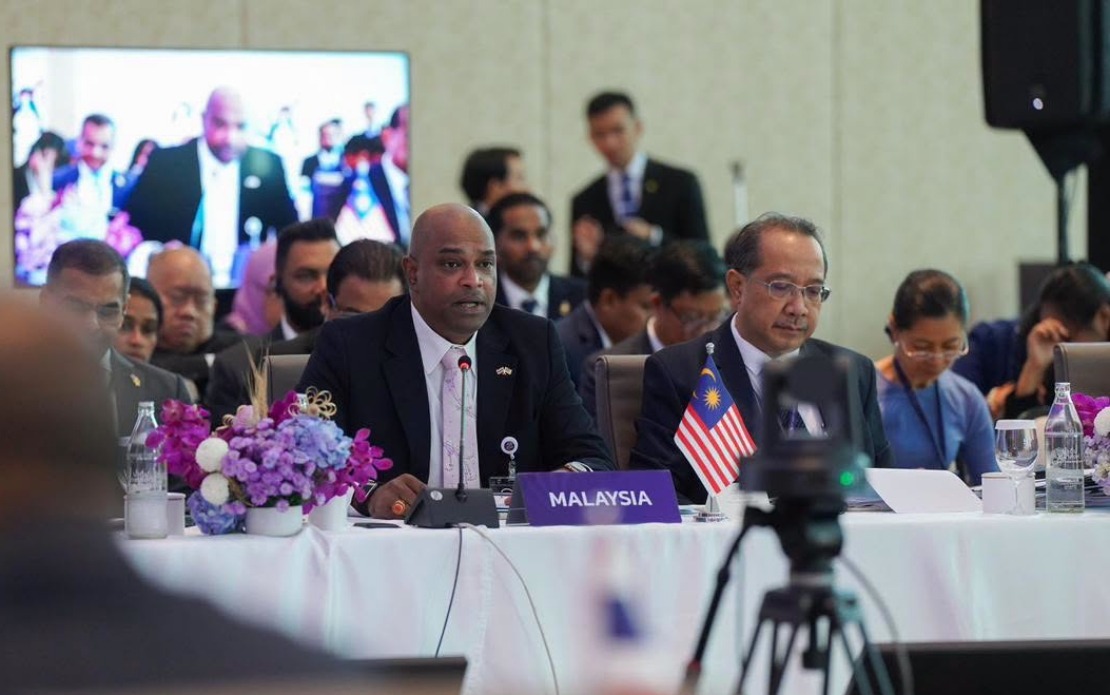
Malaysia has intensified calls for ASEAN member states to establish a unified framework for recognising technical and vocational qualifications, positioning the region's workforce as a competitive force in global labour markets. The push comes as regional economies face mounting pressure to rapidly develop talent in emerging sectors, from artificial intelligence to green energy technologies, while simultaneously ensuring that skilled workers trained across ASEAN can move freely and leverage their credentials without bureaucratic friction.
Human Resources Minister Datuk Seri R. Ramanan outlined Malaysia's vision at the 14th ASEAN Plus Three Labour Ministers' Meeting in Bangkok, Thailand, emphasising that the region must move beyond piecemeal approaches to skills development. The gathering, which included participation from China, Japan and South Korea alongside ASEAN's ten member states, provided a crucial platform for discussing how the bloc can collectively address the challenge of harmonising educational standards and credential recognition across vastly different national systems.
The minister identified three core pillars for regional action. First, ASEAN nations must jointly establish certification processes and align Technical and Vocational Education and Training (TVET) standards, creating mutual recognition agreements that enable workers to transfer qualifications seamlessly. Second, the region requires systematic technology transfer and professional development for educators, ensuring that training institutions across ASEAN can deliver consistently high-quality instruction. Third, member states must collaboratively design training programmes that anticipate future labour market demands, particularly in high-growth fields such as artificial intelligence, next-generation vehicle manufacturing, and robotics.
Ramanan stressed that this agenda extends far beyond symbolic credential recognition. The underlying objective is to build confidence among regional employers and international corporations that ASEAN-trained workers possess genuine, verifiable skills aligned with global standards. Workers qualified through recognised ASEAN programmes would gain tangible advantages: expanded employment opportunities across the bloc, clearer pathways for career advancement in multinational enterprises, and enhanced bargaining power in international labour markets where skills shortages are becoming acute.
For Malaysia specifically, the initiative holds strategic importance. As a upper-middle-income nation with significant manufacturing and services sectors, Malaysia competes for talent with developed economies whilst simultaneously seeking to absorb migrant workers from less developed ASEAN neighbours. A robust regional qualification framework would allow Malaysian employers to recruit with greater confidence from partner nations, whilst also creating clearer skills-development incentives for Malaysian workers competing in regional labour markets.
The participation of China, Japan and South Korea in these discussions reflects recognition that ASEAN's workforce development challenge cannot be addressed in isolation. These three nations collectively represent decades of expertise in rapidly scaling vocational training systems, managing technology transfer to emerging sectors, and establishing quality assurance mechanisms for technical education. Their involvement signals that ASEAN is serious about importing not just best practices but also collaborative investment in upgrading the region's human capital infrastructure.
Ramanan's framing of this as a matter of future competitiveness rather than immediate certificate swapping indicates deeper strategic thinking. ASEAN's working-age population remains young relative to aging developed economies, and this demographic advantage is a critical asset for the region's economic trajectory. However, that potential can only be realised if workers possess skills matching the demands of modern production, high-value services, and technology-intensive industries. Without a coordinated regional approach, individual nations risk duplicating efforts, wasting resources on misaligned training programmes, and losing talented workers to better-organised systems in developed countries.
The proposal also addresses a persistent vulnerability in ASEAN's integration agenda. Whilst the ASEAN Economic Community theoretically enables the free movement of goods, services, and investment, labour mobility remains constrained by regulatory barriers, skills mismatches, and credential recognition failures. A strengthened TVET framework would help unlock this latent potential, allowing skilled workers to contribute to growth in multiple economies rather than remaining confined to domestic markets or seeking opportunities abroad.
From a Malaysian perspective, pushing this agenda demonstrates active regional leadership in workforce development—a domain where Malaysia holds respected credentials. The nation's own TVET system, whilst imperfect, has generated a reputation for producing competent technicians across manufacturing and services. By championing harmonisation, Malaysia positions itself as a standards-setter and potential hub for ASEAN training excellence, which could eventually translate into economic and diplomatic influence.
However, realising this vision requires navigating substantial complexity. ASEAN member states operate vastly different education systems, labour regulations, and quality assurance frameworks. Establishing genuine mutual recognition demands not just political agreement but detailed technical work—developing shared curricula standards, aligning assessment procedures, and building trust between national certifying bodies. The involvement of external partners like China, Japan and South Korea may ease this process through technology and expertise sharing, but ultimately ASEAN nations must commit substantial resources and political capital.
Ramanan's emphasis on ensuring that ASEAN talent becomes "among the best skilled workers of choice in the world" reveals an ambitious long-term vision. Rather than settling for regional recognition alone, the objective is positioning ASEAN workers as globally competitive in quality and reputation. This ambition, if pursued systematically across the region, could gradually transform ASEAN's labour market position from a source of cheap labour to a source of trusted, skilled expertise—fundamentally upgrading the region's role in global value chains and supporting sustainable, higher-wage employment growth across the bloc.

