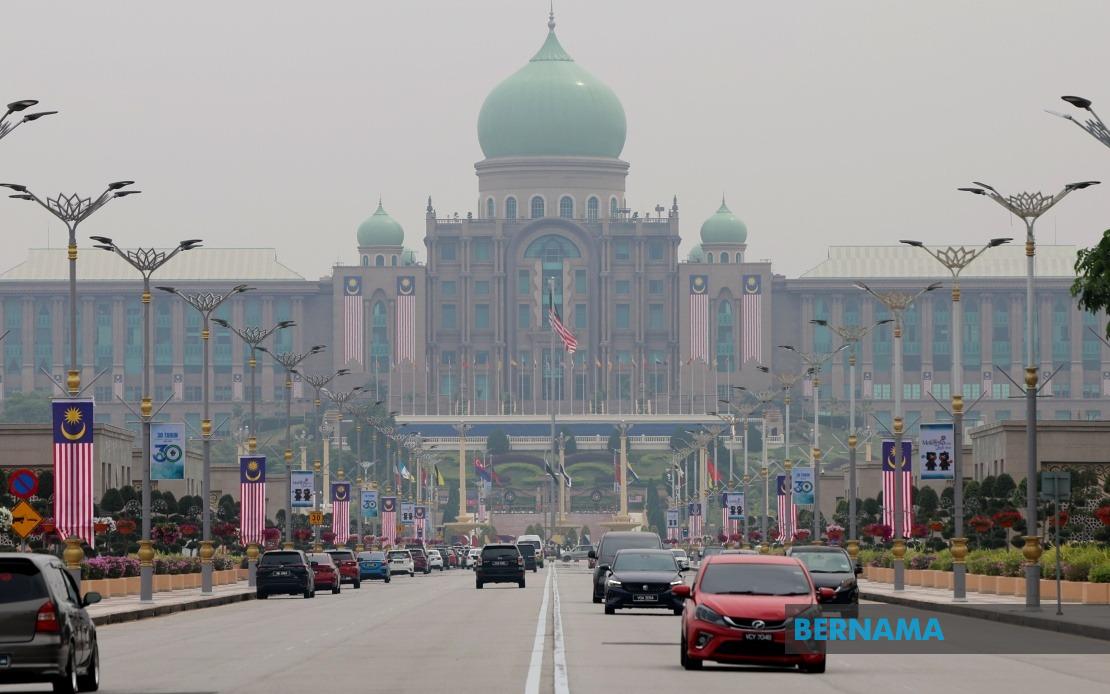
Malaysia has intensified calls for coordinated regional action to combat the escalating threat of transboundary haze pollution, warning that ASEAN nations must implement robust preventive strategies to shield the region from environmental degradation as weather patterns shift. Natural Resources and Environmental Sustainability Minister Datuk Seri Arthur Joseph Kurup conveyed Malaysia's position to ASEAN Secretary-General Dr Kao Kim Hourn, emphasizing that the 10-member bloc must operate under the framework of the ASEAN Agreement on Transboundary Haze Pollution to establish unified protocols for crisis management.
The minister's intervention reflects growing anxiety across Southeast Asia regarding smoke and air quality deterioration that routinely crosses international borders, affecting millions of residents and straining public health systems. While individual member states currently maintain control over fire incidents within their territories, Kurup stressed that the regional dimension of this environmental challenge demands a different approach—one predicated on shared responsibility and transparent cooperation. The call comes at a critical juncture, as meteorological patterns indicate deteriorating conditions ahead that could overwhelm isolated national responses.
Kurup outlined a comprehensive framework requiring member states to intensify surveillance operations in high-risk zones, strengthen enforcement mechanisms against open burning practices, and maintain operational readiness for rapid firefighting deployment. These measures reflect lessons learned from previous haze episodes that ravaged air quality across the region, sometimes rendering major cities in Malaysia, Indonesia, and Singapore dangerously unhealthy for outdoor activities. Enhanced monitoring infrastructure would enable early detection of problematic fire activity before it expands into transnational pollution events that prove far more difficult and expensive to manage.
A critical factor driving Malaysia's push is the meteorological forecast indicating that El Niño phenomenon is expected to gradually strengthen over the coming months. This climatic cycle typically correlates with extended dry periods, particularly across southern ASEAN territories, creating conditions that facilitate rapid fire spread and smoke generation. Current weather data already documents a troubling uptick in hotspot activity and haze concentration, signalling that the anticipated climatic shift will likely exacerbate environmental pressures substantially. The convergence of these factors creates a window of opportunity for preventive action before conditions deteriorate further.
Malaysia has positioned itself as a champion for regional coordination mechanisms, particularly backing the ASEAN Secretariat's role as the Interim ASEAN Coordinating Centre for Transboundary Haze Pollution Control. This institutional framework serves as a nerve centre for information dissemination, preparedness coordination, and mechanism strengthening across member states. By channelling support through established structures, Malaysia demonstrates confidence in multilateral architecture while pushing for these bodies to operate with greater agility and effectiveness. The centre functions as a critical information hub that translates raw environmental data into actionable intelligence for policymakers.
The effectiveness of any regional haze mitigation strategy hinges fundamentally on the quality of information exchange between governments. Kurop emphasised that accurate, timely data sharing represents a cornerstone of collective preparedness, enabling member states to anticipate smoke movement patterns and mobilize resources strategically. Cross-border environmental challenges demand that nations abandon siloed decision-making and instead embrace real-time communication protocols that transcend traditional bureaucratic channels. Without such transparency, individual governments lack the intelligence required to implement preventive measures that might stop fires before they generate transnational pollution.
Malaysia's diplomatic messaging also reflects domestic political considerations. The country has frequently borne the brunt of imported haze from neighbouring Indonesia, where peatland drainage and agricultural expansion have created vast tracts vulnerable to fire. Previous haze episodes have triggered public health crises, school closures, and economic disruption that resonated across Malaysian society. By positioning Malaysia as an advocate for proactive regional engagement, the government signals to its constituency that it is actively working to prevent repetition of such crises rather than merely reacting after environmental degradation becomes unavoidable.
The principle-based language invoking the ASEAN Agreement on Transboundary Haze Pollution carries strategic weight. This 2002 accord represents Southeast Asia's most comprehensive attempt to establish binding frameworks for environmental cooperation, yet implementation has historically proven inconsistent. By anchoring current calls for enhanced preparedness to established legal instruments, Malaysia attempts to elevate the urgency of action from aspirational rhetoric to obligatory compliance. The minister's statement serves as a public reminder that member states have formally committed to precisely the collective measures now being advocated.
Regional observers note that Malaysia's timing reflects broader geopolitical dynamics within ASEAN. As the bloc navigates tensions over maritime disputes, development priorities, and economic integration, environmental cooperation represents a domain where consensus traditionally materializes more readily. Transboundary haze affects all member states regardless of their positioning on other contentious issues, creating unusual alignment of interests. By focusing diplomatic energy on this domain, Malaysia potentially builds goodwill that could facilitate cooperation on other pressing regional challenges.
The implications for Malaysian readers extend beyond air quality considerations. Enhanced ASEAN coordination on environmental monitoring and enforcement establishes precedents for deeper regional integration in other technical domains. Success in haze preparedness could catalyze expansion of data-sharing protocols and joint operational frameworks applicable to water security, disaster management, and public health surveillance. Furthermore, positioning Malaysia as an environmental steward within ASEAN enhances the nation's diplomatic standing and soft power influence, supporting its broader regional leadership aspirations.
Implementation challenges remain formidable. Member states possess vastly different institutional capacities, financial resources, and political will regarding environmental enforcement. Indonesia, whose territory generates the vast majority of transboundary haze, faces enormous practical obstacles in controlling agricultural burning across its massive archipelago. Without corresponding commitments to capacity building and technology transfer, Malaysia's calls for unified action risk remaining aspirational. Nevertheless, articulating clear expectations establishes benchmarks against which member state performance can subsequently be measured.
The strengthening El Niño forecast injects urgency into these discussions. If meteorological predictions materialize, the coming months will test whether ASEAN's coordination mechanisms have genuinely improved since the devastating 2015 haze crisis. Success would vindicate investment in regional institutional development and collaborative governance. Failure would demonstrate that structural vulnerabilities within ASEAN cooperation mechanisms persist, necessitating deeper reforms to decision-making procedures and enforcement capabilities. For Malaysia, the stakes encompass both environmental protection and broader questions about the bloc's capacity to address existential challenges demanding collective action.

