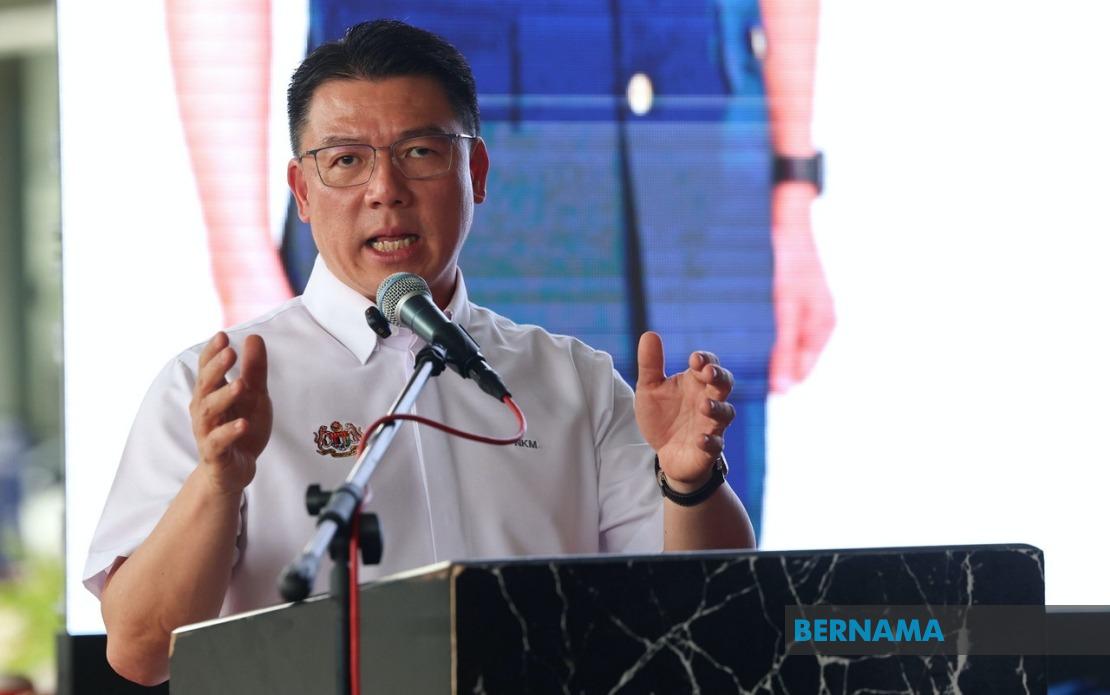
Malaysia is positioning itself to harness Japan's proven expertise in waste management as the country accelerates efforts to embed environmental responsibility into everyday behaviour and achieve a more circular economic model. Housing and Local Government Minister Nga Kor Ming has identified Japan's sophisticated approach to waste handling as a template worthy of emulation, particularly its embedded culture of source separation and public cleanliness. The move reflects a broader recognition within Malaysian policymaking circles that advancing sustainability requires more than regulatory measures—it demands a fundamental cultural shift in how citizens interact with waste and resource consumption.
The distinction between Japan's waste management achievements and Malaysia's current trajectory lies fundamentally in cultural integration. In Japan, the practice of segregating different waste streams at the point of generation has become so deeply woven into daily routine that it operates almost invisibly, requiring minimal enforcement or incentive structures. Minister Nga emphasised this crucial insight, noting that what Japan has accomplished is the transformation of environmental responsibility from an imposed obligation into an ingrained social norm. This observation carries particular weight for Malaysian policymakers seeking sustainable solutions that do not rely exclusively on regulatory compliance or penalties, which often prove difficult to maintain consistently across a large, diverse population.
Education emerges as the cornerstone of Malaysia's planned approach, with Minister Nga stressing the necessity of cultivating environmental consciousness from childhood. By introducing waste separation and recycling principles in schools and embedding these practices within family routines, Malaysia hopes to create generational cohorts for whom environmental stewardship becomes second nature rather than an externally imposed requirement. This pedagogical strategy reflects international best practice, where countries transitioning toward circular economies have found that early socialisation produces more durable behavioural change than adult-focused campaigns or punitive measures alone.
The proposed Memorandum of Understanding between Malaysia and Japan, which received Cabinet approval in the previous month, represents an institutionalisation of this knowledge transfer. The agreement will create formal channels for the exchange of technical expertise, technological innovations, and operational best practices across both nations' waste management sectors. Such bilateral frameworks prove invaluable for developing economies seeking to leapfrog inefficient stages of infrastructure development by adopting proven systems rather than through costly trial-and-error processes. For Malaysia, this cooperation potentially accelerates timelines for achieving measurable improvements in waste diversion rates and resource recovery.
Malaysia has already initiated several foundational measures that provide scaffolding for the Japanese partnership. The National Circular Economy Blueprint establishes a comprehensive strategic framework, while the National Circular Economy Council provides institutional coordination across government departments and private sector stakeholders. Additionally, regulatory requirements mandating recycling facilities within shopping mall licensing agreements extend circular economy principles into commercial spaces where consumers make frequent purchasing decisions. The phased elimination of single-use plastic bags represents incremental but symbolically important progress in reducing disposable material flows. These initiatives, while individually modest, collectively demonstrate governmental commitment and create receptive conditions for deeper engagement with international partners.
Japanese Ambassador to Malaysia Noriyuki Shikata's invitation to Malaysian representatives to participate in GREEN×EXPO 2027 in Yokohama opens additional dimensions for cooperation. Such international exhibitions provide platforms for showcasing innovative technologies, networking with global sustainability leaders, and identifying emerging practices in smart city development and sustainable urban management. For Malaysia, participation offers opportunities to benchmark domestic progress against international standards, identify technological gaps requiring investment, and cultivate relationships with technology providers and consultant firms specialising in circular economy transitions.
The emphasis on learning Japan's cleanliness culture extends beyond mere waste management mechanics. Japan's urban environments reflect decades of consistent civic engagement with environmental standards, enforced through both formal regulations and powerful social expectations around individual responsibility. Malaysian cities, by contrast, frequently struggle with litter accumulation and inadequate waste segregation despite existing legal frameworks. This gap between regulatory intent and practical outcomes suggests that technical solutions alone prove insufficient without accompanying shifts in public consciousness and community accountability. Minister Nga's recognition of this reality positions the initiative squarely within recognised international approaches emphasising behavioural change alongside infrastructure development.
The circular economy framework represents a fundamental reconceptualisation of material flows, viewing waste not as terminal refuse but as inputs for subsequent production cycles. This paradigm shift requires coordination across multiple sectors—manufacturing, retail, consumer services, waste processing, and product design. Japan's success in implementing circular systems across these domains stems partly from cultural factors but also from deliberate policy integration and technological investment. Malaysia's adoption of comparable approaches requires similar comprehensive integration across governmental and commercial actors, extending far beyond waste collection and treatment to encompass product design standards, manufacturing processes, and consumer information systems.
For Southeast Asia more broadly, Malaysia's engagement with Japanese circular economy practices signals a regional interest in learning from economically advanced neighbours who have successfully managed resource constraints and environmental pressures. The region faces mounting waste volumes as consumption patterns intensify alongside economic growth, making efficient resource management increasingly urgent. Malaysia's willingness to adopt and adapt proven international models could generate lessons applicable across the region, potentially establishing the country as a knowledge hub for other developing economies navigating similar transitions.
The practical implementation of Japanese waste separation principles in Malaysian contexts requires careful adaptation. Japan's homogeneous urban populations with high education levels and strong civic traditions differ substantially from Malaysia's more diverse demographic composition and varying levels of environmental literacy across urban and rural areas. Successful knowledge transfer will thus depend on contextualised approaches that respect local conditions while preserving core principles of source separation, transparency, and community engagement. The MoU provides institutional framework, but success ultimately hinges on sustained political commitment, adequate resource allocation, and genuine public participation in environmental transformation.
Minister Nga's articulation of this partnership frames environmental responsibility not as burden but as pathway toward prosperity and livability. By positioning circular economy transition as beneficial rather than merely necessary, Malaysian leadership attempts to reframe environmental action as aligned with rather than opposed to development aspirations. This narrative proves crucial for securing public support across social classes, as populations more readily embrace changes presented as contributory to shared prosperity than those framed merely as constraint or sacrifice. The emphasis on learning from Japan's experience, rather than imposing external standards, similarly respects Malaysian sovereignty while leveraging international expertise.

