Malaysia is accelerating its recruitment of Thai students to its higher education sector, targeting a 20 per cent expansion in enrolments as educational institutions compete for talent across Southeast Asia. The drive represents a strategic push to position the country as a premier destination for tertiary studies in the region, with officials highlighting the natural advantages that position Malaysia favourably against international competitors seeking to draw Thai students away from home.
Education Malaysia Global Services (EMGS), the government agency tasked with international student recruitment and visa facilitation, has emerged as the primary vehicle for this campaign. The agency's chief executive officer Novie Tajuddin outlined an ambitious collaboration framework with the Thai International Education Consultants Association (TIECA), an umbrella organisation representing 78 active education consultants across Thailand. This partnership aims to systematically build awareness among prospective Thai students and their families about the opportunities available in Malaysian tertiary institutions, moving beyond traditional marketing channels to leverage trusted local advisory networks.
Current enrolment figures suggest room for considerable growth. Statistics compiled by EMGS indicate that 634 Thai students were actively enrolled in Malaysian institutions during 2025, distributed between undergraduate and postgraduate tracks. The undergraduate cohort comprises more than 60 per cent of Thai students, while approximately 40 per cent pursue advanced qualifications. This baseline represents a notably positive trajectory compared to 2024, when Thai enrolments stood at 300, jumping to 360 in 2025. The 20 per cent growth target would push potential enrolments significantly higher, reflecting confidence among Malaysian educational institutions in their competitive positioning.
The appeal of Malaysian higher education rests on several concrete factors that resonate with Thai families evaluating tertiary options. Geographic proximity eliminates extensive travel complications and allows students to maintain closer ties with home, a consideration that weighs heavily in family decision-making across Southeast Asia. Educational costs in Malaysia remain substantially below those of English-speaking destinations such as Australia and the United Kingdom, making the proposition attractive to middle-income Thai families. Quality assurance frameworks and accreditation standards have improved substantially across Malaysian institutions, dispelling earlier perceptions of compromise in educational rigour.
Post-graduation pathways represent an increasingly decisive factor in student choice calculus. Malaysia's Graduate Pass scheme permits international degree holders to remain in the country for one year following completion of studies, enabling practical work experience in regulated sectors. This opportunity differentiates Malaysia from purely academic destinations, allowing Thai graduates to test professional competencies and build regional networks before deciding whether to establish longer-term careers in Southeast Asia or return home with enhanced credentials. For many students, this represents genuine career infrastructure rather than mere theoretical qualification.
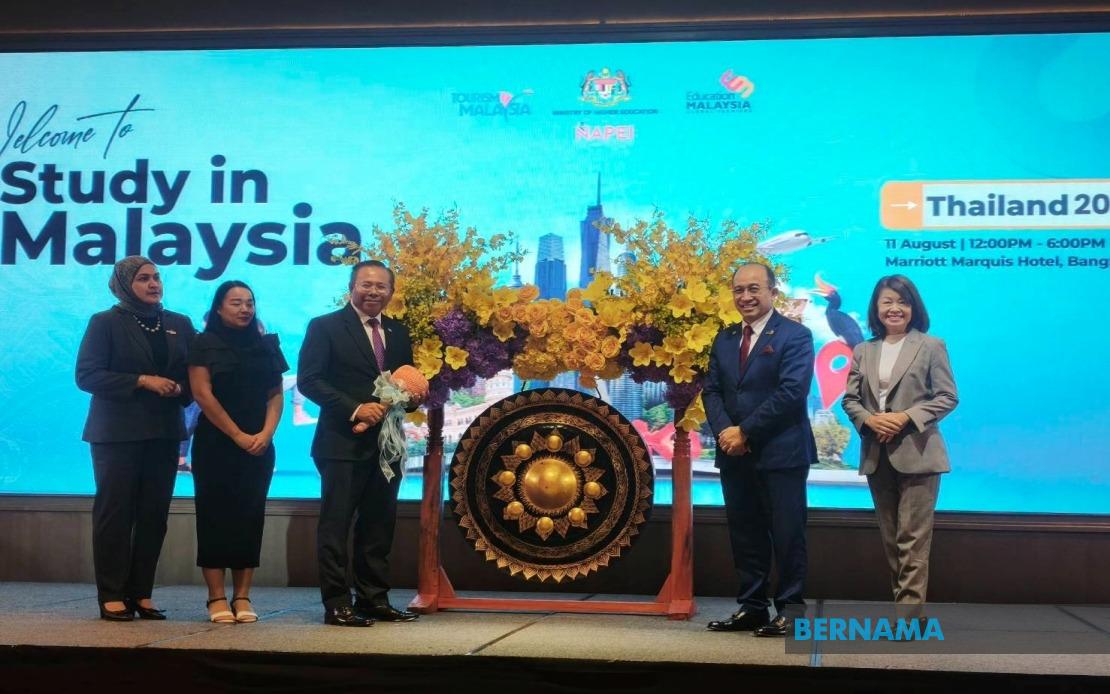
The recruitment roadshow itself demonstrates the systematic approach underlying Malaysia's educational diplomacy in Thailand. The Study in Malaysia Education Fair launched in collaboration between EMGS, Tourism Malaysia, and the National Association of Private Educational Institutions (NAPEI) traversed three major Thai population centres. Events were held in Chiang Mai on August 9, Bangkok on August 11, and concluded in Hat Yai on August 13, covering the northern, central, and southern regions of Thailand. This geographic distribution reflects recognition that educational decision-making extends beyond Bangkok, with significant Thai populations in provincial cities warranting direct engagement.
Ambasador Datuk Wan Zaidi Wan Abdullah, Malaysia's diplomatic representative in Thailand, articulated a complementary strategy centred on enhanced financial incentives. He proposed that Malaysian universities establish dedicated scholarship programmes explicitly targeting Thai applicants, recognising that financial barriers often prove decisive for capable students from families lacking substantial disposable income. Such scholarships would reduce the effective cost differential that currently favours study within Thailand and strengthen Malaysia's competitive proposition among aspirational Thai students seeking to internationalise their qualifications.
The diplomatic dimension of this recruitment drive extends beyond promotional activities. EMGS has strengthened coordination with the Thai Embassy in Malaysia to foster sustained educational cooperation between the two countries. This institutional linkage ensures that student mobility is embedded within broader bilateral relationships, providing policy frameworks and governmental support that transcend individual institutional partnerships. When educational exchanges receive diplomatic validation and active support, they acquire legitimacy and stability that appeals to risk-conscious families considering international study.
The strategic timing of this initiative reflects Malaysia's broader positioning within intensifying regional competition for international students. Thailand, Indonesia, and Vietnam have all recognised that attracting foreign students generates revenue streams for universities while establishing networks with future regional leaders and professionals. Malaysia's early mover advantage in professionalising student recruitment through dedicated agencies and government backing positions it competitively, though sustained effort remains necessary to capture meaningful market share from Thailand's substantial population of prospective overseas students.
Beyond immediate enrolment metrics, Thai student recruitment carries symbolic significance within Malaysian higher education's internationalisation narrative. Successfully attracting substantial numbers from a neighbouring country validates institutional quality and regional reputation, creating positive feedback loops that enhance attractiveness to students from other ASEAN nations. Thai students often serve as informal ambassadors, communicating authentic experiences through social networks that influence subsequent cohorts of prospective applicants from their home countries.
Implementing the 20 per cent growth target will require sustained commitment across multiple stakeholder groups. Universities must maintain quality standards while expanding capacity, education agents require ongoing training to articulate Malaysian advantages authentically, and government policy must remain stable regarding visa processing and post-study work provisions. The roadshow represents an important launching point, but converting awareness into actual enrolments depends on consistent follow-through across recruitment, admissions, and student support functions.
The convergence of geographic logic, economic rationality, and enhanced career prospects positions Malaysia well within the contest for Thai educational talent. As ASEAN economies increasingly prioritise human capital development and regional integration, student mobility across borders will expand substantially. Malaysia's deliberate cultivation of the Thai market through partnership, incentives, and diplomatic coordination reflects sophisticated understanding that educational globalisation requires coordinated effort across public and private sectors. Success in attracting Thai students will validate this approach and likely inform strategies targeting educational markets within other neighbouring countries.

