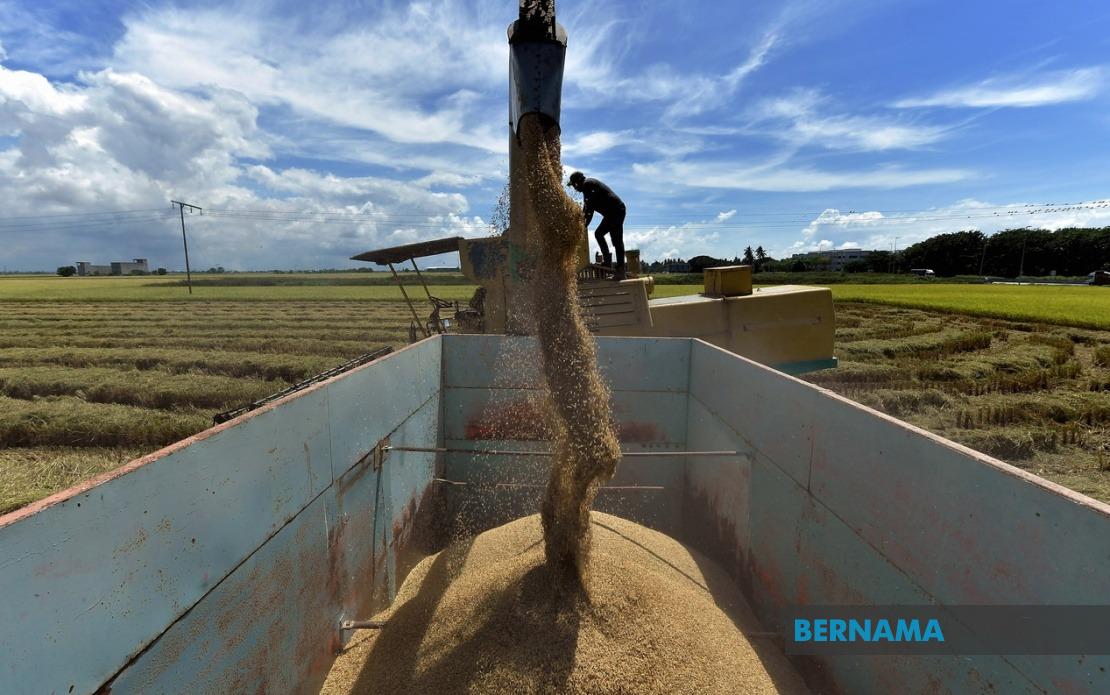
Parliament took its first step on July 7 towards overhauling Malaysia's foundational rice regulation framework when the Control of Padi and Rice Act (Amendment) Bill 2026 was tabled for first reading in the Dewan Rakyat. Agriculture and Food Security Minister Datuk Seri Mohamad Sabu fast-tracked the legislative process by signalling that both second and third readings would proceed during the current sitting, indicating the government's determination to move the amendments quickly through the chamber. The revised legislation represents one of the most significant updates to rice sector governance in recent years, reflecting mounting concerns about supply chain integrity and the need for stronger regulatory mechanisms in a critical food commodity.
The bill targets five distinct areas of Act 522, with the most dramatic changes appearing in the penalty structure. Current maximum fines for individuals violating rice regulations would leap from RM15,000 to RM250,000 on first offence, while repeat violations would carry fines reaching RM500,000—a scale increase that underscores government seriousness about enforcement. For corporate entities, the financial consequences become substantially steeper, with first-time maximum penalties climbing from RM25,000 to RM500,000, and subsequent offences triggering fines up to RM1 million. These escalations dwarf previous deterrents and signal a fundamental shift in how the government intends to police the padi and rice sector, where compliance has historically been inconsistent across the supply chain.
Perhaps more significant than the penalties is the expanded authority granted to executive bodies over price setting. The amendments would empower the director general to determine maximum or minimum prices for both padi and rice, subject to ministerial approval, effectively giving government formal tools to intervene directly in market pricing. This represents a considerable expansion of state control, moving beyond traditional regulatory oversight into active price administration. The provision is positioned as complementary to ministerial authority to prescribe rice grades and establish corresponding price controls for each grade—a technical distinction that essentially allows government to segment the market and set pricing across different quality tiers.
Ministerial powers receive substantial reinforcement throughout the bill's framework. Under the proposed amendments, the Minister gains authority to establish regulations governing padi purchaser licensing, rice grading standards, and price controls across grades. Additionally, the Minister would be empowered to regulate or prohibit the movement of padi and rice, granting extraordinary control over commodity flows. These consolidated powers reflect a strategic shift towards centralised management of rice production and distribution, presumably motivated by concerns about price stability, hoarding, or speculation that authorities believe require firm government oversight. For business operators in the rice sector, the implications are profound—operational flexibility diminishes significantly as ministerial regulations become the primary governance mechanism.
The regulatory apparatus is further strengthened by granting the Minister power to prescribe which actions or omissions constitute offences under the amended act, with associated penalties of up to RM15,000 in fines or imprisonment not exceeding six months, or both. This delegated legislative capacity allows the government to adapt enforcement mechanisms without returning to parliament, enabling responsive governance in a volatile commodity sector. However, such breadth also raises questions about regulatory predictability and the scope of ministerial discretion in determining which commercial activities constitute violations. Operators already navigate complex licensing and compliance requirements; these amendments compound the regulatory burden while centralising interpretive authority in the executive.
Context matters significantly here. Rice pricing has proven politically sensitive across Southeast Asia, with sudden price volatility triggering public concern and occasionally contributing to political pressure on governments. Malaysia's domestic rice production currently meets roughly 70 per cent of national consumption, making the country substantially dependent on imports to meet demand. Supply disruptions or international price spikes therefore pose genuine food security risks. The government's decision to expand price-setting authority and penalty mechanisms reflects a strategic choice to prioritise supply stability and affordability over market liberalisation, positioning rice as a public good requiring active state management rather than a commodity subject to pure market forces.
The amended legislation also addresses procedural continuity, ensuring that investigations or legal proceedings initiated before the act's commencement date continue under existing frameworks rather than retroactively subject to new penalties. This transitional safeguard protects operators from sudden exposure to vastly increased fines for conduct that was previously non-compliant under lower penalty schedules, though the practical effect depends on enforcement agency capacity and political will to pursue existing cases. The provision itself signals that the government anticipated concerns about retroactive application and sought to position the amendments as forward-looking reform rather than punitive backdating of enforcement.
For Malaysian stakeholders across the rice value chain—millers, traders, retailers, and producers—the bill introduces substantial operational and financial uncertainty pending its passage and subsequent regulatory implementation. Padi farmers, particularly smallholders dependent on consistent purchasing arrangements, face unpredictable dynamics if price controls are aggressively implemented. Importers and distributors confront both new compliance obligations and the possibility of government-mandated pricing that could compress margins. Consumers potentially benefit from price stabilisation if government uses its expanded authority to prevent sharp increases, though evidence from global rice markets demonstrates that price controls can sometimes distort supply or create parallel markets.
The rapid progression through parliament suggests broad political consensus on the need for stronger rice sector oversight, though the balance between government control and market function remains contested terrain across economic policy debates. Regional parallels exist—rice-producing countries throughout Southeast Asia maintain various regulatory frameworks attempting to balance food security objectives with commercial viability, though few grant executive authorities quite such expansive pricing power. Malaysia's approach reflects a decision that food security concerns justify significant state intervention, a position consistent with historical rice policy but increasingly uncommon among nations moving towards market-based agricultural governance.
Implementation will prove critical to determining whether the amendments achieve their intended effects without creating unintended distortions. If the government uses price-setting authority sparingly and focuses primarily on preventing hoarding or speculative excess, market function may survive largely intact. Conversely, if ministerial price controls become routine, they could discourage private investment in milling capacity and distribution networks, ultimately creating supply vulnerabilities. The substantial penalty increases create clear enforcement incentives, but penalties work only when actively pursued; if agencies lack resources or political will to prosecute violations, the deterrent effect diminishes regardless of penalty size.
Parliament's rapid approval process, coupled with the government's signal that all three readings would occur during the current sitting, suggests the amendments could become law within weeks rather than months. Subsequent attention will focus on ministerial implementation decisions—specifically, how aggressively government deploys its new price-setting and movement-control authorities, and how the business community adapts its operations in response. The amendments represent not merely technical refinement of existing legislation but rather a fundamental recalibration of state-market relationships in Malaysia's rice sector, with implications extending beyond commodity markets into broader questions about the proper scope of government economic intervention in food security governance.

