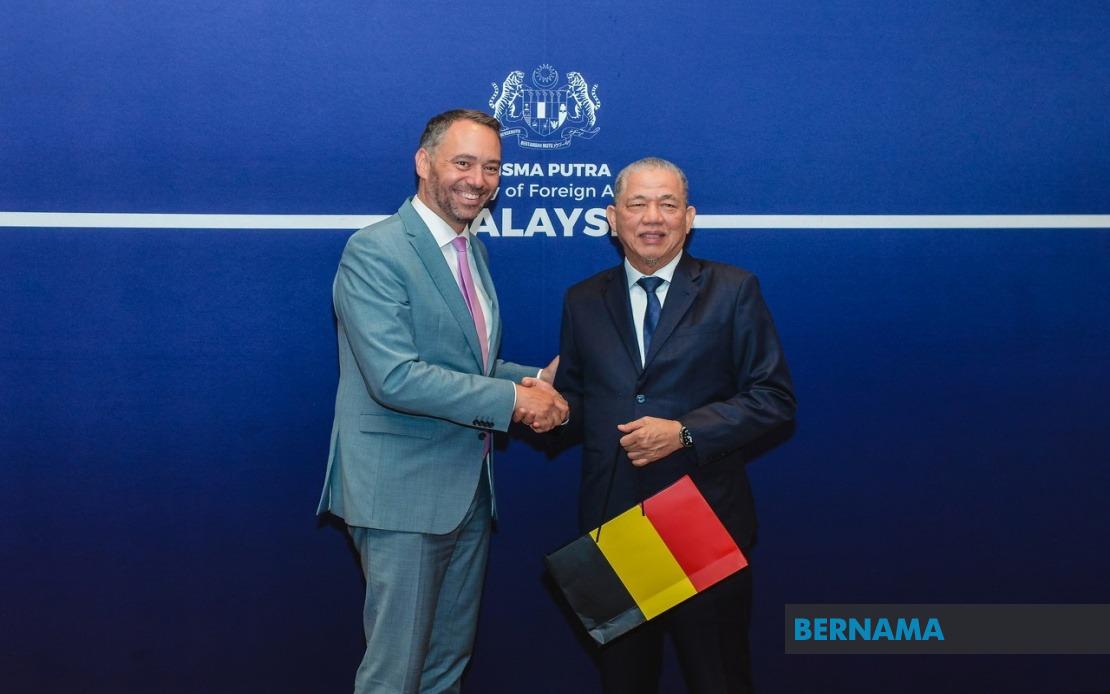
Malaysia has moved to reassure Belgium that maritime routes through the South China Sea will remain accessible and secure, with Deputy Prime Minister Datuk Seri Fadillah Yusof underscoring ASEAN's foundational commitment to preserving peace and maintaining open navigation corridors in one of the world's most strategically important waterways. The assurance came during high-level talks between Fadillah and Belgium's Deputy Prime Minister and Minister of Foreign Affairs, Maxime Prévot, who was conducting his inaugural visit to Malaysia since taking office in February 2025.
The exchange reflects mounting international apprehension about potential disruptions to global commerce following recent instability in other critical chokepoints such as the Strait of Hormuz. Prévot specifically raised questions about Malaysia's assessment of regional security dynamics and whether similar supply chain vulnerabilities might emerge in Southeast Asia's waters. For European trading nations reliant on Asian markets, such concerns carry tangible economic consequences, making reassurance from regional players like Malaysia particularly valuable.
Fadillah's response prioritized Malaysia's fundamental diplomatic position. He categorically rejected any prospect of blockades, framing Malaysian and broader ASEAN policy as rooted in guaranteeing security, neutrality, and peaceful coexistence. This messaging carries particular weight given Malaysia's geographic position astride crucial shipping lanes and its longstanding advocacy for resolving South China Sea disputes through dialogue rather than confrontation. By positioning ASEAN as a collective security guarantor, Fadillah sought to distance Southeast Asia from the geopolitical volatility affecting the Middle East and signal stability to international investors and traders.
The bilateral meeting extended beyond security assurances into substantive economic cooperation. Both nations discussed avenues for deepening ties across government, business, and community levels, with Prévot reaffirming Belgium's appetite for expanded bilateral commerce. The Belgian delegation signaled a willingness to reassess travel advisories affecting Sabah, a gesture that could facilitate increased people-to-people exchange and business activity. Such administrative adjustments, though often overlooked, have material impacts on tourism flows and commercial confidence in a region.
One particularly noteworthy discussion centered on Malaysia's halal certification ecosystem and its potential application as a model for European Union adoption. This proposal reflects growing recognition of Malaysia's leadership in halal standards development and represents an opportunity for Malaysian expertise to gain international institutional legitimacy. As halal products and services expand globally, standardization aligned with Malaysian frameworks could strengthen Malaysia's economic influence while opening new avenues for certification and value-added services. For Malaysian businesses, EU adoption of such standards would facilitate market entry and reduce compliance fragmentation.
Energy cooperation emerged as another collaborative frontier, with discussions centering on Malaysia's energy transition initiatives and Belgium's capabilities in emerging technologies and advanced materials. This agenda item aligns with Malaysia's broader pivot toward renewable energy and technological modernization, particularly relevant given the nation's role as a major oil and gas producer navigating the global shift toward decarbonization. Belgian investments in advanced materials and clean technology could accelerate Malaysia's industrial transformation, while Malaysian energy resources remain valuable to Europe seeking diversified supply chains beyond Russian hydrocarbons.
Fadillah's concurrent portfolio as Minister of Energy Transition and Water Transformation underscores Malaysia's institutional commitment to these discussions and suggests that energy cooperation transcends typical bilateral pleasantries. The emphasis on encouraging Belgian corporate investment in Malaysia reflects a strategic effort to diversify the investor base and access European technological expertise and capital. Given Belgium's position as a hub for European business and logistics, such investment flows could extend beyond energy sectors into manufacturing, services, and technology-intensive industries.
The timing of Prévot's visit carries broader significance for ASEAN's engagement with Europe. As regional tensions persist and major powers vie for influence, Southeast Asian nations are actively reinforcing relationships with established Western partners to maintain strategic autonomy. Malaysia's emphasis on reassuring Belgium about maritime security can be interpreted as part of this calibrated engagement strategy—demonstrating that ASEAN nations remain reliable partners committed to rules-based international order while resisting pressure to align with any single power bloc.
Fadillah's repeated invocation of ASEAN principles rather than narrowly Malaysian positions reflects the diplomatic framework through which Southeast Asia constructs regional identity. By framing security guarantees as collective commitments rather than unilateral pledges, Malaysia positions itself as a spokesperson for ASEAN consensus. This approach carries both advantages and constraints—it amplifies Malaysia's voice through collective authority but also ties Malaysian policy to consensus-building with sometimes divergent regional interests.
The presence of Foreign Ministry Secretary-General Tan Sri Amran Mohamed Zin and Belgium's Ambassador to Malaysia Peter Van Acker at the luncheon indicates that this engagement operates at multiple diplomatic levels simultaneously. Such events serve multiple purposes beyond their formal agendas: they signal Malaysia's international standing, reinforce institutional relationships, and create opportunities for technical discussions between government officials and diplomatic staff. These parallel conversations often yield more detailed cooperation frameworks than public statements suggest.
For Malaysian policymakers, maintaining assurances to European partners about South China Sea stability serves long-term strategic interests. Europe represents an important counterweight to regional power concentration, and European investment and technology transfer support Malaysia's development aspirations. By providing security reassurances coupled with substantive cooperation opportunities, Malaysia positions itself as a premium partner for European engagement with Asia—a status that enhances diplomatic leverage and economic returns.
Looking forward, the discussions on halal standards, energy cooperation, and investment represent potential high-yield collaboration areas. If successfully developed, they could serve as templates for Malaysia's engagement with other European nations and demonstrate how Southeast Asian countries can extract concrete benefits from great power competition while maintaining regional stability. The Belgium visit thus illustrates Malaysia's approach to navigating contemporary international relations: offering reassurance on strategic stability while negotiating tangible economic and technological gains.

