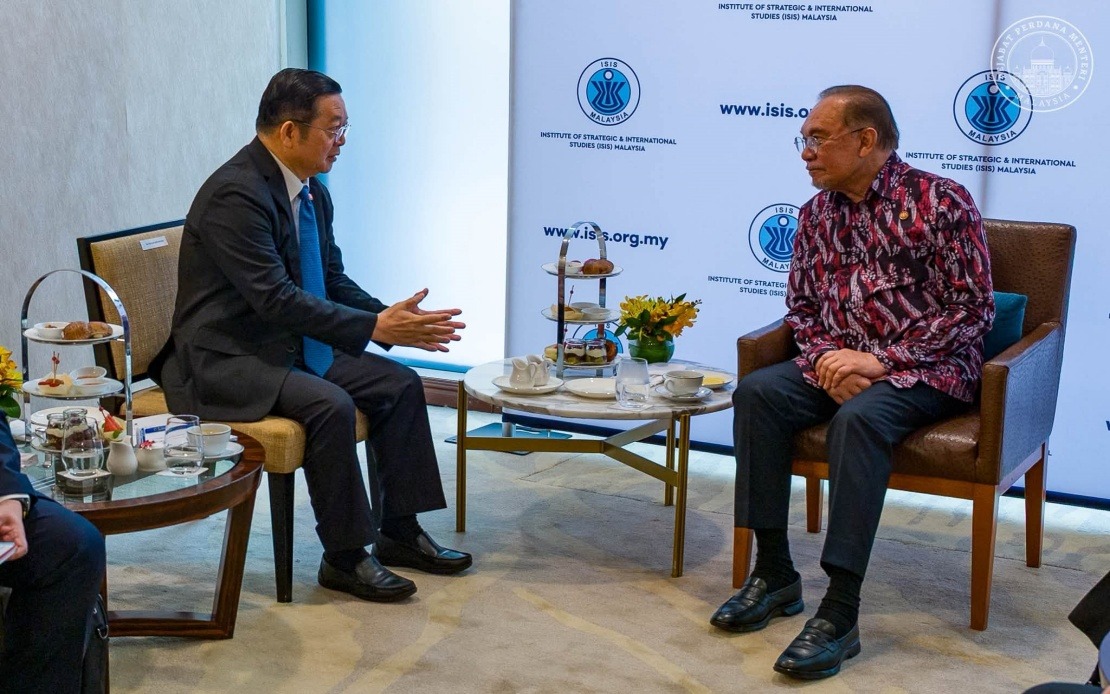
Prime Minister Datuk Seri Anwar Ibrahim has pledged that Malaysia will maintain an active and constructive approach to fortifying ASEAN as an integrated, inclusive regional community capable of addressing the needs and ambitions of its member states. The commitment was underscored during a recent meeting with ASEAN Secretary-General Dr Kao Kim Hourn, who paid a courtesy call on the Prime Minister following his keynote presentation at the 39th Asia-Pacific Roundtable here in Kuala Lumpur.
The Prime Minister, who concurrently holds the Finance Ministry portfolio, framed the discussion as a valuable opportunity to engage on pressing regional matters and the strategic priorities that will guide ASEAN's path through a period marked by intensifying geopolitical friction and economic headwinds. His remarks come at a particularly significant juncture for the bloc, which continues to grapple with multiple overlapping challenges that test its cohesion and decision-making capacity.
Among the substantive topics canvassed during the exchange were the deteriorating security situation in Myanmar, where a military takeover in 2021 has created a humanitarian crisis and prompted calls for ASEAN intervention. The conversation also encompassed maritime tensions in the South China Sea, where competing territorial claims and strategic competition between major powers threaten freedom of navigation and could destabilise the region's economic lifelines.
The dialogue reflected growing recognition of technology's transformative impact on regional governance and development. Artificial intelligence figured prominently in the discussion, signalling ASEAN's awareness that the bloc must position itself to harness technological advancement while managing associated risks and ensuring equitable distribution of benefits across member economies of vastly different development stages.
Another focal point was the operational and strategic implications of Timor-Leste's admission as ASEAN's eleventh member state. The transition into what officials term the post-accession phase requires careful management as the young nation, still consolidating democratic institutions and addressing poverty, integrates into regional structures and contributes to collective decision-making.
The leaders also examined progress toward realising ASEAN Community Vision 2045, an ambitious blueprint launched in 2015 that envisions deeper regional integration across political, economic and socio-cultural domains. Measuring implementation and maintaining momentum on this agenda presents ongoing challenges, particularly as member states contend with domestic priorities and fiscal constraints stemming from post-pandemic economic recovery efforts.
Separately, both officials assessed the ramifications of escalating conflict in West Asia for Southeast Asian stability and prosperity. The region maintains significant economic and strategic interests in Middle Eastern stability, including energy security, trade flows, and the wellbeing of substantial diaspora communities. Regional leaders recognise that protracted instability in that theatre could reverberate across supply chains and create security spillovers that extend into Southeast Asia.
Anwar emphasised that ASEAN's resilience depends fundamentally on unwavering commitment to established foundational principles—particularly unity of purpose, the bloc's central role in regional architecture, and sustained cooperation grounded in mutual respect and non-interference. These principles, enshrined in the ASEAN Charter and the Treaty of Amity and Cooperation, have provided the organisational bedrock enabling a diverse ensemble of nations with competing interests to coexist peacefully for nearly six decades.
Malaysia's reaffirmation of support carries particular weight given the country's historical role as a founding member and consistent advocate for ASEAN's primacy. As the bloc faces unprecedented pressures—from power competition between the United States and China to transnational challenges like climate change and pandemic threats—member states like Malaysia must sustain diplomatic investment in solidarity mechanisms and consensus-building frameworks that preserve ASEAN's effectiveness.
The Prime Minister's statement reflects broader strategic calculations within Malaysian policymaking circles. As a middle-power with strategic location, significant Chinese diaspora, and deepening ties with Washington through security partnerships, Malaysia navigates a delicate balance between great power interests. Strengthening ASEAN cohesion serves Malaysian interests by preserving space for autonomous regional decision-making and preventing the bloc's fragmentation into competing spheres of influence.
Looking forward, Malaysia's commitment to constructive engagement suggests the country will prioritise mediation efforts on contentious issues, support for ASEAN Secretariat initiatives, and advocacy for inclusive mechanisms that accommodate divergent interests. This approach aligns with Kuala Lumpur's tradition of consensus-seeking diplomacy and its conviction that ASEAN's greatest asset remains its capacity for managed coexistence among neighbours with sharply differing political systems and strategic alignments.
The meeting between Anwar and Dr Kao Kim Hourn underscores ASEAN's imperative to adapt and evolve while preserving institutional integrity. As regional architecture becomes increasingly crowded with competing initiatives and extra-regional powers seek influence, ASEAN's ability to remain central to regional affairs hinges on member states like Malaysia consistently demonstrating commitment to collective problem-solving and rejecting bilateral arrangements that might undermine bloc cohesion.

