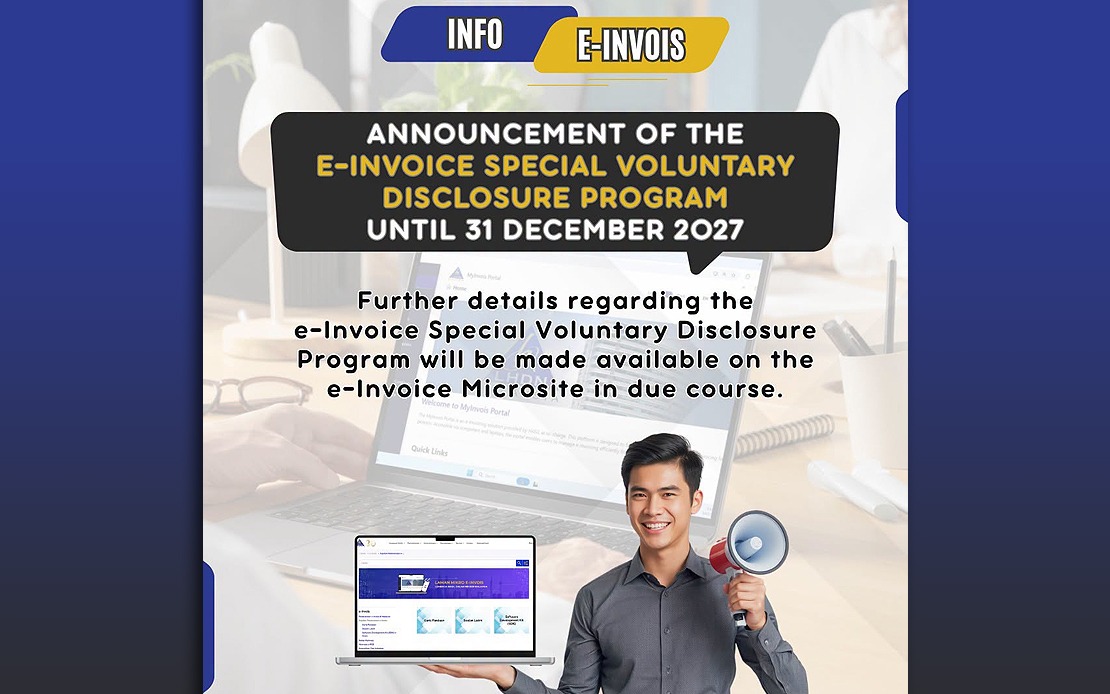
Prime Minister Datuk Seri Anwar Ibrahim has introduced a significant relief measure for Malaysia's business community through the e-Invoice Special Voluntary Disclosure Programme, which will remain open until the end of 2027. Announced as part of broader efforts to ease compliance burdens, the initiative reflects government recognition that the transition to mandatory digital invoicing has created challenges for enterprises of varying sizes and operational sophistication. The programme applies to three distinct categories of taxpayers struggling with different aspects of e-Invoice implementation, indicating a nuanced understanding of where compliance failures commonly occur.
The first category encompasses businesses that have simply failed to submit e-Invoices for specific transactions covered by the mandatory regime. This group includes entities that may have misunderstood which transactions require digitalisation or that inadvertently overlooked certain sales or purchases. The second category addresses those who submitted e-Invoices but made errors or failed to meet the technical and substantive requirements outlined in regulatory guidelines. This represents perhaps the largest cohort, as the e-Invoice framework involves detailed specifications regarding data fields, formats, and submission procedures. The third category welcomes businesses that never submitted e-Invoices for any period dating back to when the government first mandated the system, covering those with more comprehensive non-compliance across their operations.
According to the Inland Revenue Board, taxpayers participating in the programme must ensure that their voluntary disclosures are accurate and fully comply with both the General and Specific e-Invoice Guidelines. This requirement protects the integrity of the disclosure process by preventing businesses from using the amnesty as an opportunity to make unsubstantiated claims or corrections. The IRB emphasises that the initiative aims to support the government's broader digitalisation agenda by encouraging voluntary compliance without the threat of financial penalties, thereby removing a significant disincentive for businesses to come forward and rectify their records.
The amnesty period extending to December 31, 2027 provides a substantially long window for compliance, suggesting the government anticipates many businesses may require considerable time to audit their records, understand their obligations, and implement the necessary corrections. This extended timeframe is particularly important for small and medium enterprises that may lack dedicated tax and compliance personnel, allowing them to schedule corrections during less demanding business periods rather than under urgent pressure. The fact that the IRB will not impose penalties during this period for updates, revisions, or corrections represents a fundamental shift in the enforcement approach and signals genuine intent to facilitate rather than punish.
As an incentive for full and timely compliance, the government has accelerated tax incentive provisions that allow participating businesses to claim capital allowances for information and communication technology equipment investments within a single tax year. Previously, such claims would have been spread across multiple years, effectively reducing the immediate financial benefit. This acceleration applies to equipment purchased specifically for e-Invoice implementation purposes. Additionally, businesses may now fully deduct costs associated with developing or modifying computer software to comply with e-Invoice requirements, including system integration and staff training programmes related to the new digital framework.
These accelerated incentives carry significant implications for Malaysia's small business sector, particularly micro and small enterprises that have struggled most with digitalisation costs. By compressing tax relief into the current year, the government effectively provides greater immediate cash relief for businesses investing in compliance infrastructure. For a typical small enterprise purchasing new accounting software and hardware to support e-Invoice generation and submission, these combined incentives could substantially offset initial technology expenditure, making compliance financially more manageable. This approach acknowledges that beyond the administrative burden of compliance, the upfront capital costs have been a genuine barrier for resource-constrained businesses.
The Malaysian business community can access IRB support through multiple channels designed to accommodate different communication preferences. The e-Invoice helpdesk at 03-8682 8000 provides direct telephone access for real-time queries and technical guidance, while MyInvois Live Chat offers digital support for businesses preferring online interaction. Email assistance and face-to-face consultations at IRB offices nationwide ensure that enterprises regardless of size or technical capability can obtain necessary clarification on disclosure procedures and e-Invoice requirements. This multi-channel support infrastructure reflects recognition that compliance questions vary widely in complexity and that different business types have different communication preferences.
Regionally, Malaysia's e-Invoice amnesty programme situates the country within a broader trend of Southeast Asian governments promoting digital business transformation while acknowledging practical implementation challenges. Indonesia, Thailand, and other regional economies have implemented similar digital invoicing regimes, often encountering comparable compliance difficulties during rollout phases. Malaysia's structured approach—combining mandatory requirements with extended amnesty periods and targeted incentives—represents a relatively mature policy framework that balances digitalisation ambitions with realistic assessment of business adaptation capacity. The programme's existence implicitly validates that even well-intentioned regulatory transitions require correction mechanisms.
For businesses considering participation, the key strategic question involves timing and scope. With nearly three years remaining before the programme closes, companies have flexibility in sequencing their compliance corrections, though early participation may prove advantageous psychologically and operationally. Businesses should conduct comprehensive audits of their e-Invoice submissions since the mandatory implementation date to identify all gaps and errors requiring correction. This exercise itself creates value by forcing systematic review of invoicing practices and potentially revealing other compliance or operational issues. Companies should engage with the IRB's support channels during this audit phase rather than waiting until a later deadline when helpdesk resources may become overwhelmed.
The programme's existence also carries broader implications for Malaysia's digital economy development agenda. By removing penalty barriers to confession and correction, the IRB effectively converts a compliance exercise from a potential enforcement action into a constructive business improvement initiative. This approach likely yields better data quality outcomes than punitive enforcement would, since businesses have genuine incentive to be thorough and accurate rather than minimalist or defensive in their corrections. As regulatory agencies globally increasingly recognise, compliance support and collaborative problem-solving often achieve better long-term outcomes than purely adversarial enforcement, particularly when dealing with transitions to new digital systems requiring significant organisational adaptation.

