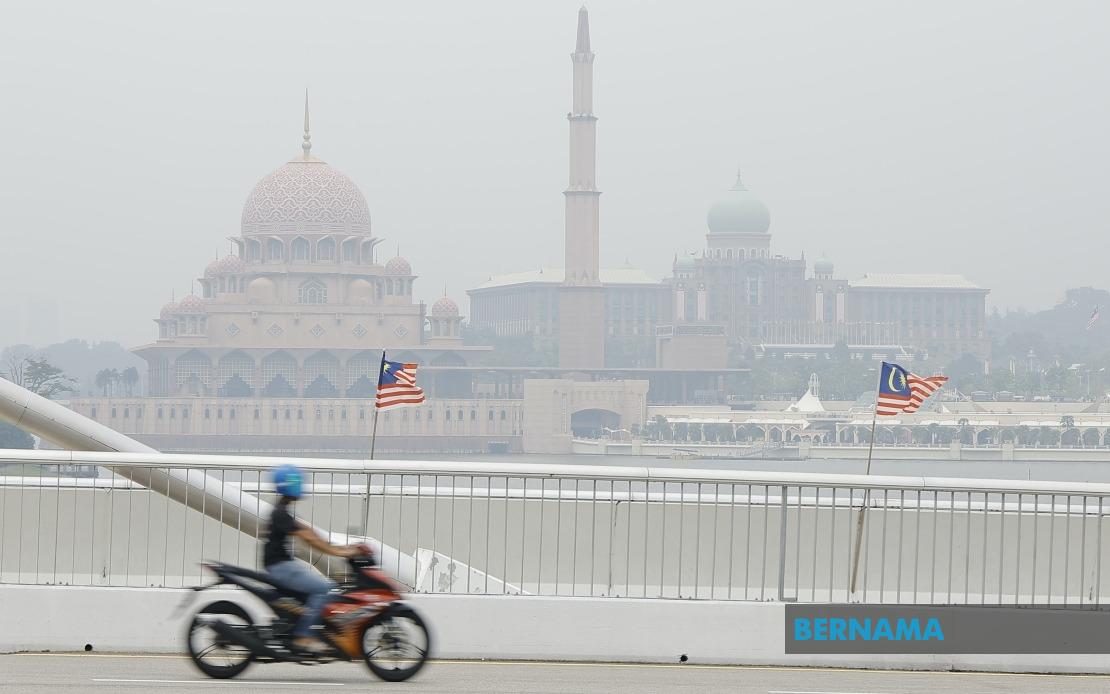
Malaysia should abandon its reactive approach to transboundary haze and instead implement a predictive forecasting system that can alert the public and health authorities days before air quality deteriorates, according to Associate Professor Dr Azman Azid, director of Universiti Sultan Zainal Abidin's Besut Campus and an environmental researcher.
The recurring seasonal haze episodes that plague Malaysia and the broader Southeast Asian region represent a persistent public health emergency that demands a fundamental shift in how the nation addresses air pollution. Speaking from Kuala Nerus, Azman articulated a compelling case for transitioning from the current model of monitoring, warning and reactive crisis management toward a forward-looking framework centred on forecasting, prevention and protection.
The urgency of this change becomes apparent when examining the health toll exacted by deteriorating air quality. Ministry of Health data monitoring between the 32nd and 33rd epidemiological weeks revealed a staggering 259 per cent surge in asthma cases, climbing from 61 to 219 cases. This alarming spike underscores that haze is not merely an environmental nuisance or visibility issue but a serious respiratory health crisis that demands preemptive action.
Contrary to assumptions that Malaysia lacks the necessary information infrastructure, Azman stressed that most foundational data for constructing an effective early warning system already exists within the country's various agencies and monitoring networks. The challenge lies not in data availability but in meaningful integration. By synthesising hotspot data indicating fire locations, satellite imagery tracking smoke plumes, meteorological information about wind patterns, atmospheric trajectory models predicting air mass movement, API readings capturing current pollution levels, respiratory disease surveillance patterns, and PM2.5 fine particulate measurements, Malaysia could develop a coherent forecasting tool comparable to existing weather prediction systems.
Such an integrated system would furnish authorities with a critical advantage: visibility into potential haze events within a 48 to 72-hour window. This lead time would enable hospitals and clinics to surge their preparedness protocols, allowing medical facilities to stockpile respiratory medications, arrange additional staff, and prepare isolation wards. Schools could strategically schedule outdoor activities around predicted pollution peaks, safeguarding students from hazardous exposures. The cumulative effect across sectors would substantially mitigate the public health burden.
Azman emphasised that early warning capability would complement rather than replace the existing Air Pollutant Index system. While API readings remain valuable for informing the public about real-time air quality, they function only after pollutants have already become concentrated in the atmosphere. From a risk management perspective, this represents a significant disadvantage. A comprehensive haze forecasting framework would preserve API's utility while addressing its fundamental limitation: it reports conditions only after harm has begun, rather than enabling prevention before pollution arrives.
The integration challenge extends beyond technical considerations into the realm of institutional coordination. Malaysia participates in the ASEAN Agreement on Transboundary Haze Pollution, a multilateral commitment acknowledging the region's shared vulnerability to smoke and particulates that drift across borders. However, Azman contended that current ASEAN cooperation remains insufficiently ambitious, focusing primarily on data sharing and post-haze responses rather than coordinated pre-emptive action. The framework needs strengthening to encompass joint fire source mapping, collaborative smoke trajectory forecasting, technology transfer arrangements, mutual firefighting support, and integrated response mechanisms.
The transnational character of atmospheric pollution demands recognition that air currents and smoke plumes respect no political boundaries. When fires ignite across borders in Kalimantan, Sumatra, or Brunei, the resulting smoke inevitably reaches Malaysian airspace within hours or days. Similarly, prevailing wind patterns may carry Malaysia's own agricultural burn-off smoke into neighbouring territories. Only through genuine regional collaboration—extending beyond information exchange to include prevention, forecasting and coordinated suppression efforts—can Southeast Asian nations meaningfully reduce haze incidence rather than merely managing its consequences.
Domestic enforcement measures require equivalent strengthening. Azman stressed the necessity for authorities to rigorously apply and strengthen legislation governing open burning, agricultural and land-clearing fires, and peatland ecosystem management. These enforcement gaps permit the practices that ultimately generate the transboundary haze episodes affecting millions across the region.
Addressing haze comprehensively demands a multifaceted strategy that Azman outlined as requiring simultaneous advancement across five dimensions: fire prevention through stricter regulation and enforcement, sustainable peatland management protecting carbon-rich ecosystems, advanced atmospheric modelling enabling accurate forecasting, deepened regional cooperation transcending data-sharing frameworks, and fundamental shifts toward more environmentally sustainable land use practices. No single intervention, however well-designed, suffices in isolation.
While the goal of preventing every smoke plume from entering Malaysia may prove unattainable given regional geography and weather patterns, Azman concluded that the country can substantially reduce fire incidence, forecast smoke movement with greater precision, and most critically, protect population health through timely public warning and healthcare system preparation. This reorientation from acceptance of seasonal hazard toward active prevention and early warning represents an achievable and essential step toward better air quality governance.

