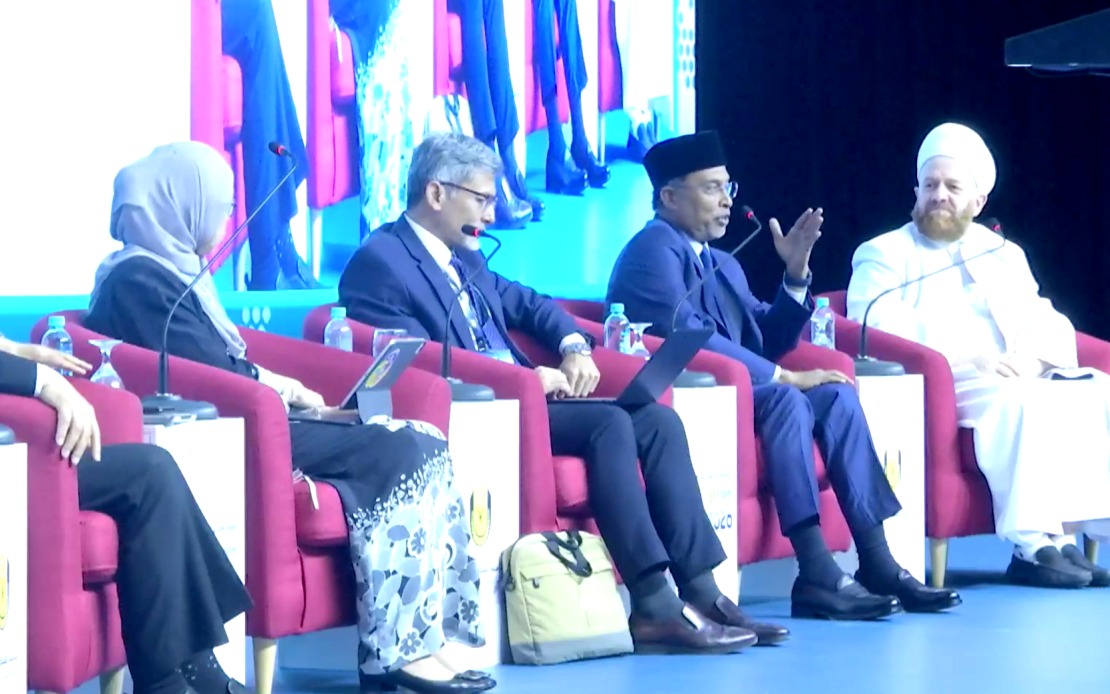
Malaysia's universities need to become laboratories where artificial intelligence coexists with moral philosophy, according to Higher Education Minister Datuk Seri Dr Zambry Abd Kadir, who highlighted the integration of cutting-edge technology with ethical frameworks as essential to sustaining the nation's competitive edge in an increasingly uncertain global landscape. Speaking at the 8th World Conference on Islamic Thought and Civilisation in Ipoh on July 21, Zambry articulated a vision extending beyond conventional technological adoption, instead positioning education as the crucible where technical prowess and human character are simultaneously forged.
The Ministry of Higher Education has charted an ambitious trajectory through its 10-year strategic blueprint spanning 2026 to 2035, designed to orchestrate three concurrent transitions: technological innovation, workforce capability building, and reinforcement of moral and ethical anchors within academic spaces. This tripartite approach reflects recognition that emerging disciplines such as artificial intelligence, quantum computing, and planetary health demand institutional frameworks that do not simply transmit knowledge but actively cultivate wisdom and principled decision-making among graduates who will eventually govern organisations and influence societies.
Zambry's intervention responds to a genuine tension within contemporary higher education across Southeast Asia. As universities race to embed AI literacy and computational thinking into programmes, many struggle to prevent curricula from becoming purely instrumental—teaching students to build systems without necessarily equipping them to interrogate the moral implications of those systems. The minister's insistence that ethics and moral values be "seamlessly infused" into academic content suggests this is not an ancillary concern but foundational to pedagogical legitimacy. Universities that fail to cultivate ethical reasoning risk producing graduates who are technically fluent but philosophically adrift, capable of deploying AI but potentially blind to its societal consequences.
The pivot from STEM to STEAM exemplifies this recalibration. By inserting the arts and liberal studies into disciplinary silos historically dominated by science and mathematics, the framework acknowledges that human-centred problem-solving requires exposure to philosophy, literature, history, and social analysis. This shift proves particularly relevant for Malaysia, where technology transfer and talent retention have long hinged not merely on coding ability but on graduates' capacity to navigate cross-cultural contexts, think strategically, and lead with integrity. Institutions like Universiti Teknologi Petronas already embed humanities courses within engineering degrees, recognising that future engineers and technologists require the reflective capacity that liberal education cultivates.
Zambry's observation that artificial intelligence delivers "precise answers and rapid solutions" but cannot shape character cuts to the heart of why human education remains irreplaceable. Algorithms optimise; humans deliberate. Machines process; people interpret. As AI systems increasingly mediate consequential decisions—from hiring and lending to criminal justice and healthcare—the individuals designing, deploying, and governing these tools must possess well-developed moral compasses and critical sensibilities. Malaysia's higher education system thus carries a generational responsibility to ensure that its graduates do not become mere operators of powerful technologies but thoughtful custodians capable of questioning their own tools.
The 10-year blueprint's emphasis on placing "humanity at its core" positions Malaysia within an emerging global conversation about education's ultimate purpose in the AI era. Countries from Singapore to South Korea to India are similarly grappling with curriculum redesign, recognising that competitive advantage now flows not solely from technical specialisation but from societies' capacity to produce leaders, innovators, and professionals who combine technological sophistication with ethical maturity. Malaysia's explicit articulation of this dual imperative—in a forum devoted to Islamic thought—signals an attempt to draw on indigenous intellectual traditions while engaging global best practice.
The challenge ahead lies not in policy formulation but implementation. Embedding ethics into curricula requires faculty trained in interdisciplinary thinking, institutional structures that reward moral inquiry alongside technical achievement, and assessment frameworks that evaluate character development alongside technical competency. Malaysian universities will need to invest substantially in professional development for academics, reconceptualise learning outcomes, and potentially restructure graduation requirements to ensure that every student, regardless of discipline, engages seriously with ethical philosophy and values-based decision-making.
For Malaysian employers and industry bodies, this reorientation carries immediate implications. Organisations currently absorbing graduates into AI-related roles should expect a cohort increasingly equipped not just to code but to conduct ethical audits, to anticipate unintended consequences, and to propose governance frameworks for algorithmic systems. This represents both opportunity and accountability: companies will gain employees with keener awareness of reputational and legal risks, whilst assuming greater responsibility to create organisational cultures where ethical concerns are treated as legitimate rather than obstructive.
Zambry's pronouncements also reflect Ministry recognition that Malaysia's intellectual capital will ultimately determine whether the nation captures high-value segments of the AI economy or remains relegated to lower-tier implementation roles. Countries that produce engineers capable of designing AI systems command greater economic rents than those limited to deploying imported solutions. Yet design capability without ethical grounding courts systemic risk: algorithms developed without consideration of fairness, privacy, or social impact eventually provoke backlash, regulation, and reputational damage. By systematically cultivating what might be termed "virtuous technologists," Malaysia's higher education sector aims to position itself as a source of trusted expertise rather than merely cheap labour.
The WCIT forum itself provided meaningful venue for this messaging, suggesting that Malaysian policymakers view Islamic intellectual traditions as resources for thinking through technology governance. Islamic philosophy contains rich traditions of ethics, justice, and stewardship relevant to algorithmic accountability. Situating AI ethics discussions within this framework offers opportunity to counter narratives portraying technological governance as exclusively secular or Western domains, potentially strengthening both institutional buy-in from Malaysian universities and policy legitimacy among diverse stakeholder communities.
Looking forward, the success of Zambry's vision will depend on whether the 2026-2035 blueprint translates into concrete institutional change. Universities must revise admission criteria, curriculum design, and faculty hiring practices to prioritise ethical reasoning and interdisciplinary capability. Accreditation bodies will need updated standards reflecting this reoriented mission. Employers must signal demand for graduates exhibiting these expanded competencies through hiring preferences and compensation structures. If these systemic alignments occur, Malaysia could position itself as a distinctive contributor to global conversations about responsible AI development, drawing on both technological capacity and deep engagement with ethical frameworks.

