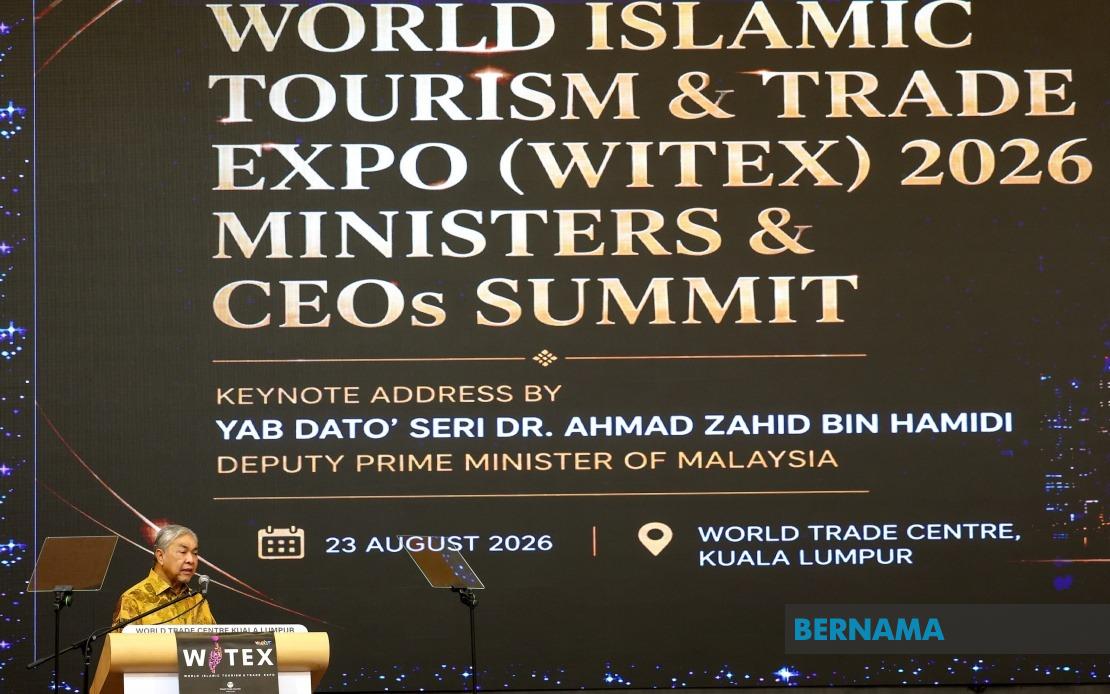
Deputy Prime Minister Datuk Seri Dr Ahmad Zahid Hamidi has outlined an ambitious vision for Malaysia's role in the booming Islamic tourism sector, arguing that the country must transition from merely being a welcoming destination for Muslim travellers to becoming the definitive centre for the entire Muslim travel economy. Speaking at the Ministers and Chief Executive Officers Summit held alongside the World Islamic Tourism & Trade Expo (WITEX) 2026 at the World Trade Centre Kuala Lumpur, Ahmad Zahid articulated a strategic framework that positions tourism not as an isolated industry but as an interconnected ecosystem linking halal innovation, international trade, cutting-edge technology, and grassroots entrepreneurship.
The Deputy Prime Minister's remarks reflect a recognition of the scale and dynamism of the Muslim travel market. International arrivals from Muslim-majority nations and communities reached 196 million travellers in 2025 and are forecast to surge to 262 million by 2030, with corresponding expenditure climbing to approximately USD310 billion during the same period. These figures underscore the economic significance of this demographic and the competitive opportunities available to destinations that successfully position themselves within this framework. For Malaysia, which already possesses considerable strengths in Muslim-friendly infrastructure and services, the challenge lies in leveraging these advantages while simultaneously innovating to meet evolving consumer expectations.
Crucially, Ahmad Zahid emphasised that contemporary Muslim travellers operate within a far more sophisticated marketplace than previous generations. While halal-certified food, prayer facilities, and culturally sensitive accommodation remain essential baseline requirements, today's Muslim tourists increasingly seek diverse experiences encompassing business opportunities, wellness retreats, cultural immersion, natural exploration, and adventure activities. This diversification of demand signals that Malaysia's tourism strategy cannot rely on repetitive messaging around religious compliance alone; instead, it must cultivate a comprehensive value proposition that appeals to the multifaceted interests of a growing middle class from Muslim nations experiencing rising disposable incomes.
The economic multiplier effect that Ahmad Zahid highlighted deserves particular attention when considering Malaysia's development trajectory. Each international visitor generates demand extending well beyond hotel room bookings—encompassing transportation networks, food service provision, retail commerce, entertainment venues, digital infrastructure, artisanal products, and authentic cultural experiences. When aggregated across hundreds of millions of travellers, these secondary and tertiary economic benefits create employment across rural and urban communities, stimulate small and medium-sized enterprise development, and generate tax revenue supporting public services. By framing tourism as an economic multiplier rather than a niche hospitality sector, Ahmad Zahid signals a comprehensive approach to national economic development that resonates particularly with policymakers in Southeast Asia seeking diversified growth engines.
To maintain competitive advantage in this rapidly expanding market, Ahmad Zahid identified three critical investment areas: technological innovation, human capital development, and standardisation. The adoption of advanced technologies—including digital platforms for booking and service delivery, artificial intelligence for personalised tourism experiences, and blockchain for supply chain transparency in halal products—will become increasingly essential as competing destinations invest heavily in digital infrastructure. Simultaneously, Malaysia must cultivate talent through Technical and Vocational Education and Training (TVET) programmes that equip workers with the specific skills required by an increasingly sophisticated tourism and hospitality ecosystem. Furthermore, the strengthening and harmonisation of halal and Muslim-friendly standards will ensure that Malaysia's offerings meet international expectations while differentiating local products and services from competitors.
In remarks to journalists following his formal address, Ahmad Zahid expanded on the seasonality challenge confronting Malaysia's Islamic tourism sector. Currently, the industry experiences pronounced peaks during specific religious occasions including Aidiladha, Aidilfitri, and Ramadan, when Muslim travellers concentrate their journeys and leisure expenditure. This cyclical pattern creates operational inefficiencies, workforce scheduling complications, and underutilised capacity during off-peak periods. To address this structural weakness, Malaysia must develop diversified Islamic tourism products capable of attracting visitors throughout the calendar year—encompassing educational Islamic tourism, wellness retreats with halal provisions, business conferences targeting Muslim entrepreneurs, and cultural festivals celebrating Islamic heritage. This year-round approach would stabilise employment, improve return on tourism infrastructure investment, and generate more consistent revenue streams.
Geopolitical dynamics in West Asia have created an unexpected opportunity for Malaysia and other Southeast Asian destinations. Recent regional instability and uncertainty have prompted substantial numbers of affluent West Asian travellers to redirect their leisure spending toward alternative destinations perceived as stable, welcoming, and offering exceptional value. Ahmad Zahid identified this trend as a strategic priority, noting that intensified promotional efforts through platforms such as WITEX could effectively capture market share from competitors. For Malaysia specifically, the combination of political stability, established Muslim-friendly infrastructure, competitive pricing, and geographic proximity via efficient air routes positions the country favourably to capture this displaced demand. Coordinated marketing campaigns targeting Gulf Cooperation Council nationals and other West Asian high-net-worth individuals could yield substantial returns on promotional investment.
The fourth iteration of WITEX 2026, organised by the Malaysia Tourism Agency Association (MATA) under the stewardship of President and organising chairman Datuk Seri Dr Mohd Khalid Harun, represents a significant platform for advancing these strategic objectives. Running from August 21 to 23 at the WTCKL, the exposition convenes industry stakeholders spanning Islamic tourism operators, halal trade enterprises, investment firms, technology innovators, and cultural institutions. Such gatherings facilitate knowledge transfer, forge business partnerships, showcase Malaysian capabilities to international audiences, and generate media attention amplifying the country's positioning within the global Muslim travel economy.
For Malaysian stakeholders across tourism, hospitality, food production, retail, transportation, and entertainment sectors, Ahmad Zahid's strategic articulation presents both opportunities and imperatives. The Deputy Prime Minister's emphasis on creating entrepreneurial opportunities and supporting small business suggests that growth in Muslim travel should not concentrate wealth among large international hotel chains and tour operators, but rather distribute benefits across local communities. This inclusive growth model requires deliberate policy design, including preferential procurement policies for local suppliers, training programmes developing local entrepreneurship in tourism-related enterprises, and regulatory frameworks facilitating market entry for small businesses competing with established players.
The positioning of Malaysia as a Muslim travel economy hub rather than merely a destination reflects sophisticated strategic thinking aligned with global economic trends. Tourism increasingly functions as a vehicle for cultural exchange, technological transfer, business network formation, and sustainable local development rather than a simple transactional exchange of accommodation for currency. By embracing this expansive conception, Malaysia creates foundations for tourism investment that generates broader economic multiplier effects, enhances global soft power, and strengthens Malaysia's role as a bridge between Islamic civilisation and the wider international community. The success of this vision depends on coordinated execution across government agencies, tourism operators, educational institutions, and community stakeholders—a coordination challenge that the Deputy Prime Minister's high-profile advocacy aims to catalyse.

