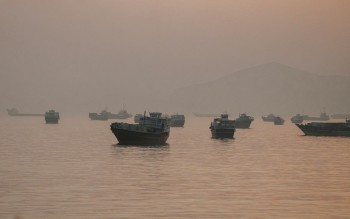
Malaysia's Economy Minister Akmal Nasrullah Mohd Nasir has sounded an alarm over the need for sustained preparedness in the face of geopolitical upheaval in the Middle East, particularly following Iran's renewed closure of the Strait of Hormuz. In a video address shared on his official TikTok account, he cautioned both the general public and the business community against underestimating the cascading economic consequences that such regional instability can trigger across Malaysia's interconnected economy.
The warning comes at a time when limited commercial shipping activity continues through the strategically vital waterway, a situation that the minister stressed should not breed complacency or a false sense of security. Despite reports of some vessels still transiting the strait, Akmal Nasrullah emphasised that this trickle of activity masks the deeper vulnerability of Malaysia's economy to external shocks originating from beyond its borders. The underlying message is unambiguous: Malaysia remains exposed to the ripple effects of West Asian conflicts and military escalations, and both policymakers and citizens must maintain vigilance rather than assume normalcy has returned.
The immediate triggers for this heightened concern stem from a series of military strikes launched by the United States against Iran on July 8, actions that prompted the fresh closure declaration. Rather than viewing this as a discrete incident, the minister positioned it within a broader pattern of geopolitical instability that shows no signs of quick resolution. This framing suggests that Malaysian planners are preparing for extended rather than temporary disruption, implying that contingency measures should be treated as structural adjustments rather than emergency responses.
The economic mechanisms through which Middle Eastern tensions harm Malaysia's prosperity operate on multiple fronts simultaneously. Petroleum pricing represents the most visible pressure point—the closure of a waterway through which roughly one-third of global seaborne traded oil passes inevitably drives crude costs upward. Beyond oil, however, the cascading effects extend into shipping logistics, where extended transit times around African routes dramatically inflate transportation premiums for all goods in transit. These cost increases eventually embed themselves into the prices of raw materials and finished goods that Malaysian manufacturers and consumers depend upon, creating a transmission mechanism that converts Middle Eastern geopolitical risk into domestic price pressures.
Food security emerges as a particularly acute concern in Akmal Nasrullah's analysis, reflecting Malaysia's significant reliance on food imports to feed its population. As shipping costs surge and global agricultural commodity prices rise in response to petroleum cost increases, the affordability of essential foodstuffs for ordinary Malaysians deteriorates. This vulnerability has direct implications for household budgets across the income spectrum and represents a tangible threat that extends beyond abstract economic indicators to affect daily living standards for millions.
The minister's discussion of supply chain complexity reveals sophisticated understanding of how modern manufacturing ecosystems create hidden dependencies and fragility. His example of the plastics sector illustrates how pressure on a single input supplier cascades through multiple downstream industries in ways that are not immediately obvious to casual observers. When plastic manufacturers face rising costs or logistical constraints, their struggles ripple outward to encompass food packaging producers, electronics component manufacturers, automotive suppliers, medical device makers, construction materials firms, agricultural input providers, and export-oriented manufacturers. This interconnected web means that disruption in one node transmits shocks throughout the entire ecosystem, amplifying initial impacts.
The Malaysian electronics and electrical equipment sectors, which represent significant components of national manufacturing output and export revenue, face particular vulnerability through this supply chain transmission mechanism. Components and raw materials sourced globally inevitably carry embedded transportation costs that reflect fuel prices and shipping logistics. The automotive sector, another pillar of Malaysia's industrial base, similarly depends on just-in-time supply chains that become fragile when Middle Eastern instability lengthens delivery windows and raises transit costs unpredictably. These industries collectively employ hundreds of thousands of Malaysians and contribute substantially to government revenues through tax and foreign exchange earnings.
Akmal Nasrullah's call for heightened attention to the supply chain ecosystem reflects recognition that defensive measures must move beyond individual company responses to encompass systemic resilience. The minister appears to be advocating for a comprehensive approach in which businesses actively map their supply chain dependencies, identify critical vulnerabilities, and develop diversification strategies that reduce reliance on transportation corridors or source suppliers concentrated in geopolitically volatile regions. This represents a departure from the efficiency-maximising approach that characterised pre-crisis supply chain management, substituting redundancy and geographic diversity for lean optimisation.
The underlying implication of the minister's message is that Malaysia cannot insulate itself from external shocks but can substantially reduce its vulnerability through deliberate strategic choices. Reducing dependence on external situations—a phrase that encompasses everything from diversifying supplier bases to developing domestic production capacity for critical materials—requires sustained investment and policy support. This is not a short-term adjustment but a recalibration of Malaysia's economic strategy to incorporate geopolitical risk as a permanent feature of the operating environment.
For Malaysian consumers, Akmal Nasrullah's warnings translate into an expectation of price pressures across multiple consumption categories extending beyond obvious candidates like petrol. Grocery bills, electronics purchases, vehicle prices, and construction costs all face potential upward revision if the Hormuz situation persists. For businesses, the message emphasises that strategic planning cannot assume stable global conditions but must incorporate scenarios of extended supply chain stress and input cost inflation. The broader national implication is that sustained prosperity requires conscious efforts to build resilience into economic structures, moving beyond reactive crisis management toward proactive systemic redesign that acknowledges the permanent reality of geopolitical risk.

