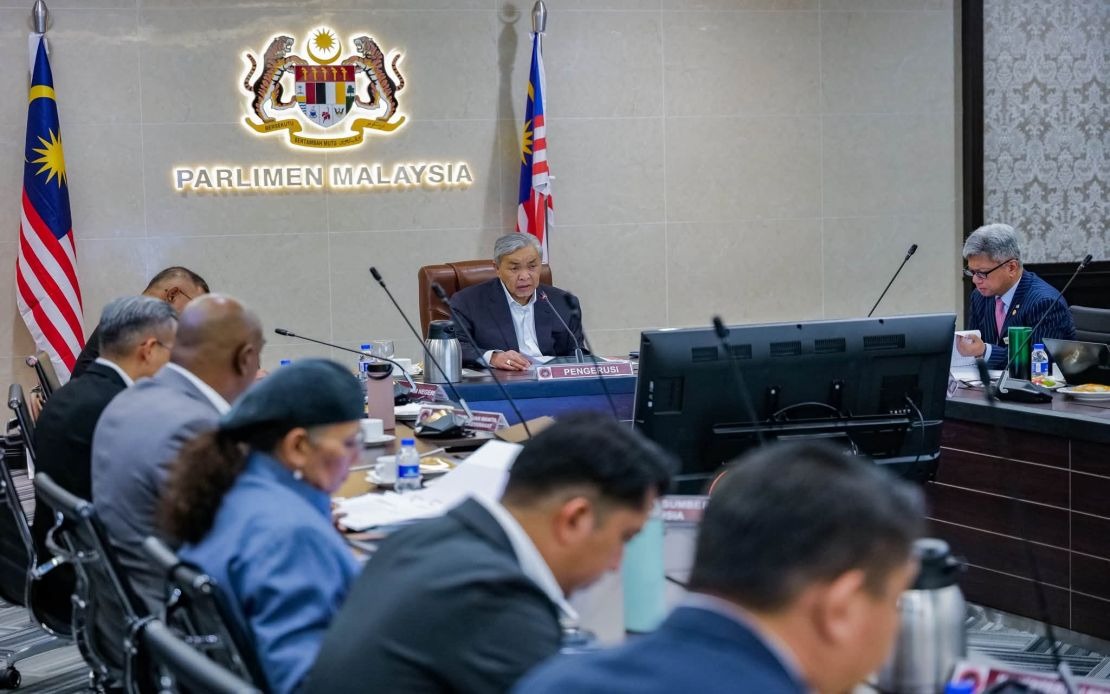
Malaysia's Deputy Prime Minister Datuk Seri Dr Ahmad Zahid Hamidi has called for a comprehensive overhaul of the nation's refugee handling approach, emphasizing that effective policy must simultaneously address humanitarian obligations and protect domestic security interests. Speaking following high-level government discussions, he articulated the delicate equilibrium required as countries worldwide confront an unprecedented displacement crisis affecting more than 122 million individuals uprooted by conflict and geopolitical turmoil.
The comments come at a critical juncture for Malaysia, which has long served as a primary destination for asylum seekers across Southeast Asia. The country currently hosts hundreds of thousands of refugees and irregular migrants, many from Myanmar, Afghanistan, Pakistan, and the Horn of Africa region. This substantial population presents both humanitarian imperatives and administrative challenges that demand sophisticated governance structures. Ahmad Zahid's remarks reflect broader recognition within the Malaysian government that reactive approaches have given way to necessity for strategic, coordinated frameworks.
The Deputy Prime Minister, who also holds the Rural and Regional Development portfolio, stressed that refugee management transcends mere bureaucratic administration. Instead, he positioned it as a multifaceted governance issue intertwining public safety, sovereignty preservation, and social cohesion. This framing acknowledges that hosting refugee populations can strain public services, housing, employment markets, and social infrastructure—concerns that resonate with Malaysian policymakers and the general public alike. Yet simultaneously, it respects Malaysia's international standing and humanitarian heritage.
Ahmad Zahid's statements emerged from deliberations during the 6th Meeting of the High-Level Committee on the Management of Refugees and Asylum Seekers, an interagency body charged with reviewing implementation of refugee-related policies. These meetings represent efforts to inject consistency and systematic oversight into an area historically fragmented across multiple government departments. The gathering examined how existing mechanisms align with Malaysia's strategic interests while ensuring compliance with international humanitarian standards and the nation's own domestic legal frameworks.
Central to the review was assessment of the Refugee Registration Document (DPP) system, which serves as Malaysia's primary tool for identifying and tracking displaced persons. Proper implementation of registration mechanisms remains crucial for distinguishing genuine refugees from irregular migrants or security risks, a distinction that proves increasingly complex given the fluid nature of modern displacement crises. Enhanced registration protocols can facilitate better resource allocation, service delivery, and security screening across government agencies.
The committee's deliberations also encompassed education and healthcare access guidelines for refugee populations. Currently, these services remain inconsistently delivered across Malaysia due to unclear administrative responsibilities and varying interpretations of policy directives. Streamlining these guidelines creates practical benefits: refugee children gain clearer pathways to schooling, healthcare providers understand their obligations more definitively, and government agencies operate under unified protocols rather than ad-hoc arrangements. Such systematization reduces administrative burden while improving outcomes for vulnerable populations.
Malaysia's approach carries significant implications for Southeast Asia's broader displacement architecture. As the region's economic hub and a primary anchor for ASEAN, Malaysian policy decisions influence responses across neighboring countries. Should Malaysia establish effective refugee management systems that genuinely balance humanitarian and security concerns, the model potentially offers lessons for other regional nations. Conversely, policy failures could accelerate onward migration to third countries, increasing pressure on global resettlement systems already strained by unprecedented demand.
The emphasis on national sovereignty and security reflects contemporary global preoccupations regarding migration and border management. Democratic societies worldwide grapple with public anxieties about immigration's effects on labor markets, social services, and community composition. Malaysian policymakers navigate these sentiments while managing genuine security risks—terrorism financing, human trafficking, and transnational crime operate within refugee and migrant populations. Acknowledging these legitimate concerns while maintaining humanitarian commitments requires sophisticated policy architecture and consistent implementation.
The timing of Ahmad Zahid's pronouncements aligns with evolving international displacement patterns. Myanmar's ongoing political crisis continues generating hundreds of thousands of refugees, while conflicts in Afghanistan, Palestine, and Ukraine sustain global displacement pressures. Climate-driven displacement, though less immediate, presents emerging challenges for maritime Southeast Asia. Malaysia's position at the intersection of these migration routes means the nation cannot isolate itself from these forces through restrictive policies alone; comprehensive management strategies prove both more humane and more effective than exclusionary approaches.
Moving forward, the High-Level Committee's work will prove consequential for millions of individuals whose security and dignity depend on functional asylum systems. The challenge lies in translating Ahmad Zahid's policy rhetoric into institutional practice. This requires sustained funding, inter-agency coordination, staff training, and political commitment across multiple government cycles. It equally demands engagement with international partners, regional neighbors, and civil society organizations possessing ground-level expertise in refugee assistance.
The Deputy Prime Minister's emphasis on balancing competing national interests represents pragmatic governance language increasingly common across Southeast Asia. Rather than portraying refugee issues through purely humanitarian or purely security lenses, Malaysian officials acknowledge that both imperatives carry legitimate weight. Success requires moving beyond simplistic framings toward nuanced policy that protects vulnerable populations while addressing genuine public concerns about resource allocation and community integration.

