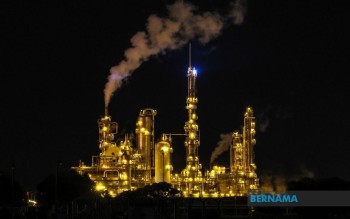
Malaysia should pursue a carefully calibrated strategy when establishing a national petroleum reserve, rejecting the temptation to replicate the expansive reserve systems maintained by wealthy nations like the United States and Japan. This measured approach is necessary to avoid overextending public finances while still addressing legitimate energy security concerns, according to Mohd Sedek Jantan, director of investment strategy and country economist at IPPFA Sdn Bhd. Prime Minister Datuk Seri Anwar Ibrahim announced yesterday that the government intends to study options for creating such a reserve to bolster Malaysia's resilience against energy supply shocks in an increasingly volatile geopolitical environment.
The central challenge facing policymakers is not the creation of the largest possible reserve, but rather determining an appropriate stockpile size that aligns with Malaysia's unique fiscal constraints and specific energy vulnerabilities. Jantan emphasised that any commitment of public resources towards petroleum reserves must withstand rigorous economic scrutiny, competing as it does with other pressing national needs including healthcare provision, educational investment and food security initiatives. These competing demands on limited government budgets mean that petroleum reserve policy cannot be evaluated in isolation but must be weighed against the broader portfolio of public spending priorities.
Malaysia's energy risk profile differs substantially from developed economies with deeper fiscal pockets and longer histories of resource vulnerability. Countries such as the United States and Japan established their strategic petroleum reserves during earlier eras when energy supply shocks posed existential threats to their economies, and they have maintained these systems through decades of sustained investment. Adopting similar models wholesale would ignore Malaysia's distinct circumstances, including its current energy mix, reliance on specific supply corridors and the fiscal space available for non-productive assets. The economist cautioned against mechanical imitation of international precedents without accounting for these contextual differences.
Paradoxically, the costs of inadequate energy security preparation during a major supply disruption could ultimately prove more expensive than the upfront investment required to establish an appropriately scaled reserve system. A significant disruption lasting weeks or months could impose substantial economic losses across manufacturing, transportation and utilities sectors, potentially triggering cascading effects throughout the broader economy. This reality argues for some level of reserve capacity, but not necessarily at the scale that major developed nations maintain. The policy challenge lies in identifying the optimal point between these competing imperatives.
Jantan advocated for a phased implementation strategy that begins with comprehensive analysis before committing to large-scale infrastructure spending. The initial phase should involve a detailed risk assessment that examines potential supply disruption scenarios, their probability, expected duration and likely economic impact. This analysis would establish a defensible baseline for determining the minimum reserve level that genuinely protects national interests without excessive redundancy. Only after this groundwork is complete should Malaysia progress toward developing physical storage infrastructure and operational frameworks.
The financing model for any petroleum reserve warrants equally careful consideration. Rather than relying exclusively on government budgets, policymakers should explore partnership arrangements with private sector entities that might share both financial burden and operational responsibility. Such arrangements could enhance commercial viability while distributing fiscal risk across multiple stakeholders. Commercial operators might be incentivized to maintain optimal reserve levels based on their own profit calculations, reducing the need for continuous government oversight and subsidy.
Scalability and commercial sustainability must be designed into any reserve system from inception. A poorly designed reserve that becomes stranded capacity or requires continuous budgetary support would exemplify wasteful public spending. Conversely, a system configured to accommodate future expansion as the economy grows and energy demands increase could deliver greater long-term value. The operating framework should permit adjustments based on changing energy markets, technological developments and shifting geopolitical circumstances.
The economist's emphasis on establishing a clear economic case before physical implementation represents sound governance practice. Too often, infrastructure projects proceed on the basis of political momentum rather than rigorous cost-benefit analysis, resulting in white elephant facilities that consume resources indefinitely. A methodical approach beginning with comprehensive study, proceeding through pilot programmes and expanding only after demonstrated success would provide better stewardship of public funds.
This prescription aligns with broader international best practice in energy policy, where even resource-rich nations increasingly employ storage strategies calibrated to realistic risk profiles rather than worst-case scenarios. The objective, as Jantan stated, is not to construct the geographically largest reserve but to design the most intelligent and economically efficient system suited to Malaysia's particular circumstances. By adopting this evidence-based, staged approach, Malaysia can enhance its energy resilience while demonstrating fiscal discipline that reinforces confidence in government budgeting more broadly.

