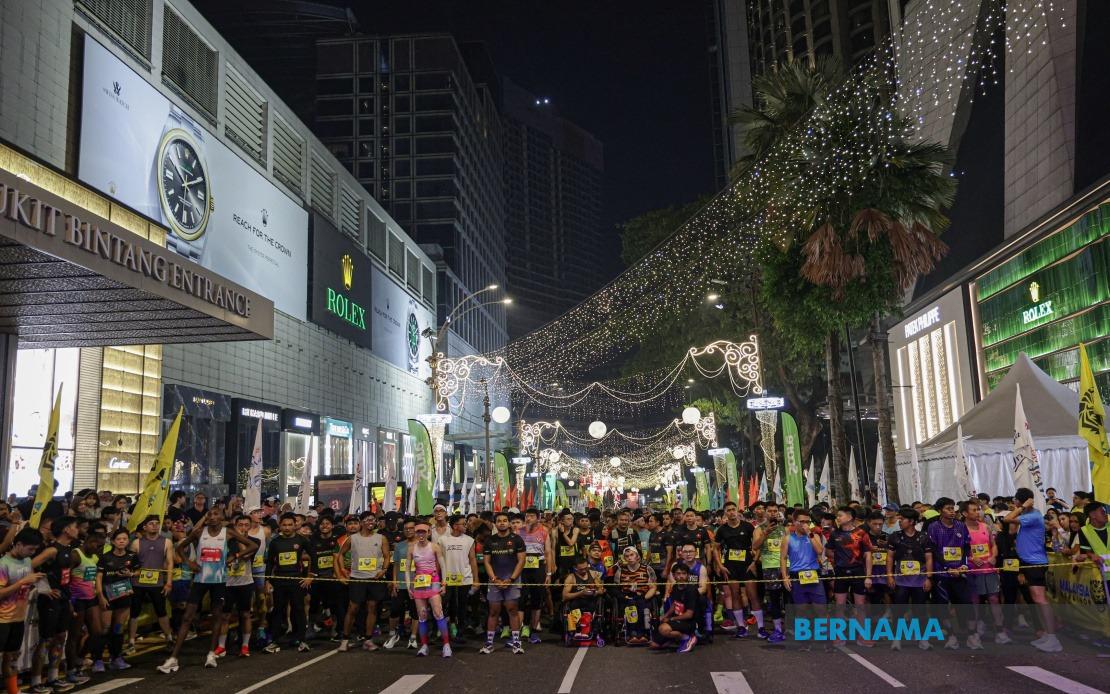
Malaysia Marathon 2026 commenced in the early hours of August 30 with the commencement of its marquee 42-kilometre Full Marathon category, drawing together 2,000 elite and amateur competitors as part of the nation's 69th National Day commemorations. The ceremonial flag-off took place shortly after midnight at Pavilion Kuala Lumpur, officiated by Minister of Tourism, Arts and Culture Datuk Seri Tiong King Sing, setting the tone for what organisers have positioned as an unprecedented celebration of Malaysian athleticism and patriotic fervour.
The race schedule reflected an ambitious multi-tiered approach designed to accommodate runners of varying abilities and fitness levels throughout the extended event window. The Full Marathon participants set off at 12:30 am on August 30, immediately followed by the 21-kilometre Half Marathon starting at 2:00 am, which attracted 8,000 competitors. The 10-kilometre category maintained momentum by beginning at 3:30 am with a field of 5,000 runners, while the 5-kilometre Fun Run component, pitched at recreational participants and families, commenced later at 7:30 am with 10,000 entries. This staggered commencement strategy allowed organisers to manage crowd flows and infrastructure demands whilst maintaining the symbolic overnight-to-dawn narrative tied to National Day.
A distinctive feature of this inaugural event centred on the choice of the Kuala Lumpur City Centre precinct as the unified finishing location for all race categories, departing from tradition by relocating away from the conventional Dataran Merdeka venue. This decision carries practical and symbolic implications: the KLCC locale reflects the modern, cosmopolitan identity organisers wish to project whilst potentially accommodating the anticipated participant volume more effectively. The shift also leverages one of Malaysia's most recognisable architectural landmarks to strengthen brand visibility both domestically and internationally, a consideration increasingly important for major sporting events seeking global sponsorship and media attention.
One particularly noteworthy element involved the participation of an HONOR-manufactured humanoid robot competing in the 10-kilometre category alongside international runners hailing from nations including Japan and Nigeria. This novelty addition underscores the race organisers' ambition to position Malaysia Marathon 2026 as a technologically progressive event, blending competitive athletics with innovation showcases. The robot's participation generates additional media interest and differentiates this event from conventional marathon competitions across Southeast Asia, though its symbolic value—representing Malaysia's technological aspirations—arguably carries greater significance than its actual racing performance.
The route itself presented considerable physical challenges, particularly for Full Marathon competitors. Participants faced a demanding 900-metre elevation gain whilst traversing the Ampang-Kuala Lumpur Elevated Highway, a section designed to test cardiovascular endurance and mental fortitude in equal measure. This topographical feature distinguishes Malaysia Marathon 2026 from flatter regional alternatives and may appeal particularly to serious competitive runners seeking legitimately difficult racing conditions. The selection of such a challenging route element, combined with the event's World Athletics recognition, signals aspirations for the marathon to establish itself as a serious international fixture rather than remaining a domestic-focused celebration.
The cumulative field of 25,000 participants across all four categories represents a substantial undertaking from an organisational standpoint. Drawing competitors from both Malaysia and abroad, the event reflects growing regional interest in endurance sports and mass participation running events. The breadth of distance options—from the recreational 5-kilometre through to the demanding 42-kilometre full distance—democratises access to organised competitive running, potentially converting casual participants into long-term running enthusiasts whilst maintaining space for established ultramarathoners and elite international athletes seeking challenging new venues.
Kuala Lumpur Police implemented comprehensive traffic management measures to accommodate the early-morning race operations, instituting phased road closures and diversions beginning on the evening of August 29 and continuing through the afternoon of August 30. Major thoroughfares affected included Jalan Bukit Bintang, Jalan Ampang, Jalan Sultan Ismail, and Jalan Raja Chulan, alongside the AKLEH and SUKE highways. Such extensive infrastructure coordination demonstrates the operational complexity inherent in organising large-scale urban sporting events, requiring close coordination between multiple government agencies, traffic authorities, and event management teams. For commuters, these temporary disruptions reflected the trade-off between accommodating major national celebrations and maintaining routine urban mobility.
The marathon's receipt of World Athletics recognition carries particular significance for Malaysian sports development. This accreditation validates the event's technical standards and management competencies whilst positioning Malaysia within global athletics governance structures. For Southeast Asian distance runners, the availability of a World Athletics-sanctioned marathon relatively proximate to their home regions reduces travel requirements and costs associated with international competition participation, potentially accelerating the development pathway for emerging regional talent. The recognition also enhances Malaysia's profile within international sports tourism markets, with significant numbers of overseas runners and accompanying support personnel generating economic activity through accommodation, dining, retail, and transportation expenditures.
From a National Day commemoration perspective, the marathon's timing and scale reflected deliberate efforts to deepen celebration programming beyond traditional ceremonial activities. By anchoring major sporting participation to patriotic observance, organisers cultivated an experiential dimension to national identity celebration, particularly appealing to younger demographics and international participants. The midnight commencement timing symbolically bridged August 29 and August 30, intensifying the temporal connection to National Day whilst creating distinctive visual and experiential elements suitable for social media dissemination and international broadcast coverage. This approach modernises how Malaysia engages with its national commemoration calendar, moving beyond formal ceremonies toward active participatory experiences that generate sustained community engagement and international attention.

