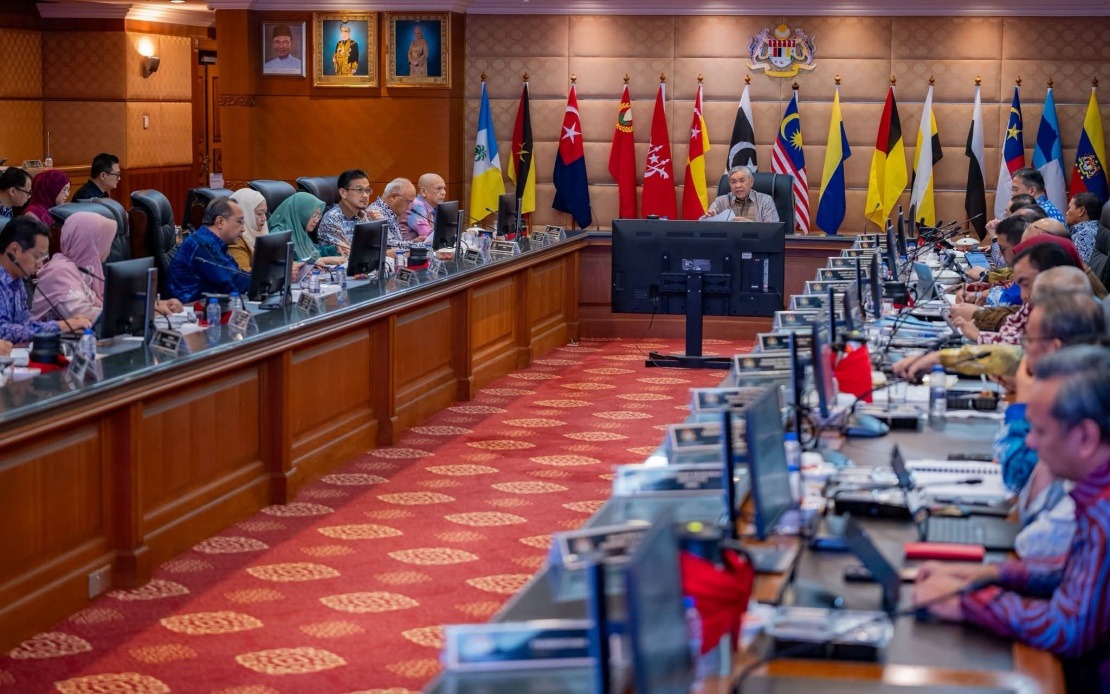
The National Cost of Living Action Council (NACCOL) has advanced its efforts to manage inflationary pressures across multiple sectors, with Deputy Prime Minister Datuk Seri Dr Ahmad Zahid Hamidi steering detailed deliberations at the 18th Executive Committee meeting held in Putrajaya. The session centred on formulating a sustainable path for domestic white rice production whilst safeguarding household purchasing power, reflecting the government's broader commitment to addressing the cost-of-living crisis through comprehensive rather than fragmented interventions.
The council's approach signals a recognition that controlling prices at the supermarket checkout represents only one dimension of a far more intricate challenge. Ahmad Zahid articulated this expanded perspective, emphasising that meaningful relief requires simultaneous attention to farm-gate economics, logistical efficiency, nutritional adequacy, medical affordability, and schooling expenses. This multisectoral lens acknowledges that families squeezed by elevated food bills simultaneously confront pressures in healthcare premiums and education fees, making isolated price controls insufficient to meaningfully improve household welfare.
Central to the rice discussion is a "soft-landing" mechanism employing targeted subsidies to shelter economically vulnerable populations during the transition toward a more sustainable domestic production model. Rather than abruptly exposing poor households to market-rate rice prices, the council proposes a phased adjustment that permits farmers and millers time to enhance efficiency while ensuring that basic food security does not deteriorate. This approach reflects lessons learned from subsidy rationalisation elsewhere in Southeast Asia, where precipitous withdrawal of price support has occasionally provoked social friction.
The deliberations extend beyond grains to encompass a significant expansion of the Sumbangan Asas Rahmah (SARA) assistance programme, which would broaden its remit to encompass fresh produce including fruits, vegetables, and protein sources currently excluded from its scope. This enhancement addresses a frequently overlooked aspect of cost-of-living debates: that households struggling with expenditure often curtail purchases of nutrient-dense foods in favour of cheaper, energy-dense alternatives, gradually degrading dietary quality and long-term health outcomes. By subsidising fresh foods, the programme aims to decouple affordability from nutritional compromise, particularly benefiting children and elderly dependents within straitened families.
The council's framing of external pressures demonstrates awareness of Malaysia's vulnerability to global supply-chain disruptions and geopolitical volatility. Uncertainty in West Asian markets, international regulatory compliance expenses for agricultural imports, and the ripple effects of subsidy adjustments on production costs collectively create upward pressure on domestic food prices that domestic policy alone cannot fully neutralise. Continuous monitoring and responsive coordination among agencies becomes essential to insulating consumers from these external shocks, particularly given Malaysia's reliance on imported food commodities.
Agricultural producers themselves receive recognition through proposed enhancements to existing support mechanisms targeting farmers and fishermen. The council understands that producers operating under compressed margins may exit the sector entirely if assistance proves insufficient, ultimately worsening supply constraints and price pressures. Strategic support for these stakeholders thus represents not merely rural welfare but a structural investment in food security and price stability that benefits consumers nationwide.
Healthcare affordability receives parallel attention through the 11 RESET strategy initiatives designed to moderate private medical expenses whilst simultaneously expanding public-sector capacity and treatment options. As healthcare costs escalate globally, Malaysian families increasingly face impossible choices between medical treatment and other essential expenditures, often postponing care with serious health consequences. The RESET framework attempts to create competitive pressure within the private sector whilst improving public alternatives, allowing consumers genuine choice rather than forced reliance on unaffordable private providers.
Education policy similarly reflects the council's holistic vision, with data showing that tertiary-education assistance schemes distributed RM589.6 million to 62,937 Form Six and university students in the preceding year. This substantial investment underscores the government's position that educational opportunity should not hinge on family wealth, as talent constrained by financial barriers represents an irretrievable loss to human capital development and economic productivity. The council's commitment to reinforcing these schemes recognises that cost-of-living pressures often force capable young Malaysians to forgo higher education, perpetuating intergenerational inequality.
The council's deliberations situate these initiatives within the broader Cost of Living Action Plan 2030, a coordinated framework spanning food, healthcare, education, and social support. This integrated approach contrasts sharply with piecemeal interventions implemented across different ministry silos without regard for cumulative household impact. By designing policy coherently across sectors, the council aims to produce synergistic relief that multiplies the benefit of individual measures.
For Malaysian households, particularly those in the lower-income brackets, these developments suggest that government policy is attempting to move beyond simple price controls toward more sophisticated mechanisms addressing the underlying causes of affordability pressures. The emphasis on production efficiency, supply-chain resilience, and nutritional quality improvement rather than subsidy dependency alone indicates recognition that sustainable relief requires structural adjustments rather than temporary palliatives. The implementation fidelity of these proposals, however, will ultimately determine their efficacy in delivering tangible improvement to family budgets across Malaysia.

