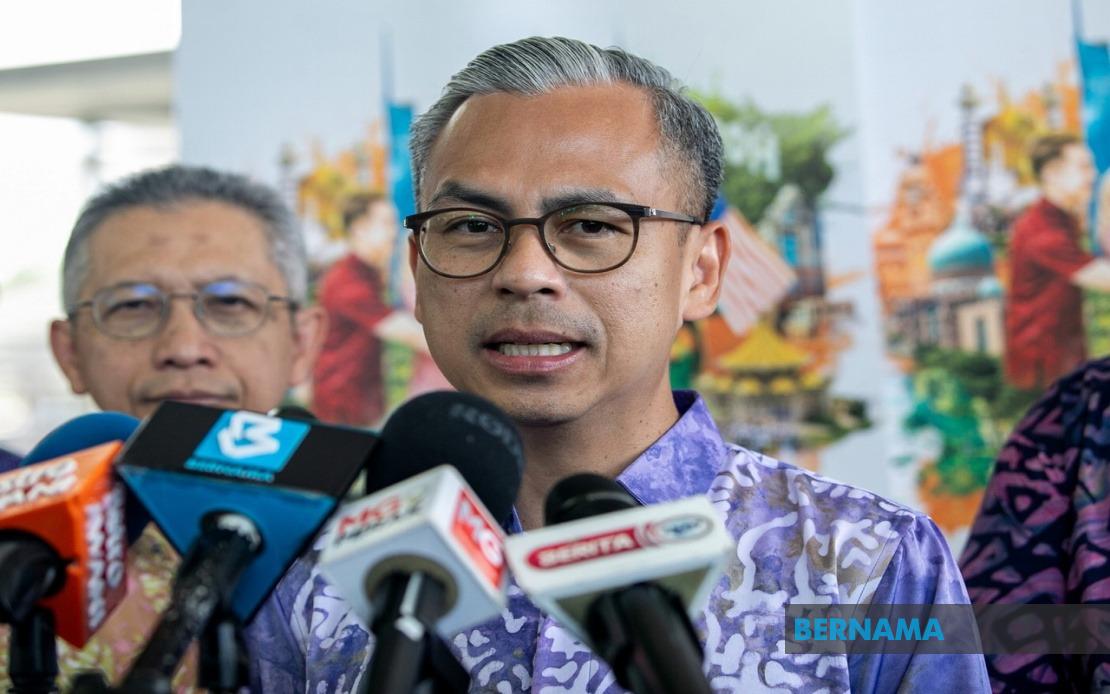
The federal government has unveiled the guiding theme for next year's National Day and Malaysia Day festivities, positioning shared prosperity and inclusive growth as central pillars of the administration's development agenda. Communications Minister Datuk Seri Fahmi Fadzil announced that 'Malaysia MADANI: Kesejahteraan Dinikmati' would frame the 2026 celebrations, signalling the MADANI Government's commitment to ensuring economic advancement and social progress are distributed fairly across the nation's diverse population.
Fahmi made the announcement at the launch of the 2026 National Month and Fly the Jalur Gemilang campaign held at the Sultan Azlan Shah Ministry of Health Training Institute in Tanjung Rambutan, Ipoh, with Prime Minister Datuk Seri Anwar Ibrahim officiating the event alongside National Unity Minister Datuk Aaron Ago Dagang and Perak Menteri Besar Datuk Seri Saarani Mohamad. The choice of theme reflects a deliberate policy pivot towards framing national development not merely through economic metrics but through tangible improvements in living standards, access to opportunity, and equitable benefit-sharing.
The minister emphasised that shared prosperity under the MADANI framework transcends narrow definitions of economic expansion. Rather, the government seeks to address quality of life improvements, ensure equal access to opportunities regardless of socioeconomic status, and distribute development gains in a manner that prevents any segment of the population from being marginalised. This inclusive approach addresses long-standing concerns about unequal regional development, disparities between urban and rural communities, and the need for social mobility across demographic lines.
Central to this vision is the principle of leaving no one behind regardless of ethnicity, faith, geographic location, or personal circumstances. For Malaysia, a nation built on constitutional frameworks recognising diversity, this formulation attempts to reconcile federal ambitions for accelerated growth with constitutional obligations towards equitable treatment. The messaging suggests a recalibration away from growth-at-all-costs models towards development paradigms that attend to distributional outcomes and social cohesion.
Fahmi positioned Malaysia's ethnic and cultural pluralism not as a challenge to development but as a foundational asset. The diversity embedded in Malaysian society, he argued, represents the accumulated legacy of centuries of coexistence and has generated the institutional frameworks for unity, reciprocal respect, and social stability that persist today. This framing transforms diversity from a potential impediment into a competitive advantage, particularly relevant as Southeast Asian nations navigate geopolitical and economic pressures requiring internal cohesion.
The minister articulated a shared national responsibility to protect this inheritance of unity and harmony through active preservation of social bonds, strengthening institutional mechanisms for conflict resolution, and maintaining national sovereignty. This language resonates with concerns about centrifugal pressures—both internal movements challenging federal authority and external influences seeking to exploit domestic divisions. By anchoring the national celebration to themes of collective stewardship and intergenerational responsibility, the government frames patriotism as practical engagement with unity-building.
To operationalise these themes and foster renewed patriotic sentiment, the government has scheduled an array of programmes throughout the national month. The 'One House, One Jalur Gemilang' campaign encourages household-level flag displays, transforming the national symbol into a quotidian presence throughout communities. The Kembara Merdeka Jalur Gemilang convoy programme will traverse the country, bringing national celebration to provincial areas and potentially reinforcing messages of inclusion and shared national purpose in regions where federal presence may feel distant.
These grassroots activation strategies suggest recognition that top-down proclamations of unity require complementary community-level engagement. By distributing celebratory activities across diverse geographic and social spaces, the government attempts to create multiple touchpoints for Malaysian participation in national renewal. For a federation managing centripetal pressures and regional inequalities, such dispersed programming may help counteract perceptions of centralised benefit-distribution or metropolitan-centric policymaking.
Information dissemination for the 2026 celebrations will operate through dual channels: the Merdeka 360 digital portal and conventional social media platforms operated by the Information Department. This hybrid approach acknowledges both the digital natives increasingly dominant in Malaysian demographics and communities with variable internet connectivity. The technology infrastructure for national celebrations reflects broader digitalisation efforts while maintaining accessibility for populations not fully integrated into online platforms.
The MADANI framework itself represents the administration's attempt to differentiate its governance philosophy from predecessors, emphasising inclusivity, anti-corruption, and people-centric policymaking. By embedding MADANI into the 2026 National Day theme, the government reinforces these principles during the year's most significant patriotic occasion, when media saturation and public attention peak. This strategic timing maximises visibility for the administration's core messaging and creates a national platform for articulating developmental philosophy.
For Malaysian stakeholders and regional observers, the emphasis on shared prosperity carries implications for upcoming fiscal and monetary policy. The theme signals the government's intention to balance macroeconomic targets with distributional equity, potentially influencing budget allocations, subsidy structures, and development priorities. This rhetorical commitment to inclusive growth may constrain future policy options if economic pressures demand regressive fiscal measures.
Regionally, Malaysia's explicit adoption of inclusive development as a national narrative influences broader Southeast Asian conversations about development models. As the region grapples with inequality, urbanisation pressures, and demographic transitions, Malaysia's positioning of shared prosperity as central to national identity may carry demonstration effects for neighbours similarly navigating plural societies and developmental tensions.
The 2026 National Day celebrations thus represent more than ceremonial observance; they constitute a significant political statement about the government's self-conception and its understanding of the nation's future direction. By anchoring the year's patriotic climax to themes of inclusivity, equitable distribution, and collective stewardship, the MADANI administration signals that national greatness is measured not merely by aggregate economic growth but by the breadth of populations benefiting from development and the depth of social cohesion sustaining national stability.

