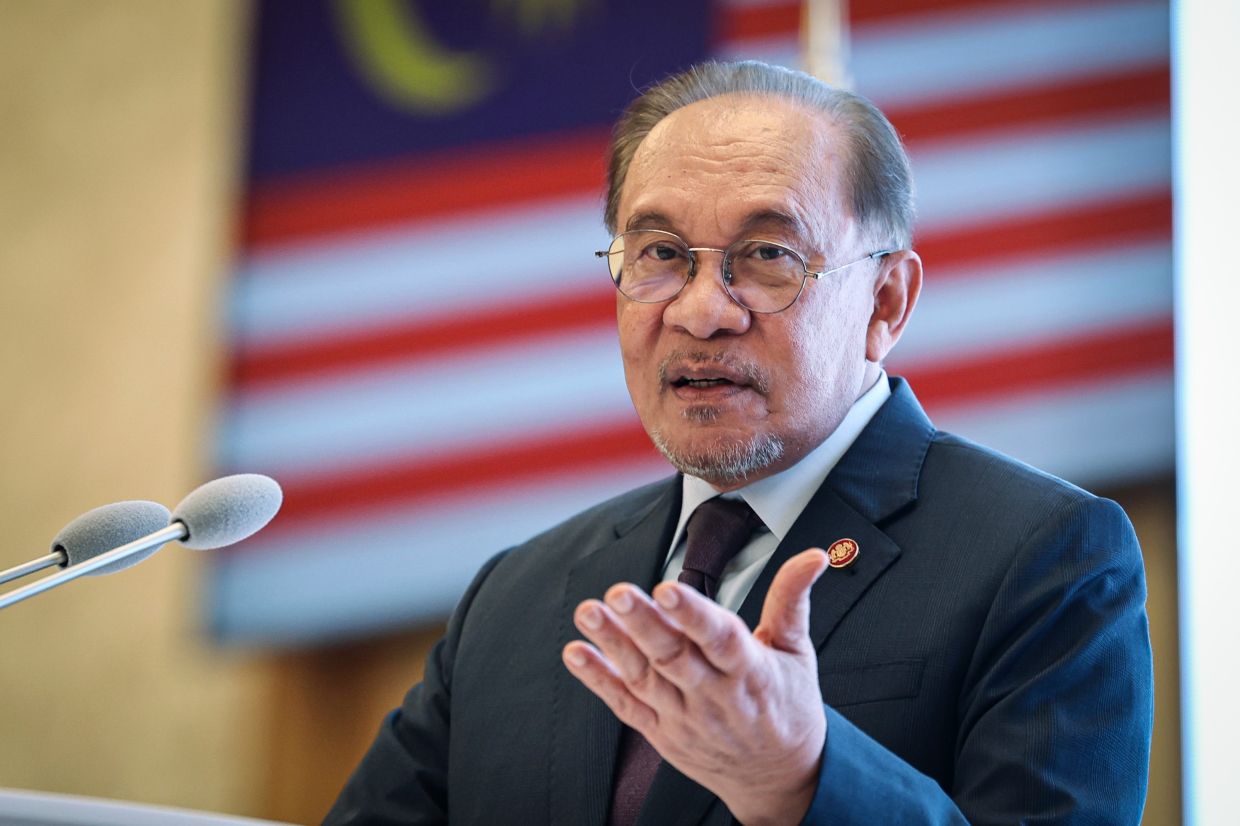
Malaysia's standing as a significant trading nation positioned at the intersection of crucial global supply chains and maritime routes represents a defining element of its economic diplomacy strategy, Prime Minister Datuk Seri Anwar Ibrahim stated at a major regional forum. Speaking in his capacity as both head of government and Finance Minister, Anwar outlined how the country has systematically cultivated and deepened commercial relationships with longstanding trading and investment counterparts over successive administrations, building upon the strategic advantages conferred by geography and historical mercantile networks.
Central to Malaysia's trade engagement framework are multilateral trade mechanisms that the government has championed to lower trade barriers and expand commercial opportunities for businesses across the region. Through participatory roles in the ASEAN Free Trade Area, the Regional Comprehensive Economic Partnership (RCEP) and the Comprehensive and Progressive Agreement for Trans-Pacific Partnership (CPTPP), Malaysia has positioned itself as an advocate for tariff harmonisation, improved market access protocols and mechanisms that distribute investment flows more equitably among member economies. These agreements reflect a deliberate policy orientation toward rules-based commerce that benefits Malaysian exporters and investors while contributing to broader regional integration.
Yet Anwar stressed that Malaysia's economic interests cannot be divorced from its fundamental commitment to ASEAN as an institutional anchor. The bloc's continued centrality to Malaysian foreign policy serves multiple purposes simultaneously—advancing the nation's own commercial interests while simultaneously underpinning a regional architecture predicated on peace, prosperity and stability. This framing acknowledges the occasional tensions and disagreements within the association while asserting that the strategic benefits of ASEAN membership outweigh any organisational shortcomings, particularly as the region faces pressures from major power competition.
Recognising that traditional markets alone cannot sustain Malaysia's long-term prosperity, the government has initiated a deliberate strategy to cultivate trading relationships in geographies historically less integrated into Malaysian commerce. West Asia, Central Asia, Latin America and the African continent now feature prominently in Malaysia's outreach calculus, representing markets with less developed infrastructure and fewer established competitors than Southeast Asia's more saturated trading environment. This geographic diversification strategy reflects both pragmatic economic reasoning and a sophisticated understanding of how trade relationships intersect with geopolitical positioning in an increasingly multipolar world order.
The Prime Minister articulated a conceptual framework linking economic diplomacy directly to geopolitical considerations, suggesting that commercial partnerships serve as both economic instruments and tools for advancing Malaysia's broader strategic interests. This synthesis appears particularly evident in priority sectors selected for expansion in emerging markets. The halal industry, where Malaysia possesses established certifications and brand recognition; the digital economy, reflecting the government's technology ambitions; agricultural modernisation; and green technology solutions represent sectors where Malaysia holds either competitive advantages or strategic alignment with development priorities in target markets.
Energy cooperation exemplifies this integrated approach most concretely. During a recent official visit to Turkmenistan, national oil company Petronas concluded agreements with Turkmenistan's state hydrocarbon entities to undertake exploration and development activities across two substantial gas fields. Complementing these commercial arrangements, the Malaysian and Turkmenistan governments signed a long-term hydrocarbon development framework encompassing not only resource extraction but also human capital and technical knowledge exchange. Such multifaceted partnership architecture moves beyond transactional resource procurement to establish institutional frameworks supporting sustained cooperation.
This diversification imperative stems from an analytical assessment of contemporary global conditions characterised by mounting uncertainty and structural volatility. Rather than treating geographic and sectoral diversification as merely prudent business practice, Anwar characterised it as a national necessity facing Malaysia. The underlying premise holds that concentration of economic relationships, whether geographically or sectorally distributed, exposes national prosperity to excessive vulnerability should disruptions occur in any single market or supply chain. Maintaining broad-based economic engagement across multiple regions and industries functions as a shock-absorption mechanism in an environment where disruptions—whether pandemic-related, conflict-induced or climate-driven—increasingly threaten supply chain integrity.
The strategic imperative manifests across multiple policy dimensions simultaneously. Strengthening existing partnerships with traditional trading partners remains essential for maintaining proven commercial relationships and institutional relationships that generate predictable revenue flows and investment returns. Simultaneously, building entirely new economic partnerships in previously underdeveloped markets addresses the medium to long-term requirement for market diversity and alternative revenue sources should traditional arrangements face unexpected pressures. This dual-track approach reflects mature economic statecraft that neither abandons proven relationships nor places excessive reliance upon them.
Forward-looking economic engagement requires that Malaysia position itself as genuinely collaborative partner rather than merely extractive participant in commercial relationships. Emphasising authentic cooperation in mutually beneficial sectors rather than pursuing exploitative or asymmetrical arrangements generates partnership durability and reduces political friction that might otherwise undermine commercial stability. This orientation acknowledges that sustainable economic relationships increasingly require broader legitimacy and social acceptance within partner nations, particularly as publics become more scrutinous regarding economic arrangements' distributional consequences.
Anwar delivered these remarks as keynote speaker at the 39th Asia-Pacific Roundtable convened by the Institute of Strategic and International Studies (ISIS) Malaysia across a three-day programme spanning June 30 through July 2. The forum provided an appropriate venue for articulating Malaysia's comprehensive economic statecraft vision to an audience of regional policymakers, academics and business leaders whose perspectives substantially influence regional economic cooperation frameworks and national policy formulation processes across Southeast Asia and the broader Indo-Pacific region.

