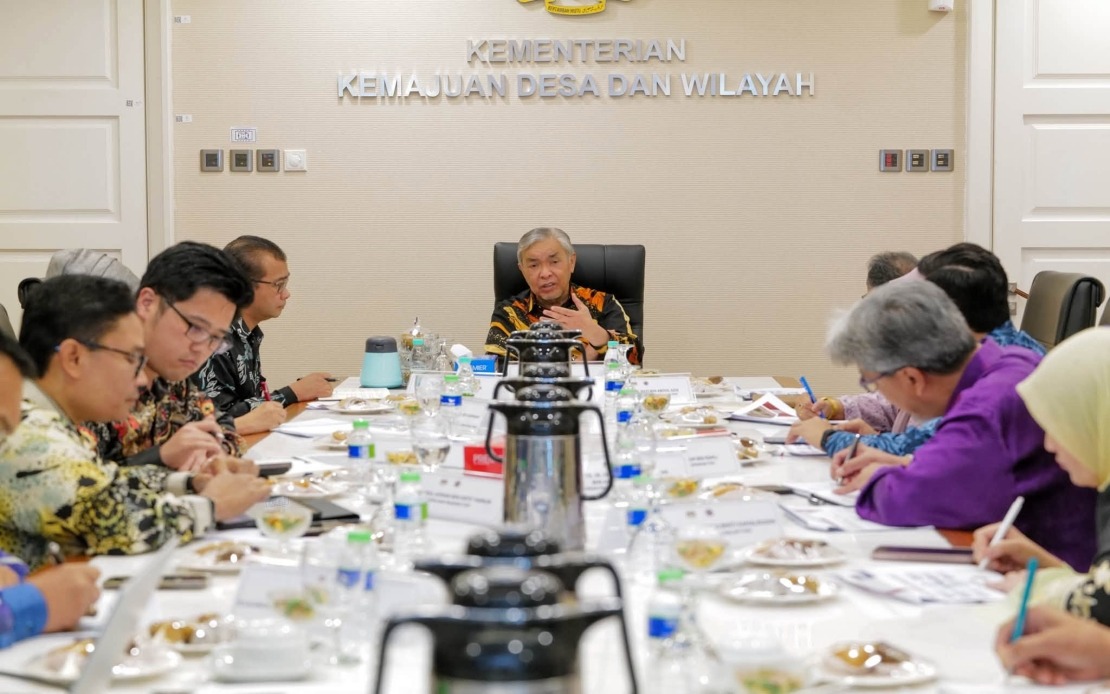
Malaysia is taking a more structured approach to developing its technical and vocational workforce by establishing the Strategic TVET 2.0 Task Force 2026-2035 and 10 supporting committees, according to Deputy Prime Minister Datuk Seri Dr Ahmad Zahid Hamidi. Speaking in his capacity as Chairman of the National TVET Council, Ahmad Zahid outlined how these new governance structures represent a pivotal shift in how the nation coordinates vocational education policy and implementation across government agencies, industry partners, and educational institutions.
The initiative reflects growing recognition among Malaysian policymakers that vocational training cannot be treated as a secondary pathway to conventional university education. Instead, the government is positioning TVET as a cornerstone of economic development strategy, directly tied to producing skilled workers capable of addressing both current workforce gaps and emerging industry demands. This repositioning matters significantly for Malaysia as regional competitors in Vietnam, Thailand, and Indonesia continue investing heavily in their own technical education ecosystems.
Leading the overarching task force is Emeritus Professor Datuk Dr Siti Hamisah Tapsir, president and vice-chancellor of UCSI University, a choice that signals the government's intent to link academic rigour with practical vocational outcomes. Her appointment underscores an important trend: TVET transformation increasingly requires bridging traditional divides between theoretical knowledge and workplace application, something Malaysian higher education has historically struggled to achieve seamlessly.
The 10 supporting committees address specific challenges within the TVET landscape. The TVET Governance and Institutional Reform Committee, chaired by Datuk Dr Asyraf Wajdi Dusuki, will tackle structural inefficiencies and coordination problems that have long plagued Malaysia's fragmented vocational education system. The TVET Industry and Employers Committee under Datuk Khairul Azwan Harun represents an explicit acknowledgment that curriculum design and training content must be directly informed by employers' actual needs rather than predetermined assumptions about future skills requirements.
Financial sustainability emerges as a critical concern through the dedicated TVET Financing and Sustainability Committee, chaired by Ramelle Ashram Ramli. This signals that the government recognizes vocational education requires consistent, adequate funding mechanisms beyond annual budget allocations. For Malaysian context, this is particularly important given competition for education funds with higher education and primary school systems. The committee's mandate likely extends to exploring partnerships with private sector employers, international development organisations, and alternative funding models that could supplement government expenditure.
The inclusion of a Women Empowerment in TVET Committee, chaired by Datuk Dr Masilla Kamalrudin, addresses a significant demographic gap in Malaysia's technical workforce. Women remain significantly underrepresented in many TVET fields, particularly in skilled trades, manufacturing, and engineering roles. This committee's establishment suggests the government recognizes that achieving optimal labour force participation rates requires deliberate strategies to attract female students, address workplace cultural barriers, and create career pathways that accommodate diverse life circumstances.
Ahmad Zahid, who also holds the Rural and Regional Development portfolio, contextualised these institutional changes within the broader MADANI government agenda. The framing matters: by linking TVET reform to human capital development and economic competitiveness, the Deputy Prime Minister positioned vocational education as central to Malaysia's national development strategy rather than marginal to it. This rhetorical shift, if matched by resource allocation and political attention, could substantially reshape how policymakers at federal and state levels prioritize technical education.
The 2026-2035 timeline indicates this initiative is intended for long-term implementation rather than quick fixes. A decade-long strategic horizon allows for curriculum reform, infrastructure development, educator training, and cultural shifts within educational institutions and among employers. However, it also means outcomes will only become apparent well into the next decade, requiring political continuity and sustained commitment across multiple election cycles—a challenge for any Malaysian government initiative.
For Malaysian employers, particularly in manufacturing, construction, hospitality, and technology sectors, this restructuring potentially signals improved alignment between vocational training and actual job requirements. If the committees function effectively, companies could see more graduates whose skills directly match workplace needs, reducing costly retraining periods. Conversely, if coordination remains weak, the proliferation of committees risks becoming another bureaucratic layer without substantive improvement in educational quality or employment outcomes.
Regionally, Malaysia's TVET 2.0 initiative positions the country as taking technical education seriously at the policy level, though implementation quality will ultimately determine competitive standing. Vietnam and Thailand have demonstrated that committed TVET investment can create significant labour cost advantages and attract manufacturing investment. Malaysia's challenge lies in executing coordinated reform across multiple stakeholders while maintaining quality standards and ensuring equitable access across different socioeconomic groups and geographic regions.
The success of this task force approach will ultimately depend on institutional capacity, political will, and genuine stakeholder engagement. Creating committees is straightforward; ensuring they produce coherent, implementable policy and coordinate effectively across traditional institutional silos remains considerably more difficult. Malaysian education reform history suggests that structural reorganisation alone, without accompanying resource increases and cultural change within educational institutions, may deliver disappointing results.

