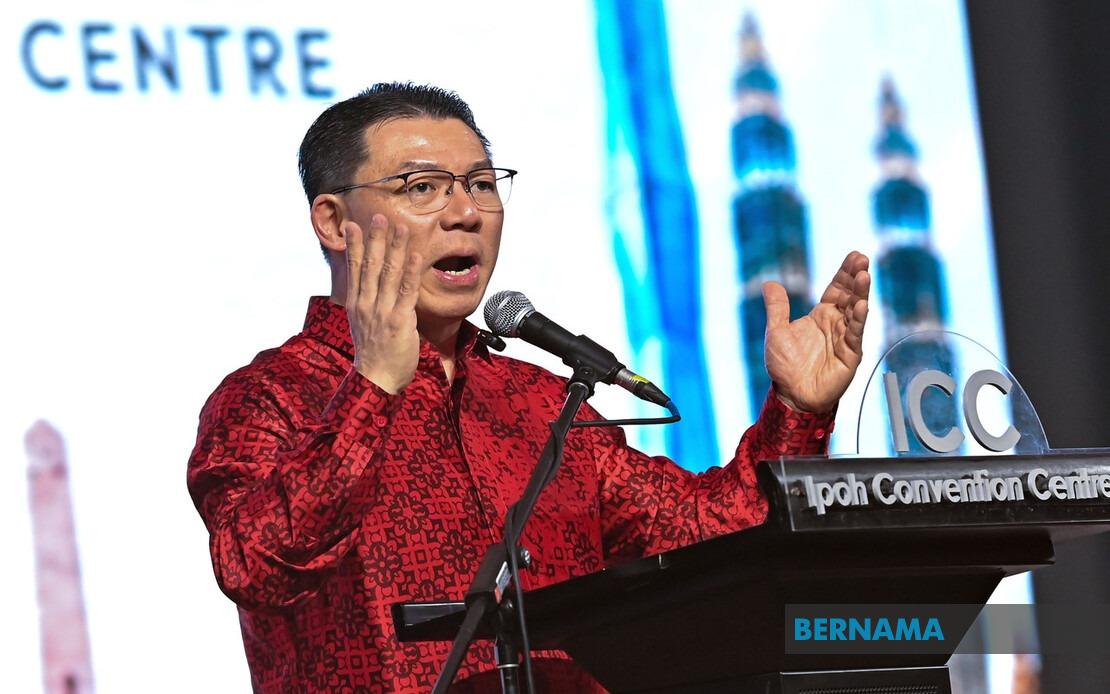
The Ministry of Housing and Local Government has embarked on an ambitious programme to reshape public spaces across Malaysia through the MY Public Space initiative, marking a significant departure toward quality-driven urban design. Announced during the 2026 National Landscape Day Celebration in Melaka, the initiative represents a strategic partnership with UN-Habitat aimed at ensuring that public spaces developed nationwide adhere to rigorous standards of quality, inclusivity, safety, and resilience. Housing Minister Nga Kor Ming outlined the programme at the opening ceremony at Hang Jebat Stadium, attended by Prime Minister Datuk Seri Anwar Ibrahim and Melaka Chief Minister Datuk Seri Ab Rauf Yusoh, signalling strong political commitment from the highest levels of government.
The initiative operates on four interconnected pillars designed to create a cohesive framework for public space development across the country. First, the government will establish a national recognition framework aligned with the Rosa Sinensis Award, providing a standardised benchmark for excellence in landscape design. Second, the MY Public Space Toolkit will transition from pilot stage to broader implementation, offering practical tools and guidelines for municipalities and developers. Third, the ministry intends to strengthen existing public space management practices through capacity building and technical support. Finally, these toolkit standards will be mainstreamed into national landscape development guidelines, effectively making them the baseline expectation for all future projects rather than aspirational targets.
The partnership with UN-Habitat carries particular significance for Malaysia's international standing. By collaborating with this United Nations body, the country positions itself as a serious player in global conversations around sustainable urbanism and liveable cities. Nga emphasised that this collaboration will elevate Malaysia's public space standards onto the world stage while burnishing the nation's credentials as a leader in sustainable, inclusive, and liveable urban development. Given Malaysia's current presidency of the UN-Habitat Assembly, the initiative simultaneously demonstrates tangible commitment to accelerating the achievement of the Sustainable Development Goals through international cooperation—a commitment that carries weight both domestically and within the wider UN system.
Parallel to the MY Public Space framework, the government has set its sights on a more expansive goal: the development of 1,000 MADANI Parks nationwide by 2035. This ambitious target reflects a policy recognition that quality green spaces are essential infrastructure, not luxury amenities, and that equitable distribution of recreational areas across urban and suburban communities remains a critical governance challenge. The progress thus far has exceeded initial expectations. Between 2024 and 2025, a total of 217 MADANI Recreational Parks were successfully developed nationwide, surpassing the original target of 100 parks per year. Of these, 10 parks were completed in Melaka alone, demonstrating that the programme is reaching regional areas beyond the major metropolitan centres.
The acceleration in park development reflects shifting priorities within Malaysian urban governance. Rather than viewing parks as peripheral to economic development, the government has elevated green space provision to a central pillar of its MADANI framework—the governing philosophy emphasising prosperity, democracy, accountability, and integrity. Looking ahead to 2026, Nga expressed confidence that the nation would once again exceed the 100-park annual target, with three new MADANI Recreational Parks slated for development in Ayer Keroh and Masjid Tanah. This consistency suggests that the programme has moved beyond initial implementation challenges and is establishing sustainable momentum, though questions remain about maintenance standards and long-term operational funding for these facilities.
Beyond urban amenities, the government perceives the landscape sector as a significant economic driver. Officials have targeted the national landscape industry to contribute up to RM40 billion to Gross Domestic Product by 2035, a figure that reflects confidence in both domestic consumption and export potential. Malaysia's landscape product export value reached RM534.3 million in 2025, with shipments directed toward developed markets including Singapore, Japan, Australia, and the United States. These export figures indicate that Malaysian landscape expertise and products command international recognition and can compete in premium markets, suggesting comparative advantage in design innovation, horticultural knowledge, or cost competitiveness.
To realise this economic potential, the National Landscape Department is preparing the Malaysian Landscape Industry Blueprint, a comprehensive long-term strategic guide addressing multiple dimensions of sector development. The blueprint encompasses workforce capacity building—ensuring sufficient trained professionals to meet growing demand—and industry standard coordination to prevent fragmentation and ensure quality consistency. It also prioritises green technology innovation, recognising that sustainable practices increasingly differentiate Malaysian offerings in global markets. The document addresses value chain strengthening, acknowledging that competitive advantage requires integration from production through design consultation to installation and maintenance. Finally, it aims to enhance the competitiveness of local industry players at both domestic and international levels, essentially creating an ecosystem in which Malaysian firms can scale without being displaced by larger foreign competitors.
For Malaysian readers and regional stakeholders, these developments carry multiple implications. At the domestic level, citizens should expect visible improvements in public space quality, particularly in medium-sized cities and suburban areas where standards have historically lagged behind Kuala Lumpur and other major centres. The emphasis on inclusivity and safety suggests that vulnerable populations—children, elderly persons, and people with disabilities—should see their needs increasingly reflected in park design and management. The economic dimension matters equally: the landscape sector offers career pathways in horticulture, design, project management, and maintenance, potentially diversifying employment opportunities beyond traditional urban sectors.
Regionally, Malaysia's positioning as a leader in sustainable public space development could influence neighbouring countries' urban policies. Singapore's well-established park system provides a regional benchmark, but Malaysia's approach emphasises broader geographic reach and democratic access—every community gaining quality green spaces, not merely affluent districts. This model could resonate across Southeast Asia, where rapid urbanisation frequently outpaces provision of public amenities. Thai, Indonesian, and Philippine cities facing similar pressures might reference the MY Public Space framework and MADANI Parks programme as templates worth emulating, effectively enhancing Malaysia's soft power influence.
The initiative also reflects a maturing understanding of urbanisation's social costs. Rapid economic development frequently generates congested, polluted, and socially fragmented cities. By systematically prioritising public space quality, inclusivity, and resilience, the government acknowledges that liveable cities require deliberate investment in commons—spaces where citizens of all backgrounds interact, exercise, and build community. This philosophy marks evolution beyond treating cities merely as economic productivity engines; it recognises that sustainable development encompasses social cohesion and quality of life alongside GDP growth.
Implementation challenges, however, remain substantial. Developing 1,000 parks within a decade requires sustained funding, coordination across multiple jurisdictions with varying capacities, and consistent political commitment across election cycles. The MY Public Space Toolkit's success depends on genuine adoption by municipalities and developers rather than nominal compliance with guidelines. Maintaining quality and safety standards across hundreds of parks in diverse climates and settings requires robust funding models and skilled management teams—resources that have historically proven elusive in Malaysian municipal governance.
Neveretheless, the confluence of international partnership, economic incentives, and political leadership suggests that this programme enjoys genuine momentum. Malaysia's positioning as UN-Habitat Assembly president, combined with explicit government targets and measurable progress benchmarks, creates accountability structures that mere aspirational statements cannot provide. For Southeast Asian urban planners and policymakers observing these developments, the MY Public Space initiative and MADANI Parks programme offer a replicable model for elevating public space standards without requiring massive capital expenditure or radical governance restructuring—qualities that may prove increasingly valuable as urbanisation accelerates across the region.

