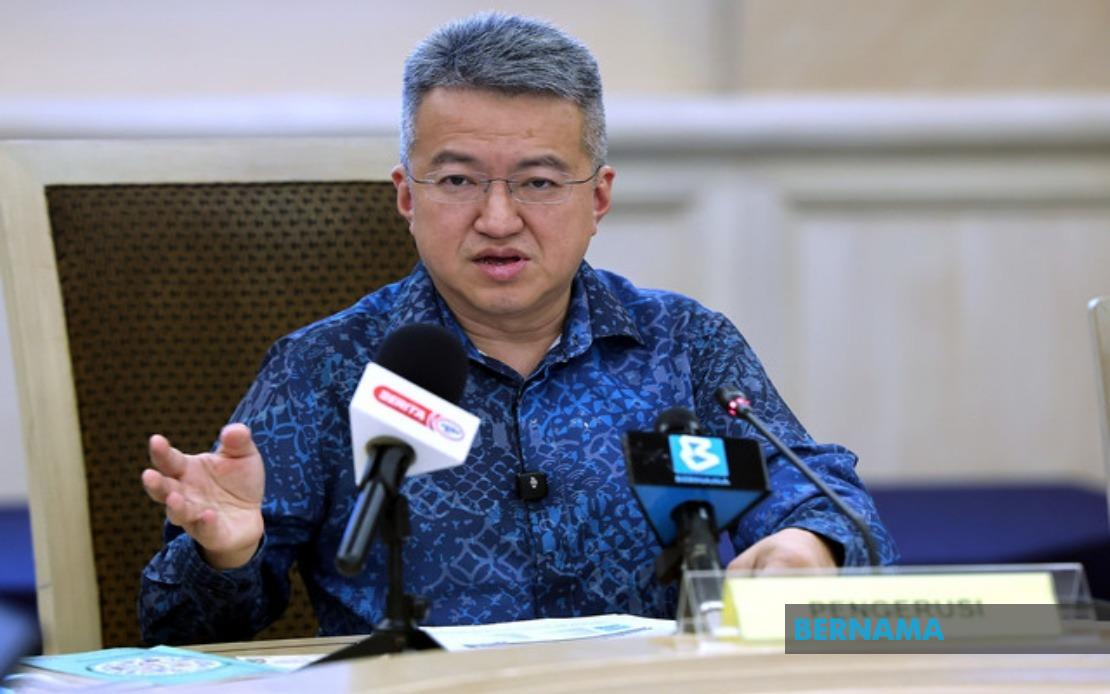
Malaysia's government has announced a comprehensive enforcement initiative to eliminate dangerous electrical products from entering and circulating within the country's market. Deputy Finance Minister Liew Chin Tong disclosed that seven government agencies and industry bodies will collaborate on a Special Compliance Operation designed to intercept substandard electrical appliances at borders and retail locations, whether sold through conventional shops or online marketplaces. This coordinated effort represents a significant escalation in regulatory scrutiny over product safety standards that have long concerned policymakers and consumer advocates.
The operation will be spearheaded jointly by the Ministry of Finance, the Malaysian Communications and Multimedia Commission, the Energy Commission, the Ministry of Domestic Trade and Cost of Living, the Royal Malaysian Customs Department, the Malaysia Border Control and Protection Agency, and SIRIM, the national standards and industrial research institute. This multi-stakeholder approach acknowledges that preventing unsafe products from reaching consumers requires coordination across import controls, retail enforcement, digital commerce oversight, and technical certification pathways. The breadth of institutional involvement signals the government's commitment to treating product safety as a priority that transcends individual ministerial portfolios.
Liew identified a persistent vulnerability in Malaysia's product safety architecture: many electrical items entering the country lack SIRIM certification or fail to comply with domestic safety regulations. The absence of proper labeling and documentation means consumers cannot verify whether products meet legally mandated standards. This gap in compliance has emerged as a critical public health concern, particularly given statistical evidence linking a substantial proportion of residential fires to electrical products that do not conform to safety specifications. By focusing enforcement on import points including major ports and airports, authorities aim to prevent non-compliant goods from ever reaching warehouse or retail inventory.
The initiative targets 34 categories of controlled electrical appliances enumerated in the Electricity Regulations 1994. These encompass both everyday household items and less obvious electrical devices: electric kettles, refrigerators, toasters, portable lighting fixtures, washing machines, electric fans, phone chargers, power cables, kitchen appliances, vacuum cleaners, and electric massagers all feature on the regulated list. The comprehensiveness of this categorization reflects an understanding that fire and electrical hazard risks are not confined to large appliances but manifest across the full spectrum of consumer electrical products. Even items considered routine—such as chargers and cables—have emerged as particular sources of concern.
Market surveys conducted jointly by industry participants, the Energy Commission, and SIRIM have documented how non-compliant products saturate both retail channels. Alarmingly, random inspections disclosed that more than half of mobile phone chargers available for purchase in Malaysia lack ST-SIRIM certification. This statistic is especially concerning given how ubiquitous chargers are in households with children and adolescents, populations particularly vulnerable to electrical accidents. The wide availability of uncertified chargers suggests that enforcement against online and physical retailers has historically been inconsistent or insufficiently resourced, allowing sellers to prioritize cost reduction over safety compliance.
The operation will pursue five strategic enforcement vectors. First, strengthened border monitoring at principal entry points aims to prevent non-compliant products from crossing into Malaysian territory. Second, integrated inspections and enforcement actions will target retail premises suspected of stocking substandard items, combining investigative work with immediate compliance actions. Third, systematic product sampling and testing protocols will verify whether items meet Malaysian safety specifications, creating an evidence base for enforcement decisions. Fourth, enhanced scrutiny of import declarations seeks to prevent falsified, inaccurate, or deliberately misleading documentation that obscures the true nature or origin of imported goods. Fifth, enhanced cooperation with e-commerce platforms will establish mechanisms ensuring online sellers understand and adhere to Malaysian regulatory requirements.
The focus on e-commerce enforcement reflects a regulatory challenge that traditional border control cannot adequately address. Online marketplaces have created unprecedented distribution networks for cheap electrical products manufactured to minimal standards, often sourced from countries with weaker safety regulations than Malaysia. These platforms have democratized access to electrical goods but simultaneously democratized access to hazardous ones. By working directly with platform operators to implement compliance verification systems, the government aims to make e-commerce marketplaces partners in enforcement rather than vectors for circumventing it. This approach acknowledges that purely retrospective enforcement through raids and seizures cannot match the volume of products flowing through digital channels.
The risks posed by non-compliant electrical products extend beyond fire hazards, which remain the primary concern. Liew emphasized that inadequately engineered products expose consumers—particularly children and teenagers—to electric shock and burn injuries. These hazards are not merely theoretical: in households with multiple electrical devices, the cumulative risk from non-certified chargers, lighting products, and kitchen appliances creates dangerous environments, especially where product failures may go unnoticed until a crisis occurs. Young users often handle electrical devices with limited awareness of danger, making products targeting youth demographics or widely used by young people particularly problematic when they lack proper safety engineering.
The operation's broader objectives encompass market integrity and fair competition alongside consumer protection. Legitimate electrical appliance importers and retailers who invest in compliance—obtaining proper certifications, maintaining documentation, purchasing only from certified manufacturers—face unfair competition from cost-cutting rivals selling non-certified products at lower prices. By eliminating this illicit cost advantage, enforcement raises the commercial playing field. Businesses operating lawfully gain competitive advantage, and market prices reflect genuine product safety rather than regulatory arbitrage. For Malaysian exporters of electrical products relying on SIRIM certification to access international markets, domestic enforcement of equivalent standards domestically reinforces Malaysia's reputation for quality and safety.
The significance of this operation extends beyond Malaysia's borders. Southeast Asia has experienced proliferation of cheap, non-compliant electrical products circulating across the region's integrated supply chains. Malaysia's enforcement initiative may establish precedents and operational partnerships that encourage neighboring countries to strengthen their own product safety regimes. Given Malaysia's position as a manufacturing and logistics hub within ASEAN, successful implementation of integrated multi-agency enforcement could provide a model for regional cooperation. The involvement of MCMC in overseeing online commerce compliance also positions Malaysia as potentially leading digital commerce regulation in the region, establishing frameworks other countries may later adopt.
Implementing this comprehensive operation faces practical challenges. Customs authorities and border agencies already manage massive import volumes; adding systematic testing and certification verification requires substantial resource allocation. Online marketplaces operate across jurisdictions, complicating enforcement; platforms may prioritize compliance in some markets while maintaining minimal controls elsewhere. Small retailers, particularly in less-developed areas, may lack awareness of regulatory requirements or access to properly certified suppliers. Addressing these implementation realities will require sustained political commitment and adequate budgeting beyond the initial announcement phase. The government has signaled its intention to protect consumers, but translating that commitment into consistent enforcement across ports, retail locations, and digital platforms demands organizational capacity and sustained vigilance that will be tested as the operation unfolds.

