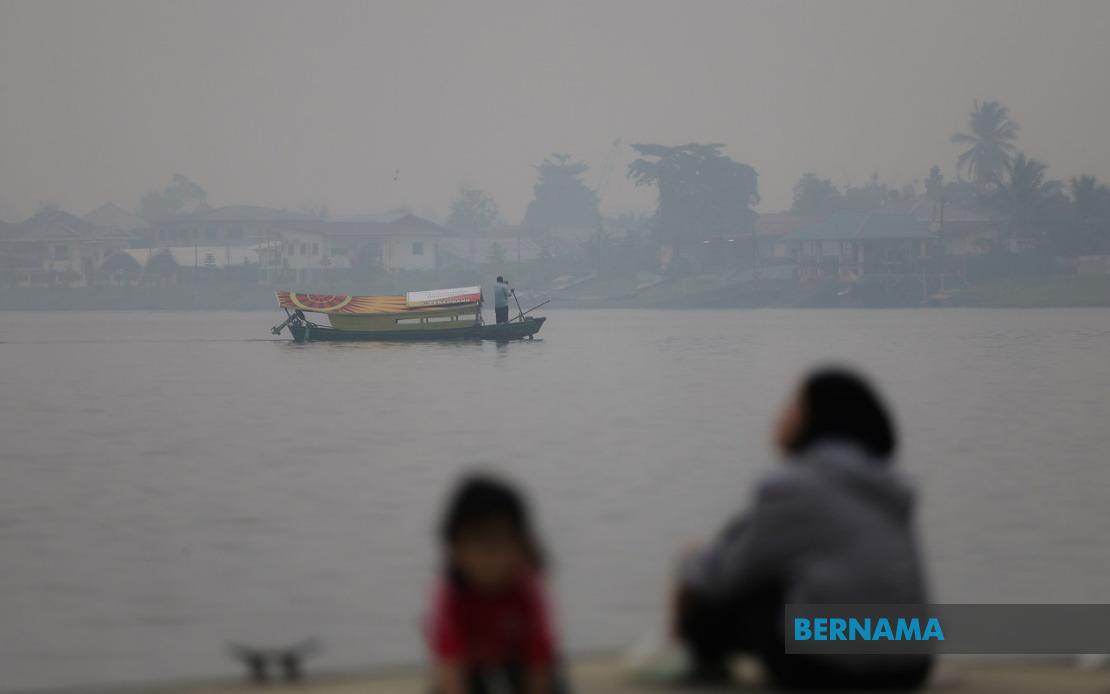
Malaysia has activated cloud seeding operations across haze-affected regions, with Deputy Prime Minister Datuk Seri Dr Ahmad Zahid Hamidi confirming that efforts are concentrated in areas recording Air Pollutant Index readings above 150 and locations where dam water levels are declining significantly. The initiative represents a coordinated response to dual environmental challenges currently confronting the nation: deteriorating air quality and water security concerns amid persistent dry conditions.
The cloud seeding programme is being executed through a collaborative framework involving the Malaysian Meteorological Department and the Royal Malaysian Air Force, combining meteorological expertise with operational capability to maximise intervention effectiveness. This multi-agency approach underscores the complexity of weather modification activities, which require precise coordination between civilian scientific institutions and military logistics infrastructure. The partnership reflects the scale of the challenge facing water resource managers across the country as temperatures remain elevated and precipitation remains irregular.
According to Dr Ahmad Zahid Hamidi, the intervention targets critical infrastructure vulnerability stemming from extended dry periods. Water supply disruptions pose immediate public health and economic consequences, particularly affecting urban populations dependent on centralised distribution networks connected to major reservoirs. The decision to prioritise dam-adjacent areas reflects an understanding that preventing further reservoir depletion offers more cost-effective outcomes than managing subsequent water rationing or emergency supply arrangements. Early intervention through cloud seeding represents a preventive approach rather than a reactive crisis management strategy.
Operations commenced in Putrajaya on the announcement day, with the Deputy Prime Minister indicating that expanded activities would proceed across Sarawak, Kedah and Perlis commencing September 3 through 5. This geographical sequencing suggests a phased deployment strategy responding to real-time air quality monitoring and meteorological assessments. The selection of these specific regions indicates that haze concentration patterns and water resource vulnerability are not uniformly distributed, requiring targeted allocation of operational resources where atmospheric conditions and hydrological stress align most acutely.
Critical atmospheric conditions in East Malaysia underscore the urgency of intervention. Three monitoring stations in Sarawak recorded hazardous readings according to the Department of Environment's Air Pollutant Index Management System, with Serian Police headquarters monitoring station documenting an API reading of 412, representing severe atmospheric degradation requiring immediate public health advisory measures. Samarahan recorded 332 while Kuching reached 304, both classified as hazardous. The Sri Aman station registered 228, falling within the very unhealthy category. These readings indicate substantial particulate matter concentration requiring public respiratory protection and limiting outdoor activities for vulnerable populations.
Cloud seeding effectiveness depends fundamentally on atmospheric conditions that cloud seeding practitioners cannot control entirely. Dr Ahmad Zahid Hamidi's comments acknowledge this constraint, noting that operations proceed not exclusively according to demand but contingent upon prevailing weather patterns. The presence of moisture-laden clouds is prerequisite; however, the directional movement of weather systems must align with targeted geographic areas for seeding compounds to produce meaningful precipitation enhancement. This conditional nature of interventions explains why advance scheduling cannot guarantee outcomes, requiring continuous meteorological monitoring and operational flexibility.
The underlying water security challenge extends beyond immediate haze management into broader resource sustainability patterns across Malaysia. Dam levels declining during dry seasons reflect cumulative pressure from growing water demand, climate variability, and increasingly irregular precipitation patterns affecting Southeast Asia. The need to deploy technological interventions like cloud seeding indicates that conventional water storage and management systems may face increasing stress under evolving climatic conditions. For Malaysian water utilities and agricultural sectors dependent on reservoir irrigation, this dependency on supplementary precipitation enhancement suggests structural vulnerabilities requiring long-term strategic examination.
From a regional perspective, transboundary haze affecting Malaysia frequently originates from biomass burning in neighbouring territories, particularly during dry seasons when agricultural clearing and land preparation activities accelerate. The simultaneous occurrence of air quality deterioration and water scarcity is not coincidental; both conditions emerge during extended dry periods that simultaneously suppress precipitation and incentivise vegetation burning. Cloud seeding initiatives therefore represent one component of a broader environmental management framework that ideally would encompass regional cooperation on emission control, water resource sharing arrangements, and coordinated meteorological intervention strategies.
Public communication regarding cloud seeding operations carries implications for citizen understanding of environmental management trade-offs and technological limitations. While technological solutions appear responsive and proactive, they cannot substitute for systemic interventions addressing underlying causes of haze and water stress. The visibility of cloud seeding operations may inadvertently suggest technological omnipotence while obscuring the necessity for demand management, emission reduction, and long-term infrastructure adaptation. Malaysian policymakers must balance reassurance messaging about active environmental intervention with honest acknowledgment that technological fixes operate within ecological boundaries increasingly constrained by climate and land-use pressures.

