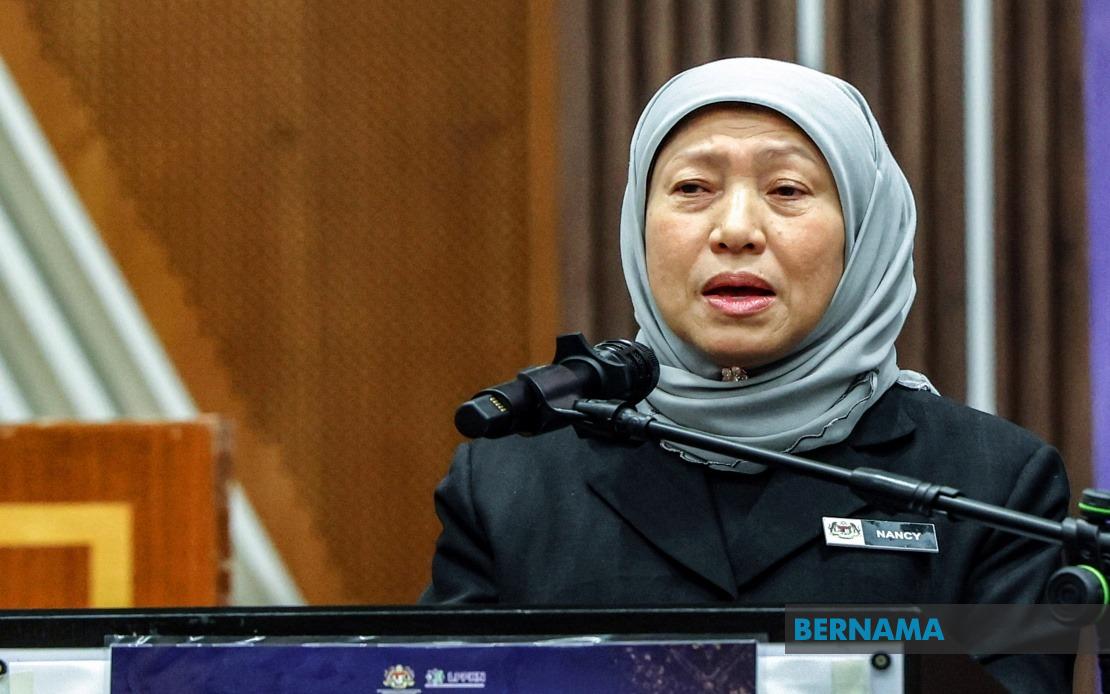
The Ministry of Women, Family and Community Development (KPWKM) is embarking on an ambitious 18-month research initiative this month designed to reshape how Malaysia approaches men's empowerment, moving beyond conventional frameworks focused solely on economic gains and career advancement. Minister Datuk Seri Nancy Shukri unveiled the initiative at the Men's Empowerment Consultative Forum in Putrajaya, signalling a recognition that contemporary challenges facing Malaysian men extend far deeper into psychological and social dimensions than previously acknowledged in policy circles.
At the heart of the new direction lies the government's National Gentleman Initiative, a conceptual framework that redefines what empowerment means for men in the 21st century. Rather than perpetuating traditional notions of dominance or sole breadwinner status, this initiative emphasises developing resilient, emotionally balanced individuals capable of contributing meaningfully to both family stability and broader national progress. The terminology itself—"gentlemen" rather than "men"—carries deliberate implications, signalling a cultural shift towards values-based development encompassing emotional maturity, integrity, and genuine partnership.
The empirical backdrop for this policy pivot is sobering. Male suicide rates in Malaysia hover nearly three times higher than female counterparts, representing a public health crisis that has largely escaped sustained policy attention. Compounding this reality, the 2023 National Health and Morbidity Survey identified depression affecting 4.6 per cent of Malaysians aged 16 and above, a figure that masks potentially higher incidence among men who historically underreport mental health struggles due to social stigma. These statistics underscore a population segment experiencing acute psychological distress while lacking adequate institutional support frameworks.
Financial pressures constitute another critical dimension of the crisis. Bank Negara Malaysia data reveals household debt reaching 84.3 per cent of gross domestic product, creating cascading family tensions that manifest in relationship breakdown and abandonment of financial responsibilities. The 2024 divorce statistics paint a particularly troubling picture: 60,457 cases representing a 4.1 per cent increase year-on-year, with financial stress, failure to meet maintenance obligations, and protracted domestic discord consistently identified as primary catalysts. This trajectory suggests systemic vulnerabilities in how Malaysian men navigate economic pressure and family obligation.
Domestic violence presents perhaps the most visible manifestation of these underlying crises. Royal Malaysia Police data from 2025 documents that 95 per cent of domestic violence perpetrators recorded were male, a statistic that Minister Shukri presented not as evidence of inherent male criminality but rather as symptom of unresolved trauma, economic desperation, and absence of healthy coping mechanisms. This framing reflects an important analytical shift: recognising that perpetrators often emerge from backgrounds characterised by their own victimisation, unaddressed mental health conditions, and lack of constructive outlets for managing stress.
The consultative forum structure itself demonstrates commitment to inclusive policymaking. Operating through a Public-Private-People Partnership (4P) framework, the initiative solicits input from diverse stakeholders spanning government, corporate entities, and civil society organisations. This architecture acknowledges that male empowerment cannot materialise through top-down diktat but rather requires collaborative engagement with communities, workplaces, and social institutions where men navigate daily challenges. By positioning this as a broad consultative exercise rather than ministerial pronouncement, the government creates space for authentic voices and contextualised understanding of localised barriers.
Minister Shukri's articulation of empowerment through a "principle of gender respect" marks another significant departure from traditional discourse. By explicitly situating men's development within frameworks valuing mutual respect, women as equal partners, and shared responsibility rather than hierarchical arrangement, the ministry signals alignment with contemporary gender scholarship that recognises mutually beneficial outcomes when gender relations move beyond zero-sum competition. This perspective acknowledges that rigid patriarchal structures ultimately disadvantage men themselves by constraining emotional expression, limiting caregiving roles, and concentrating survival pressure disproportionately on male breadwinner shoulders.
The 18-month timeline permits comprehensive research architecture capable of capturing nuanced data across economic, psychological, social, and relational dimensions. Such duration allows longitudinal elements, qualitative investigation of lived experiences, and testing of preliminary interventions. The resulting findings will theoretically inform substantial policy reorientation across multiple governmental portfolios—from mental health services to educational curricula to workplace practices—rather than generating another report collecting dust on bureaucratic shelves.
For Malaysian society, this initiative carries implications extending beyond male demographics. Stronger, psychologically healthier men translating into more stable families, reduced domestic violence, improved child development outcomes, and decreased strain on healthcare systems. From an economic perspective, addressing male depression and suicide risk represents significant productivity gains and reduced healthcare expenditure. Regionally, Malaysia positions itself as potential leader in Southeast Asian thinking about men's development, potentially offering models adaptable across diverse cultural contexts grappling with similar demographic challenges.
The coming months will determine whether the consultative process generates genuinely transformative recommendations or reproduces familiar gender-neutral platitudes lacking implementation mechanisms. Critical questions remain about resource allocation, timeline for policy translation, accountability measures, and integration across government agencies operating within rigid bureaucratic silos. Yet the mere elevation of these conversations signals that Malaysian policymakers increasingly recognise that sustainable national development requires attending seriously to the psychological, emotional, and relational crises afflicting significant population segments previously treated as invisible or irrelevant to gender discourse.

