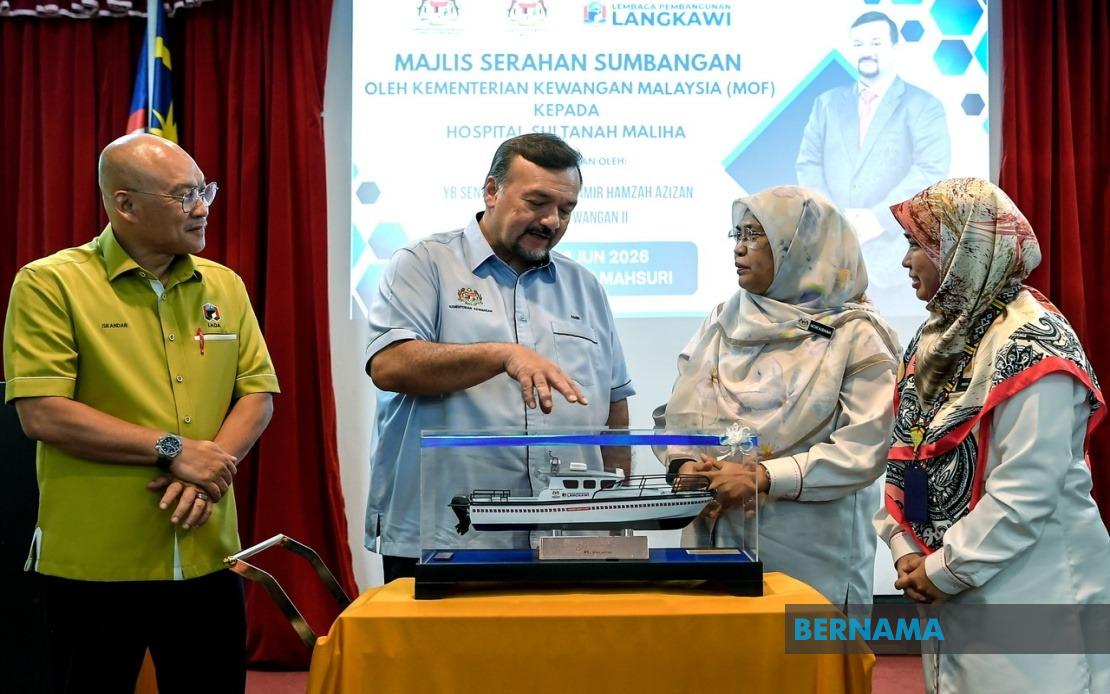
The Ministry of Finance has committed RM5.5 million to establishing a dedicated sea ambulance service for Langkawi, marking a significant step towards resolving long-standing challenges in the island's emergency medical response capabilities. Finance Minister II Datuk Seri Amir Hamzah Azizan announced the development during a visit to Hospital Sultanah Maliha, where he simultaneously presented healthcare equipment worth RM700,000 to the facility. The new ambulance service is expected to become operational in early 2024, fundamentally transforming how critical patients are transported from the island to specialist care centres on the Malaysian mainland.
The initiative addresses a critical vulnerability in Langkawi's healthcare infrastructure that has long constrained emergency response times and patient outcomes. Currently, the island's medical system relies heavily on commercial passenger ferry services for patient transfers to referral hospitals—a dependency that creates dangerous bottlenecks during medical emergencies. When ferry schedules are reduced or cancelled due to weather conditions or operational constraints, patients requiring urgent specialist intervention face potentially life-threatening delays. The situation is particularly acute for conditions requiring immediate surgical intervention or intensive care, where every minute materially affects patient survival rates and recovery prospects.
Amir Hamzah, who serves concurrently as co-chairman of the Langkawi Development Authority, explained that the dedicated sea ambulance vessel would be operated directly by Hospital Sultanah Maliha. This arrangement ensures medical accountability and streamlined coordination between the transferring facility and receiving hospitals. The vessel's primary function will involve transporting patients to mainland referral facilities with greater speed and reliability than existing alternatives, circumventing the unpredictability of commercial ferry operations. The dedicated service also provides flexibility unavailable through passenger ferry networks, enabling emergency transfers at any hour regardless of standard commercial schedules.
The design specifications of the sea ambulance reflect careful consideration of medical and operational requirements. The vessel will accommodate two stretcher patients simultaneously, alongside a professional crew of twelve personnel—nurses, paramedics, and support staff—trained to deliver continuous clinical care during transit. This configuration ensures patients receive uninterrupted monitoring and treatment throughout the journey to the mainland, maintaining clinical stability during what would otherwise be an unstable transport environment. The capacity for two simultaneous patient transfers has significant implications for managing mass casualty situations or multiple medical emergencies occurring within a short timeframe.
Beyond transportation logistics, the project addresses patient dignity and safety concerns inherent in existing arrangements. Commercial ferry environments were never designed for medical care, exposing vulnerable, acutely ill patients to public scrutiny and uncomfortable conditions during transfers. The dedicated ambulance provides privacy and clinical infrastructure appropriate to patients' medical status, reducing psychological stress and maintaining professional standards of patient care. The controlled environment also allows medical teams to address clinical complications immediately rather than waiting until arrival at a mainland facility.
The RM700,000 healthcare equipment contribution represents a complementary investment in strengthening Hospital Sultanah Maliha's internal capacity. The equipment package encompasses modern medical devices, information technology infrastructure, clinical furniture, transport vehicles, and security systems designed to enhance both diagnostic and treatment capabilities. This diversified investment suggests a comprehensive approach to upgrading the facility's operational standards across multiple departments and functions.
A particularly significant component involves the hospital's integration into the broader national digital health ecosystem through implementation of the Electronic Medical Record system. This adoption will connect Langkawi's hospital with other Malaysian healthcare facilities through standardised digital platforms, enabling seamless information sharing and coordinated care pathways. The introduction of bedside computing devices allows clinical staff to enter patient data in real-time during ward rounds, creating contemporaneous digital records immediately accessible to all treating professionals. This technological shift fundamentally improves care continuity and reduces the delays and errors associated with manual paper-based record systems.
For Langkawi's substantial tourism sector, these healthcare improvements carry significant economic and reputational implications. The island attracts millions of international and domestic visitors annually, creating substantial demand for reliable emergency medical services. Tourist-related medical emergencies—ranging from diving accidents to acute illnesses—require rapid access to advanced facilities. The improved ambulance service and digital healthcare infrastructure enhance confidence that visitors will receive world-class emergency care, potentially influencing destination selection decisions and insurance considerations. A robust, modern healthcare system has become a competitive advantage in international tourism markets.
The timing of the announcement reflects broader government prioritisation of healthcare infrastructure outside major urban centres. Malaysia's healthcare system has historically concentrated advanced facilities and emergency capabilities in cities like Kuala Lumpur and Petaling Jaya, creating disparities in access for geographically isolated populations. Investments in Langkawi signal policy recognition that health service equity requires targeted development in island and remote communities where geographic isolation compounds existing resource limitations.
The sea ambulance service also demonstrates practical government response to infrastructure constraints that cannot be resolved through terrestrial solutions. Unlike mainland communities where road ambulance networks provide distributed emergency response capabilities, Langkawi's island status creates inherent geographic barriers to conventional ambulance operations. Water-based medical transport becomes a necessity rather than an option, requiring specialised procurement and operational protocols distinct from standard emergency medical services. The five-year investment commitment suggests government recognition of this service's ongoing operational costs beyond initial procurement.
Implementation of the service will require coordination across multiple government agencies and the private sector. The Ministry of Finance funds the capital investment, the Health Ministry provides clinical oversight and staffing, and the maritime authorities ensure navigational safety and compliance with marine regulations. Hospital Sultanah Maliha assumes operational responsibility for crew training, maintenance scheduling, and integration with its clinical workflows. This multi-agency approach is essential given the complex technical and medical requirements of marine ambulance operations.
The broader context includes Malaysia's commitment to achieving universal health coverage and ensuring healthcare access regardless of geographic location. The Sustainable Development Goals framework emphasises equitable health service distribution, and investments like the Langkawi sea ambulance contribute to demonstrating government commitment to these principles. As Malaysia's healthcare system evolves, ensuring that island and remote communities benefit from technological advancement and infrastructure investment becomes increasingly important for maintaining public health standards across the entire nation.
Moving forward, the success of this initiative will likely influence similar healthcare infrastructure projects in other geographically challenging areas. If the Langkawi service operates efficiently and demonstrably improves patient outcomes, policymakers may consider comparable investments for other island communities or remote regions where geographic barriers similarly constrain emergency healthcare access. The project thus serves as a potential pilot model for addressing healthcare disparities in Malaysia's diverse geographic landscape.

