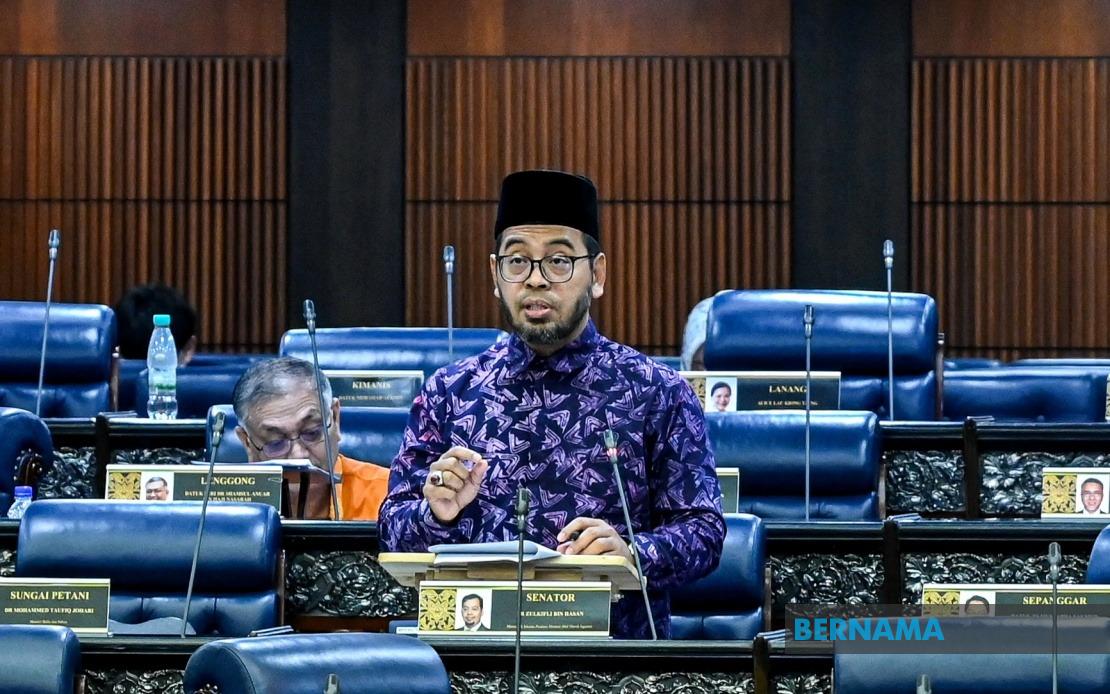
The Malaysian government has embarked on an expansive, multi-departmental strategy to combat the proliferation of what it considers heterodox Islamic teachings that increasingly exploit digital channels to reach potential followers. Dr Zulkifli Hasan, the Minister in the Prime Minister's Department overseeing religious affairs, disclosed the comprehensive approach during parliamentary proceedings on July 16, emphasizing that authorities remain committed to identifying and neutralizing doctrinal movements that diverge from mainstream Sunni Islamic practice. The coordinated effort represents a significant escalation in how Malaysia's religious establishment addresses theological dissent in an era where traditional enforcement methods have become inadequate.
The nature of the challenge has fundamentally transformed over recent years, according to ministerial statements delivered to the Dewan Rakyat. Deviant teachings, once confined to underground gatherings and word-of-mouth recruitment within tight-knit communities, have migrated wholesale to digital ecosystems where they operate with considerable opacity. Messaging applications, social media platforms, and encrypted communication tools now serve as primary conduits for spreading theological positions deemed incompatible with Malaysia's official Islamic framework. Practitioners have become increasingly sophisticated in their messaging strategy, disguising recruitment and doctrinal propagation within seemingly innocuous contexts such as self-improvement seminars, humanitarian relief activities, traditional healing practices, and informal religious study circles.
The psychological and rhetorical tactics employed by these groups warrant particular attention from a counter-narrative perspective. Ministry representatives indicated that organizations utilize motivational speaking, spiritual enlightenment rhetoric, psychological manipulation techniques, conspiracy narratives, and the celebrity appeal of prominent figures to attract and retain adherents. This layered approach makes detection and counter-messaging more difficult than straightforward theological refutation. For Malaysian audiences, particularly younger demographics with limited formal Islamic training, these emotionally resonant framings can prove considerably more persuasive than traditional authoritative statements from established religious institutions.
Enforcement operations conducted over recent months demonstrate both the scale of the perceived threat and the apparatus mobilized to address it. In May, authorities detained 288 followers of Ahmadiyya Qadiani—a movement historically rejected by Malaysian Islamic authorities—during coordinated operations in Sabah. Subsequently, a separate enforcement action targeting what government sources characterized as a Syiah centre located in the Petaling Jaya area resulted in the apprehension of 226 foreign nationals. These operations underscore how transnational dimensions complicate Malaysia's religious regulation, as international networks facilitate the transmission of heterodox teachings across borders and visa categories.
The institutional architecture supporting this monitoring regime spans numerous government departments, reflecting the whole-of-government conceptualization announced by the ministry. The Department of Islamic Development Malaysia (JAKIM), traditionally the lead agency for such matters, now operates in tandem with state-level Islamic religious authorities, federal police forces, the Malaysian Communications and Multimedia Commission, the National Security Council, municipal authorities, immigration enforcement, and national identification agencies. This horizontal integration theoretically enables rapid information-sharing and coordinated operational responses when authorities identify suspect networks or digital content.
Beyond enforcement, the government has institutionalized preventative and rehabilitative frameworks designed to strengthen Islamic understanding among populations deemed vulnerable to heterodox influence. The National Steering Committee to Address Threats to Faith represents a formal acknowledgment that containment strategies alone prove insufficient without concurrent efforts to inoculate communities against ideological recruitment. This committee draws representation from education, higher education, internal security, religious affairs, and other ministries, positioning religious resilience as a cross-sectoral national priority rather than a purely religious bureaucratic concern.
Interventionist programmes administered under government supervision include targeted psychological and religious counselling directed toward individuals and leaders previously associated with deviant movements, mandatory placement in faith rehabilitation facilities ordered through Syariah courts, and structured re-education initiatives overseen by Islamic authorities. These mechanisms acknowledge that simple prohibition often drives heterodox teachings further underground and potentially strengthens adherents' sense of persecution and marginalization. Rehabilitation approaches attempt to address underlying motivations and intellectual vulnerabilities that initially attracted individuals to non-mainstream interpretations.
Youth-oriented programming has received particular emphasis within Malaysia's counter-heterodoxy strategy, reflecting government conviction that younger populations represent both the primary recruitment demographic and the demographic cohort most receptive to preventative interventions. The Institut Pemantapan dan Perkaderan Akidah Malaysia (IPHAM) coordinates faith-strengthening initiatives, while the My Insaniah Programme and Rakan Masjid Programme extend religious education and community engagement through collaboration with the Ministry of Youth and Sports. Additionally, authorities have revised the KAFA 2.0 curriculum—the standardized Quranic and foundational Islamic studies programme for young Malaysians—to emphasize religious identity formation and doctrinal resilience as explicit pedagogical objectives.
For regional observers, Malaysia's intensifying surveillance and intervention apparatus illustrates broader Southeast Asian patterns of expanding state capacity to monitor and shape religious discourse within digital environments. The sophisticated categorization of recruitment methodologies and psychological techniques suggests Malaysian authorities have invested substantially in understanding heterodox movement dynamics. However, the strategy also reflects inherent tensions between pluralistic digital communication environments and state-enforced religious orthodoxy, tensions that persist across Muslim-majority nations attempting similar regulatory approaches.
The effectiveness of this multi-faceted strategy remains uncertain and likely difficult to quantify through conventional metrics. While detention and prosecution numbers document enforcement activity, they reveal little about success in preventing ideological transmission or evaluating whether rehabilitation programmes genuinely transform religious understanding or merely enforce surface compliance. Digital technologies evolve faster than regulatory frameworks, and sophisticated actors can readily migrate to encrypted platforms beyond government surveillance capacity. For Malaysia's religious establishment, the fundamental challenge extends beyond administrative coordination—it involves maintaining doctrinal authority and institutional legitimacy in contexts where information flows globally and theological contestation increasingly occurs in digital spaces beyond traditional institutional gatekeeping.

