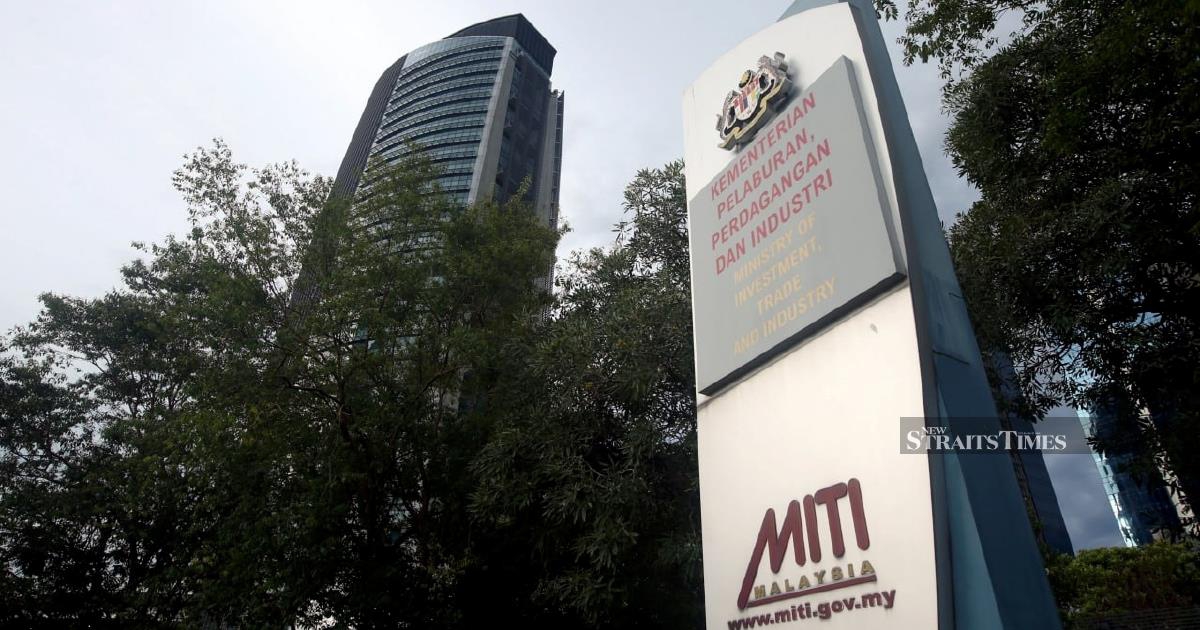
Malaysia's Ministry of International Trade and Industry has initiated parallel investigations into steel product imports from three major Asian suppliers, signalling renewed scrutiny of dumping practices in a sector long sensitive to cross-border pricing disputes. The authorities are examining certain coated steel shipments originating from China, Chinese Taipei, and Vietnam—three economies that collectively supply a substantial share of Malaysia's imported steel products.
The anti-dumping probe represents the ministry's response to complaints, likely from domestic steelmakers or importers, that foreign suppliers are selling coated steel at prices below fair value. Dumping investigations typically involve comparing export prices with domestic market prices in the exporting country, and with constructed costs of production. If the investigation confirms that goods are being dumped and have caused material injury to Malaysian industry, duties can be imposed to level the playing field.
Parallel to this new investigation, the ministry is simultaneously undertaking an expiry review of duties already in place on prepainted steel coil—a slightly different but related product—from China and Vietnam. Such reviews occur automatically when existing protective tariffs approach their termination dates, typically five years after imposition. The ministry must determine whether dumping would likely recur if the duties were allowed to lapse, based on evidence of current conditions in exporting markets and changes in competitive dynamics.
For Malaysian manufacturing and construction sectors, the timing carries implications. The country's automotive, appliances, and construction industries rely substantially on imported steel inputs. Coated and prepainted steel products are essential materials used in automotive body panels, refrigerators, washing machines, roofing sheets, and wall cladding. Investigations and duty reviews can lead to higher input costs, which manufacturers ultimately pass to consumers or absorb as margin pressure.
The involvement of Chinese Taipei, alongside China and Vietnam, underscores how steel overcapacity in East Asia continues to generate surplus output seeking export markets. Taiwan's steel sector, despite relatively high domestic technology and quality standards, still competes aggressively on price for certain product categories. Vietnam has emerged in recent years as a significant player in downstream steel products, leveraging lower labour costs and access to raw materials through regional supply chains.
Malaysia's approach reflects broader patterns of anti-dumping enforcement across Southeast Asia. Thailand, Indonesia, and the Philippines have similarly launched multiple investigations into steel imports in recent years, creating a patchwork of tariff regimes across the region. For suppliers, this fragmentation of trade barriers complicates export planning and forces companies to maintain separate pricing strategies for different markets.
The investigation process typically requires several months of data collection, analysis, and consultation with interested parties. Importers, domestic producers, and government agencies submit detailed questionnaires covering production volumes, costs, prices, and market conditions. Public hearings or written submissions allow stakeholders to present arguments. The ministry must balance protecting domestic industry against the risk of higher costs for downstream manufacturers and consumers.
From a regional trade perspective, these investigations occur within the framework of the ASEAN Trade in Goods Agreement and bilateral trade commitments. However, anti-dumping measures are explicitly permitted under World Trade Organization rules, provided they follow transparent procedures and are based on objective evidence of dumping and injury. Malaysia's actions, assuming proper procedure, are legally compliant, though they reflect protectionist sentiment that some trading partners may challenge.
The steel sector in Malaysia remains strategically important. Domestic producers, though facing upstream raw material cost pressures, have advocated for protection against what they characterise as predatory export pricing from larger regional rivals. The country's own steelmakers have capacity constraints and cannot fully meet all domestic demand, making import restrictions a complex policy lever. Blocking imports entirely would disrupt supply chains; the goal instead is ensuring fair pricing.
Existing duties on prepainted steel coil from China and Vietnam remain in force pending the expiry review outcome. If the ministry determines that dumping would likely resume, duties will be renewed, typically for another five-year period. Conversely, if the ministry finds that competitive conditions have normalised or that domestic industry no longer faces material injury risk, duties may be allowed to expire, reducing costs for Malaysian importers and manufacturers.
The broader economic context matters. As Southeast Asia moves to strengthen regional supply chains and reduce dependence on distant suppliers, intra-regional steel trade becomes increasingly important. Anti-dumping measures, if applied indiscriminately, can fragment regional integration efforts. Malaysia's challenge is protecting legitimate domestic interests whilst maintaining the competitive and open trading environment necessary for broader manufacturing competitiveness.
Stakeholders across Malaysia's industrial base will monitor these investigations closely. Steelmakers hope for duties that improve profitability and investment incentives. Downstream manufacturers and construction companies worry about rising costs. Importers and traders face uncertainty about future margins and tariff exposure. The ministry's final determinations, likely several months away, will reshape import economics and potentially influence investment and pricing decisions across multiple sectors of the Malaysian economy.

