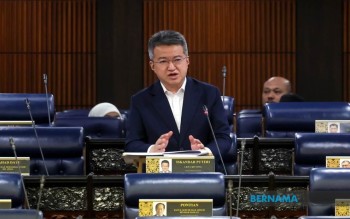
Deputy Finance Minister Liew Chin Tong has assured Parliament that Malaysia's fiscal framework for 2027 remains on track, with no immediate revisions needed despite mounting pressures from elevated global oil prices and their cascading impact on government expenditure. Speaking during oral questions in the Dewan Rakyat, Liew indicated the administration maintains confidence in its budgetary trajectory, even as it navigates the complex interplay between rising subsidy commitments and petroleum-linked revenues that partially offset these additional costs.
The backdrop to this statement lies in a formidable fiscal challenge: surging crude oil prices have forced the government to allocate an additional RM40 billion toward fuel subsidies in the opening months of 2026. This represents a significant unbudgeted pressure on public finances at a time when Malaysia, like its Southeast Asian neighbours, faces mounting calls for social spending and infrastructure investment. The scale of this subsidy burden underscores how vulnerable developing economies remain to commodity price volatility, a lesson reinforced across the region whenever energy markets experience external shocks.
However, the government's position is not entirely defensive. Liew emphasized that the same oil price dynamics driving subsidy expenses simultaneously generate additional revenue through petroleum-related earnings. The mathematics are straightforward: for every one-dollar-per-barrel increase in world crude oil prices, Malaysia's petroleum-related revenue gains approximately RM300 million. This mechanical relationship between production revenues and subsidy outflows creates a natural hedge, though an imperfect one given the lag between price movements and revenue collection, and the fact that subsidy increases often outpace revenue gains during volatile periods.
Crucially, these petroleum revenues exclude dividends from Petronas, the state oil company, which represents an additional revenue stream that remains partially shielded from immediate fiscal pressures. By structuring the analysis to highlight how petroleum earnings can defray subsidy increases, Liew positioned the government's fiscal situation as manageable rather than crisis-prone—a framing intended to reassure both domestic constituencies and international creditors monitoring Malaysia's debt sustainability.
The Deputy Finance Minister signalled that comprehensive monitoring mechanisms remain active across multiple fronts. A dedicated crisis management task force operating under the National Economic Action Council has been conducting weekly engagement sessions to track economic indicators and geopolitical developments, particularly the situation in West Asia, which threatens to further destabilize energy markets. This administrative apparatus, while bureaucratic in appearance, reflects the government's recognition that fiscal stability in an uncertain environment demands continuous intelligence-gathering and rapid-response capacity. For Malaysian businesses and investors, such monitoring suggests that policy responses, if required, could be implemented with relative speed rather than waiting for the formal October budget tabling.
Liew's confirmation that no changes are needed at present must be read alongside his explicit caveat: the government will continue observing developments until Budget 2027 is formally presented. This measured language preserves policy flexibility without suggesting panic or imminent fiscal retrenchment. Malaysian companies and households depend on this language to signal that the government has not lost control of its finances, even as commodity markets remain volatile and geopolitical risks persist. The implied message is one of prudent management within a constrained environment rather than fiscal crisis management.
The government's strategy rests on several pillars articulated by Liew: targeted subsidy policies that concentrate support on genuinely vulnerable populations rather than universal fuel subsidies; deliberate restructuring of spending priorities to align resources with strategic objectives; continuous improvements in spending efficiency across ministries; and strengthened revenue collection and tax compliance. These elements collectively represent the medium-term fiscal consolidation trajectory that policymakers believe can be maintained without requiring politically explosive tax increases or dramatic service cuts. For regional observers, Malaysia's approach offers a counterpoint to more austere fiscal frameworks adopted elsewhere in Southeast Asia, suggesting that growth-oriented spending can coexist with debt discipline.
The revenue collection dimension merits particular attention for Malaysian taxpayers and businesses. Enhanced focus on tax compliance and collection efficiency signals that the government intends to fund its commitments partly through better extraction of existing tax bases rather than new levies. This approach appeals to the business community, which has consistently resisted new taxation, while distributing compliance burdens more evenly across the tax-paying population. However, it also implies intensified audits and enforcement activities, which could create short-term friction with taxpayers accustomed to looser implementation.
Liew's response to the original question from Mohd Syahir Che Sulaiman of Bachok deliberately addressed anxieties about new taxes becoming necessary. By confirming that fiscal consolidation can proceed without fresh taxation, the Deputy Finance Minister attempted to forestall business alarm and maintain investor confidence. This is particularly important for Malaysia, which competes regionally for foreign direct investment and cannot afford to signal that its fiscal situation is deteriorating to the point where new taxation becomes unavoidable.
The structural challenge underlying this entire discussion is Malaysia's commitment to maintaining both social spending and fiscal sustainability. Unlike some regional peers with larger commodity export revenues or more aggressive subsidy reductions, Malaysia has sought to thread a middle path: preserving targeted support for vulnerable groups while gradually improving fiscal efficiency. This balancing act requires precisely the kind of continuous monitoring and revenue management that Liew described, preventing both the appearance of fiscal collapse and the political costs of abrupt policy reversals.
As Budget 2027 approaches its October presentation, the government's fiscal framework will be tested against actual first-half performance data and updated economic forecasts. If oil prices stabilize or decline from current levels, the subsidy burden could moderate, easing fiscal pressures significantly. Conversely, sustained high prices or further geopolitical escalation could force a mid-course correction. For now, Liew's steadfast commitment to unchanged projections projects an air of confidence, though the caveat about continued monitoring betrays underlying uncertainty that policymakers will not publicly acknowledge until formal budget revisions become unavoidable.

