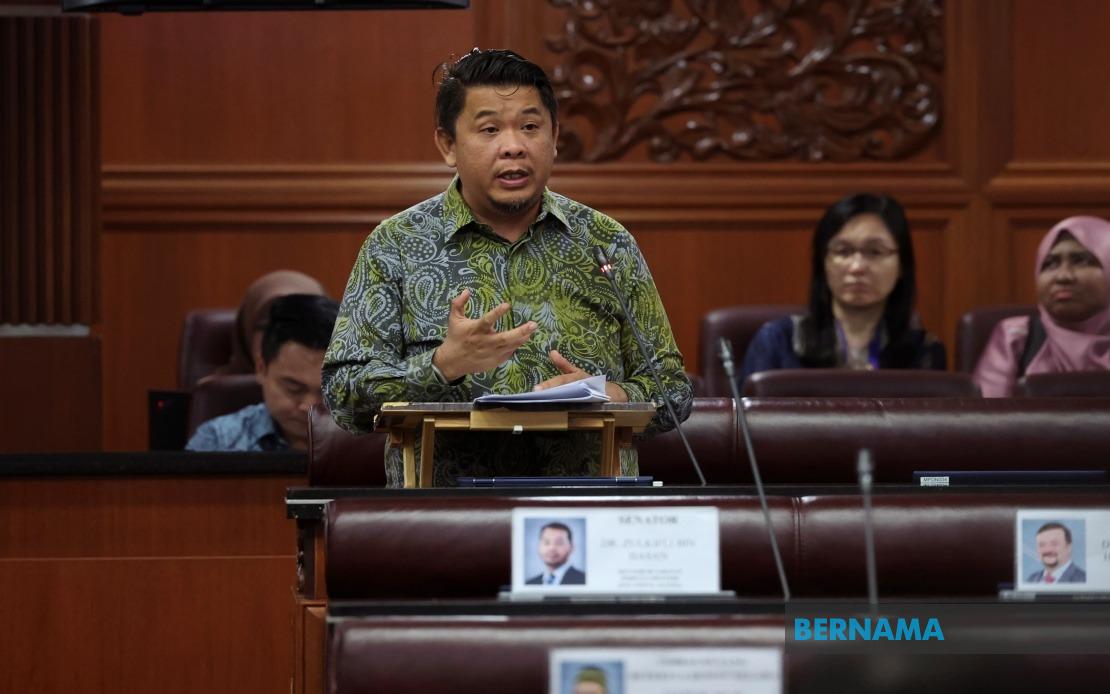
Malaysia has directed the United Nations High Commissioner for Refugees to pause all new registrations whilst the country restructures its approach to refugee administration. Deputy Foreign Minister Datuk Lukanisman Awang Sauni disclosed the Cabinet-level decision, which marks a significant shift towards tighter government oversight of the refugee population within Malaysian territory. The suspension comes as the authorities prepare to implement a new Refugee Registration Document programme that will consolidate refugee data management under direct state control rather than relying on international organisations' records.
The restructuring initiative reflects broader concerns about the current registration framework and its effectiveness in managing one of Southeast Asia's largest refugee populations. By centralising refugee information through the new DPP system, Malaysian authorities aim to achieve what they characterise as more efficient coordination across multiple government enforcement agencies. This approach would enable comprehensive identity verification, systematic monitoring of refugee movements, and stronger regulatory oversight of the displaced population. The government argues that such measures are essential for maintaining order and security within the country's refugee management apparatus.
Lukanisman emphasised during parliamentary proceedings that the temporary suspension serves a critical administrative purpose rather than representing a permanent policy change. The government intends to implement registration under the DPP through a rigorous vetting process involving collaboration with various law enforcement and immigration authorities. This multi-agency coordination model is intended to ensure that only genuinely eligible individuals receive refugee documentation while simultaneously preventing fraudulent applications and screening out people who may have entered the country illegally. The Deputy Foreign Minister indicated that the new system would incorporate stricter eligibility criteria and verification mechanisms than currently exist.
The decision carries particular significance regarding Malaysia's handling of Rohingya refugees, whose legal status remains deeply contested. Senator Hussin Ismail raised concerns about Rohingya individuals who possess no recognised identity documents and lack citizenship in Myanmar, their country of origin. These stateless individuals represent one of the most vulnerable segments of Malaysia's refugee community, facing an uncertain future as international support mechanisms remain limited. The Cabinet's decision to restructure registration systems may further complicate their already precarious situation, depending on how the new DPP criteria are defined and implemented.
Malaysia's position on refugee matters is shaped fundamentally by its refusal to ratify the 1951 Refugee Convention. This non-signatory status means the country operates outside the international legal framework governing refugee protection and management. Consequently, Malaysia bears refugee-related costs and administrative burdens without the formal international obligations or burden-sharing mechanisms that convention signatories enjoy. The government views this arrangement as unsustainable, particularly given the strain on local communities and social services. Officials increasingly frame refugee management not merely as a humanitarian concern but as a domestic security and resource allocation issue.
The government is pursuing a complementary multilateral diplomatic strategy with Myanmar and other ASEAN member states to address Rohingya displacement more comprehensively. Rather than treating this as purely a Malaysian problem, authorities are attempting to engage regional partners in finding solutions that might reduce the number of refugees arriving in the country. This approach recognises that displacement is fundamentally rooted in Myanmar's political and security situation, and that sustainable solutions require addressing root causes rather than simply managing arrivals. Such regional coordination efforts represent an attempt to distribute responsibility more equitably across ASEAN nations.
An immediate consequence of the new policy involves approximately five thousand Myanmar nationals currently held in immigration detention facilities. These individuals are scheduled for repatriation following Myanmar's indicated willingness to receive them back. The logistics of this operation are substantial, with the government planning to utilise naval vessels to transport detainees across the Andaman Sea. This repatriation process remains subject to Myanmar's continued cooperation and the successful resolution of various administrative and diplomatic procedures. The operation represents one of Malaysia's largest proposed deportations of Myanmar nationals in recent years.
For the broader Malaysian context, these developments signal a hardening government stance on refugee populations. The combination of registration suspension, structural reforms, and accelerated repatriations suggests policymakers view the current refugee situation as requiring urgent administrative correction. Domestic political pressures regarding the economic and social impacts of large refugee populations have evidently influenced Cabinet decision-making. Local communities, particularly in areas with high refugee concentrations such as Klang Valley, have frequently expressed concerns about employment competition, housing pressures, and public service utilisation.
The implications for Southeast Asia's refugee systems are also noteworthy. Malaysia hosts one of the region's largest displaced populations, and its policy shifts influence how other nations approach refugee management. If Malaysia's new DPP system proves effective from an administrative standpoint, other countries might emulate its approach. Conversely, if implementation creates humanitarian concerns or international criticism, regional governments may recalibrate their own strategies. The suspension of UNHCR registrations is particularly significant because UNHCR traditionally serves as the de facto refugee protection agency across Southeast Asia, where most countries remain non-signatories to the 1951 convention.
The timing and implementation of the restructured registration system will substantially determine its actual impact on refugee populations. How the government defines eligibility under the new DPP criteria remains unclear, and different interpretations could either strengthen protection for vulnerable groups or restrict access to formal documentation and associated assistance. Civil society organisations and humanitarian agencies will likely scrutinise the programme's details once they become available. The success of this initiative will be measured not only by administrative efficiency metrics but also by whether it adequately protects genuinely displaced persons whilst maintaining public confidence in the refugee management system.

