Malaysia's struggle with fraud has intensified dramatically, with authorities documenting more than 66,000 online scam incidents throughout the previous year that collectively drained approximately RM2.97 billion from victims' pockets. Crime prevention specialists now characterise the phenomenon as a fundamental national security challenge rather than a peripheral law enforcement concern, one that penetrates household finances, destabilises family relationships, and jeopardises commercial stability across sectors. The transformation reflects how criminal networks have evolved from opportunistic operators into sophisticated, organised syndicates deploying advanced technologies and psychological manipulation at industrial scale.
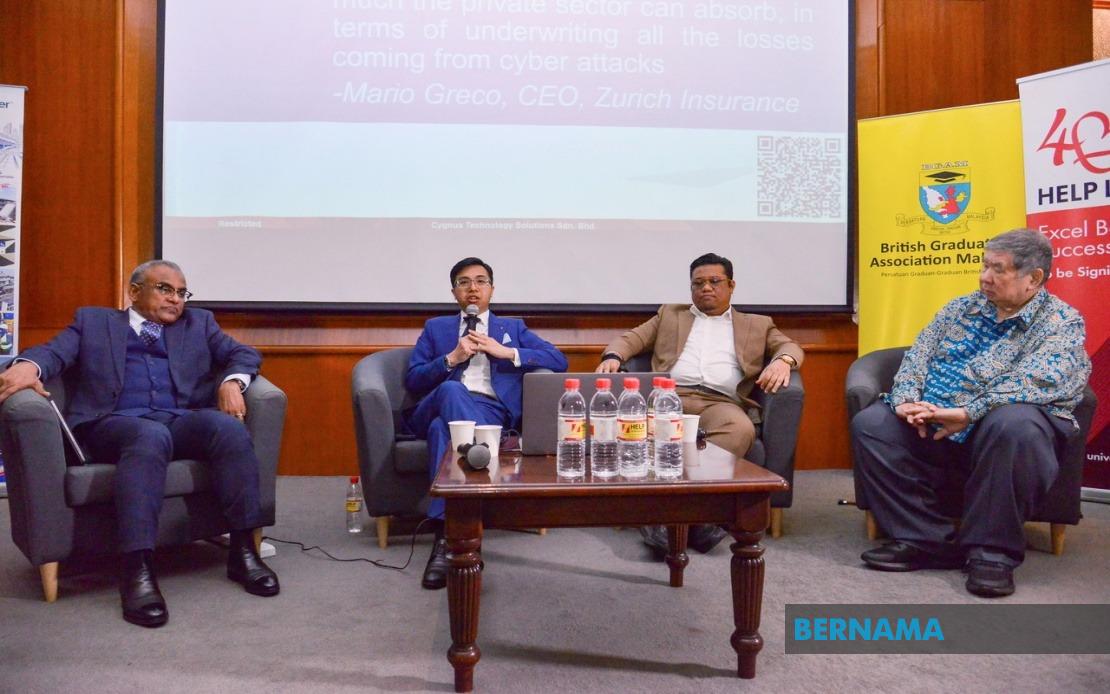
Datuk Kamarudin Md Ali, serving as both an executive member of the Malaysia Crime Prevention Foundation and president of the British Graduates Association Malaysia, articulated this escalation during the BGAM Lecture Series on scam awareness held at HELP University in Kuala Lumpur. His remarks underscored how contemporary fraud has transcended isolated incidents to become a structural threat embedded within Malaysia's digital economy. The gathering brought together policy officials, cybersecurity specialists, financial regulators, and community leaders, signalling official recognition that addressing scams demands coordinated action spanning government ministries, law enforcement agencies, private sector entities, and civil society organisations.
The mechanics of modern scamming reveal why conventional enforcement approaches prove insufficient. Prof Datuk Seri Dr Akhbar Satar, director of HELP University's Institute of Criminology and Criminal Justice, offered a penetrating observation: scammers exploit human vulnerability rather than technological weakness. Their operations target judgment, emotion, and trust—the psychological architecture supporting all human interaction. This insight reframes prevention from a purely technical challenge into a cultural and educational imperative. Satar emphasised that educational institutions bear particular responsibility for cultivating digital literacy and fostering ethical reasoning among graduates who will eventually shape policy responses and criminal justice frameworks.
The regional context amplifies Malaysia's predicament. According to Datuk Seri Ramli Mohamed Yoosuf, the former director of Bukit Aman's Commercial Crime Investigation Department, Southeast Asia has effectively become the global centre for organised commercial crime. Annual losses across the region for 2025 are projected between USD88 billion and USD114 billion—figures that dwarf many nations' annual budgets. Industrial-scale scam compounds operate with apparent impunity across Myanmar, Cambodia, Laos, and the Philippines, generating an estimated USD40 billion annually through labour trafficking and coerced fraud operations. These criminal ecosystems exploit vulnerable persons from more than eighty countries, forcing them to participate in schemes targeting fellow citizens across the globe.
Artificial intelligence has become an essential instrument within this criminal apparatus. Deepfake technology enables fraudsters to impersonate trusted figures with alarming authenticity, rendering voice-based and video-based verification unreliable. Cryptocurrency channels provide money laundering pathways that traditional banking oversight struggles to monitor effectively. The combination creates criminal infrastructure that operates at speed and scale previously impossible for networks lacking sophisticated technology. Malaysian authorities face adversaries whose operational sophistication rivals legitimate enterprises, yet whose motivation eliminates ethical constraints that typically limit corporate behaviour.
Tan Sri Dr Syed Hamid Albar, who served as Home Minister and chaired the Malaysia Crime Prevention Foundation, articulated a crucial strategic reorientation. He contended that scams represent not merely financial crimes but threats to the foundations of public trust and confidence in national digital systems. When citizens cannot distinguish authentic from fraudulent transactions, when they doubt whether financial institutions truly secure their assets, social cohesion erodes. The damage extends beyond individual losses to undermine the collective confidence necessary for economic activity. This framing explains why government leaders increasingly view scam prevention as a national security priority equivalent to cybersecurity defence or counter-terrorism efforts.
Malaysia has initiated policy responses acknowledging this elevated threat profile. The Cybersecurity Act 2024 provides legislative authority for security mandates and breach investigation. Enhanced compliance with Financial Action Task Force standards targets the money laundering dimension of scam operations. Most significantly, the establishment of a National Scam Response Centre attempts to coordinate responses across fragmented agency jurisdictions. These institutional reforms represent necessary but insufficient steps. As Yoosuf cautioned, criminal networks evolve tactically faster than bureaucratic structures can adapt, necessitating continuous innovation within law enforcement and technology sectors.
Prevention strategy must address both supply and demand sides of the scam ecosystem. Disrupting criminal operations requires intelligence capabilities, financial investigation expertise, and international cooperation spanning jurisdictions where scam compounds operate. Yet preventing victimisation requires transforming how Malaysian citizens approach digital transactions and online interactions. Educational initiatives promoting critical evaluation of unsolicited contact, skepticism toward extraordinary claims, and verification protocols before sharing sensitive information represent foundational defensive measures. Universities, secondary schools, and community organisations bear responsibility for embedding these practices into social norms.
The psychological dimension remains underexplored in most policy discussions. Scammers succeed because they understand human weakness—loneliness, financial desperation, familial obligation, professional ambition. An elderly person vulnerable to loneliness becomes susceptible to romance fraud. A middle-aged professional facing career stagnation becomes prey to investment schemes promising extraordinary returns. A parent fears for a child's safety when receiving emergency messages demanding immediate payment. Effective prevention requires acknowledging these emotional vulnerabilities and building social support systems alongside technological defences. Communities with strong interpersonal networks and accessible counselling resources demonstrate greater resilience against fraud victimisation.
The role of media and information literacy emerged as critical in discussions led by Malaysian Press Institute president Datuk Yong Soo Heong. Citizens must develop capacity to distinguish credible information from manipulated content, to recognise common fraud narratives, and to understand how scammers exploit legitimate news cycles and social anxieties. Media organisations themselves bear responsibility for responsible reporting that neither sensationalises fraud in ways that provide tactical instruction nor downplays genuine threats. Educational content explaining scam mechanisms and victim experiences creates informed communities less susceptible to similar manipulation.
Institutional collaboration remains fragmented despite acknowledged necessity. Financial institutions possess transaction data revealing fraud patterns but lack authority for enforcement. Law enforcement commands investigative powers but lacks real-time transaction visibility. Technology platforms can implement authentication measures but cannot mandate citizen adoption. Civil society organisations reach communities but lack official authority. Structural reform enabling genuine data sharing, coordinated response protocols, and aligned incentives across sectors could substantially improve detection and disruption of scam operations. Current arrangements reflect bureaucratic silos that criminals readily exploit.
Malaysia's pathway forward demands recognising that scam prevention cannot derive from enforcement actions alone, regardless of their intensity. An informed, skeptical, digitally literate populace represents the foundation upon which enforcement and technological defences build. This cultural transformation requires sustained investment in education, community awareness, and institutional integrity. Simultaneously, Singapore's success in containing commercial crime demonstrates that serious policy commitment, adequate resources, and inter-agency coordination can substantially degrade criminal operational capacity. Malaysia possesses the institutional capability and policy framework to achieve comparable outcomes, provided that scam prevention receives priority consistent with its demonstrated threat to national prosperity and social stability.

