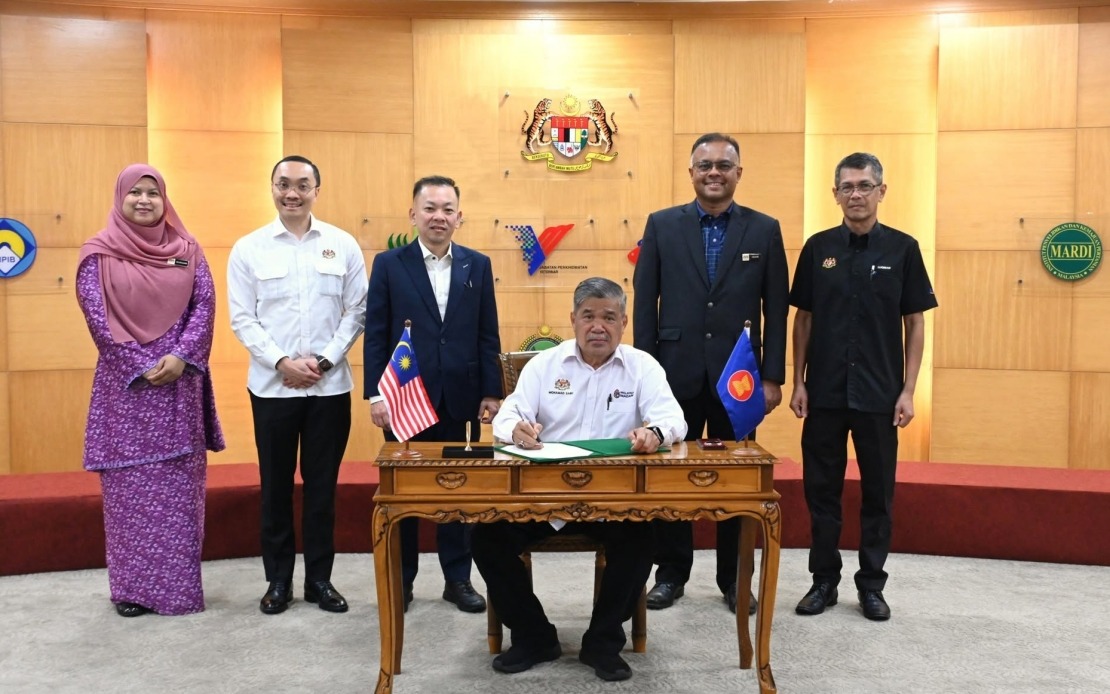
Malaysia has secured two landmark agreements under the ASEAN framework that promise to substantially widen market access for its agricultural, forestry and commodity exports whilst simultaneously integrating the nation into a regional network for climate-resilient farming practices. The Ministry of Agriculture and Food Security announced the dual arrangements following bilateral negotiations at the ASEAN Ministers on Agriculture and Forestry meeting, with Agriculture and Food Security Minister Datuk Seri Mohamad Sabu formalising Malaysia's commitment to both accords.
The first accord, formally titled the ASEAN Cooperation in Agriculture and Forest Products Scheme, represents a collective undertaking among Southeast Asian nations to harmonise trade protocols and investment frameworks across the agricultural sector. Malaysia's participation positions the nation as a lead authority for high-value commodities, with the Ministry of Plantation and Commodities assuming responsibility for coordinating palm oil and cocoa initiatives regionally, whilst the agriculture ministry steers broader agri-food product strategies. This division of responsibility reflects Malaysia's established competitive advantages in both plantation agriculture and processed food manufacturing.
Within this framework, ASEAN member states pledge to execute coordinated promotional campaigns defending the reputation and market share of regional agricultural products, particularly palm oil, which has faced persistent international scrutiny regarding sustainability practices. Beyond commodity defence, the scheme targets expansion into emerging agricultural niches including livestock production, specialty crops, medicinal botanical products and forest-derived goods such as premium mushrooms, tree nuts and wild honey. The arrangement effectively creates a unified ASEAN marketing apparatus capable of negotiating larger international contracts and countering protectionist trade policies.
The agreement explicitly addresses structural vulnerabilities affecting the region's agricultural infrastructure, prioritising strengthened food security mechanisms and private sector engagement across the supply chain. By formalising coordinated responses to transnational agricultural challenges—including cross-border pest outbreaks, disease transmission and climate-related disasters—ASEAN seeks to construct a more resilient production system capable of withstanding increasingly frequent environmental disruptions. For Malaysia specifically, this represents substantial risk mitigation, as the nation's significant agricultural footprint exposes it to considerable losses from flooding, drought cycles and emerging zoonotic diseases.
The second bilateral arrangement, negotiated directly between ASEAN and China, encompasses eighteen distinct cooperation domains spanning five years and carries particular significance for Malaysian farmers and exporters. This framework explicitly prioritises the acceleration of climate-smart agricultural techniques, which represent farming methodologies that simultaneously enhance productivity, build adaptive capacity to climatic variability, and reduce greenhouse gas emissions. The agreement facilitates institutional transfer of advanced technologies, allowing Malaysian agricultural enterprises and research institutions direct access to Chinese expertise in precision farming, resource-efficient irrigation and carbon-neutral crop production methods.
China's participation addresses a critical gap in technological capacity across Southeast Asia. Chinese agricultural institutions possess extensive experience implementing large-scale climate adaptation programmes and have developed cost-effective solutions suitable for tropical and subtropical farming environments—conditions closely matching Malaysian agricultural zones. Through formal research collaboration and knowledge-sharing mechanisms embedded in this accord, Malaysian scientists and commercial farmers gain pathways to adopt these innovations more rapidly than would occur through conventional market channels.
The accord also establishes mechanisms for strengthening agricultural insurance schemes and disaster risk management protocols, recognising that climate volatility increasingly threatens smallholder farmers across the region. By pooling risk through ASEAN-wide frameworks and accessing Chinese experience with agricultural insurance systems, member states can develop more affordable and comprehensive coverage protecting farmers against catastrophic losses from extreme weather events. This structural support particularly benefits Malaysia's smallholder sector, where individual farmer capacity to absorb climate-related losses remains limited.
Cross-border pest and disease control receives explicit emphasis within the ASEAN-China framework, reflecting the region's vulnerability to transnational agricultural threats. The recent emergence of African swine fever and various crop pathogens has demonstrated how rapidly diseases spread across porous borders, undermining production systems across multiple nations simultaneously. Coordinated surveillance systems and rapid response protocols, developed collaboratively with Chinese expertise, enable ASEAN members to identify and contain outbreaks before they achieve regional scale. Malaysia, positioned as a critical transit node for regional disease transmission, derives particular benefit from such cooperative arrangements.
Trade information-sharing mechanisms embedded within the ASEAN-China accord create transparency around market conditions, pricing trends and regulatory requirements across the region and extending into Chinese markets. For Malaysian exporters, improved market intelligence enables more strategic production planning and competitive pricing decisions. The information infrastructure also reduces transaction costs and information asymmetries that typically disadvantage Southeast Asian producers relative to larger agricultural exporters.
The sustainability dimension of both agreements reflects evolving international consumer preferences and regulatory frameworks increasingly penalising agricultural products derived from environmentally destructive practices. By formalising commitments to sustainable forest management and low-carbon production methodologies, Malaysia demonstrates compliance with international standards whilst simultaneously differentiating its products in premium markets. European and North American consumers increasingly demand environmental credentials, and ASEAN's coordinated sustainability positioning strengthens members' collective negotiating power within global supply chains dominated by multinational retailers and food processors.
For Malaysia specifically, these arrangements represent strategic alignment with regional economic architecture while maintaining bilateral relationships with major trading partners. The dual accords acknowledge ASEAN's role as both an independent economic bloc and a participant within broader Asian institutional frameworks. Malaysia's designation as lead coordinator for key commodities enhances the nation's diplomatic standing within ASEAN whilst positioning Malaysian agricultural enterprises as privileged intermediaries within regional supply networks. Chinese investment in ASEAN agricultural development, facilitated through these formal channels, also creates commercial opportunities for Malaysian service providers, equipment suppliers and technology firms serving the agricultural modernisation process.

