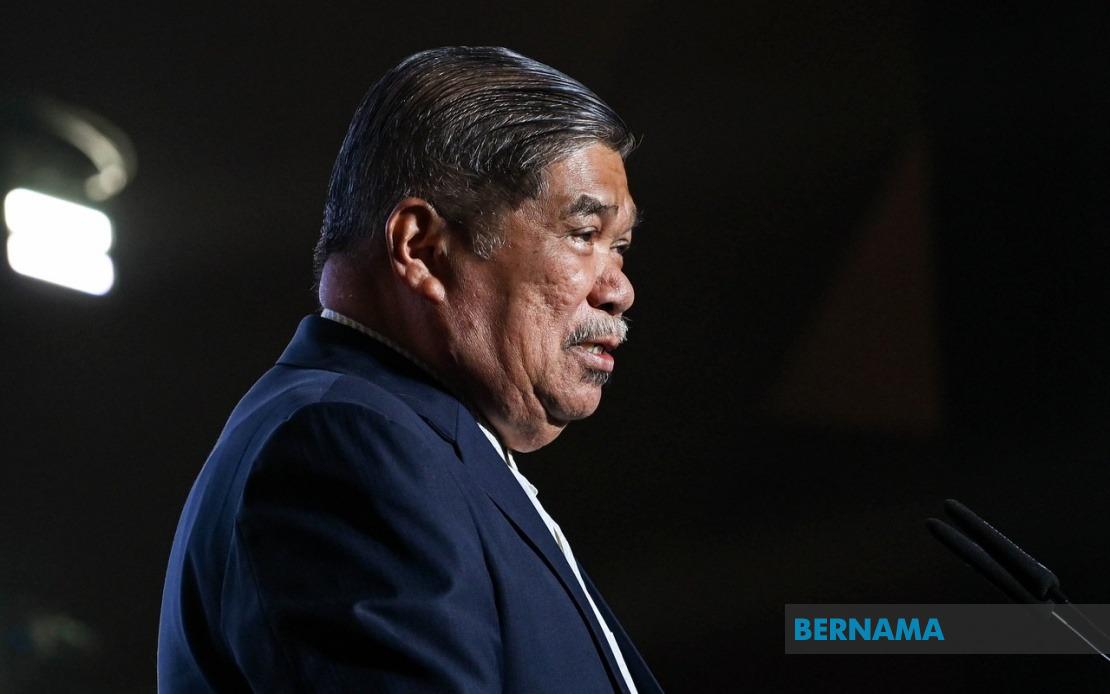
Malaysia's government is poised to announce the results of ongoing trade negotiations with Thailand before July ends, according to Agriculture and Food Security Minister Datuk Seri Mohamad Sabu. The discussions centre on several contentious trade barriers that have strained bilateral agricultural commerce, most significantly Thailand's prohibition on Malaysian shrimp exports, a restriction that has persisted since 2017. Mohamad disclosed these details while addressing reporters at the Global Animal Production and Veterinary Industry Summit (GAVIS) held in Putrajaya, emphasising that both countries stand to benefit from a mutually acceptable agreement.
The negotiation process has reached its closing stages following a recent visit by representatives from Thailand's Ministry of Agriculture to Malaysia. Authorities from both sides have begun conducting on-site inspections as part of their due diligence procedure. Mohamad characterised the current pace of progress as unprecedented, noting that resolving such complex agricultural trade disputes typically requires considerably longer timeframes. The compressed timeline reflects heightened political will from both governments to address long-standing irritants in their agricultural trade relationship.
Thailand's shrimp import prohibition stands as the most emblematic of these trade obstacles. The ban, which commenced in 2017, has cost Malaysian exporters access to a significant regional market for one of the country's important seafood commodities. Beyond shrimp, Malaysia has been seeking market access for its livestock products in Thailand, an application that has languished without resolution since 2024. These interconnected disputes underline the complexity of bilateral agricultural trade, where phytosanitary concerns, food safety standards, and market protections intersect with commercial interests.
Complicating the landscape further, Thailand introduced its own import restrictions on Malaysian shrimp that took effect on June 1, creating reciprocal barriers rather than one-directional trade friction. Simultaneously, Bangkok has implemented more rigorous inspection protocols on Malaysian seabass shipments. These layered trade restrictions have created a challenging environment for Malaysian seafood and livestock producers, who face market access challenges precisely when regional aquaculture and animal agriculture sectors are experiencing growth pressures. The reciprocal nature of these barriers suggests they stem from genuine food safety or environmental concerns rather than purely protectionist motives, making resolution more technically complex than simple tariff negotiations.
The trade disputes assume heightened significance within Southeast Asia's agricultural trade ecosystem. Thailand ranks among Malaysia's crucial regional trading partners for food and agricultural commodities, and restrictions in either direction reverberate through supply chains affecting producers, exporters, wholesalers, and ultimately consumers across both nations. Malaysia's substantial shrimp farming industry, concentrated primarily in Peninsular Malaysia and particularly in Perak and Selangor, depends on export markets to maintain profitability and employment. Similarly, Thai farmers and fishers depend on market access that restrictive protocols compromise.
Minister Mohamad's comments arrived in the aftermath of the National Food Security Council's inaugural 2026 meeting, during which government officials deliberated on these very trade impediments. The council's engagement signals that Malaysia's leadership views agricultural trade barriers through a strategic rather than routine lens, recognising connections between food security, economic prosperity, and regional stability. When nations restrict agricultural imports, they often justify such measures through rigorous food safety and environmental sustainability arguments, even where protectionist intent exists. Distinguishing legitimate regulatory concerns from disguised protectionism requires technical expertise and diplomatic finesse.
The GAVIS 2026 conference itself served as an appropriate venue for ministerial announcements regarding agricultural trade progress. The summit attracted 108 presenters, of whom 51 hailed from international institutions and agricultural sectors across China, Australia, the United Kingdom, Indonesia, and Vietnam. This gathering provided an opportunity for knowledge exchange regarding best practices in animal production, veterinary standards, and food safety protocols—precisely the technical domains within which Malaysia-Thailand trade disputes operate. By announcing negotiating progress at such a forum, Malaysia signals its commitment to science-based agricultural governance and regional cooperation.
The platform's multinational composition underscores how agricultural trade negotiations increasingly involve not merely bilateral diplomacy but alignment with international standards and practices. Thailand and Malaysia both maintain memberships in various regional and international trade bodies that establish benchmarks for agricultural product safety and quality. Resolving their trade disputes likely requires harmonising inspection procedures and certification standards in compliance with these broader frameworks. The presence of international experts and the knowledge-sharing emphasis at GAVIS reflect this reality—successful agricultural trade requires technical consensus alongside political agreement.
For Malaysian stakeholders, the prospective resolution carries considerable weight. The shrimp farming sector, which represents a cornerstone of Malaysia's aquaculture industry, has endured reduced market access for nearly a decade. Lifting Thailand's ban would inject fresh demand into the Malaysian export market and potentially raise prices for farmers who have absorbed years of reduced profitability. Livestock producers similarly anticipate expanded opportunities in Thailand's market, though achieving this will likely require compliance with specific technical standards Bangkok has established. The negotiations' success ultimately depends on Malaysia's willingness to meet Thailand's phytosanitary and food safety requirements.
Moreover, resolving these disputes carries implications extending beyond bilateral commerce. Enhanced agricultural trade between Malaysia and Thailand could serve as a template for addressing similar barriers elsewhere in Southeast Asia, where protectionist instincts sometimes masquerade as food safety concerns. A successful negotiation demonstrates that persistent trade problems can yield to sustained diplomatic engagement and technical cooperation. Conversely, failure to resolve matters could entrench protectionist thinking and undermine efforts to create a more seamless regional agricultural marketplace, directly impacting ASEAN's collective economic integration objectives.
The month-end deadline Mohamad specified represents a concrete commitment that should clarify whether optimistic negotiations rhetoric translates into substantive outcomes. Thai and Malaysian agricultural producers, exporters, and food security planners across both countries await concrete details regarding the resolution's scope. Specifically, they will need clarity on whether the shrimp export ban will be entirely lifted or subject to new conditions, what livestock products Malaysia will gain access to, and what inspection regimes will govern future trade flows. These operational details will ultimately determine whether the negotiation's political success translates into genuine commercial benefits.

