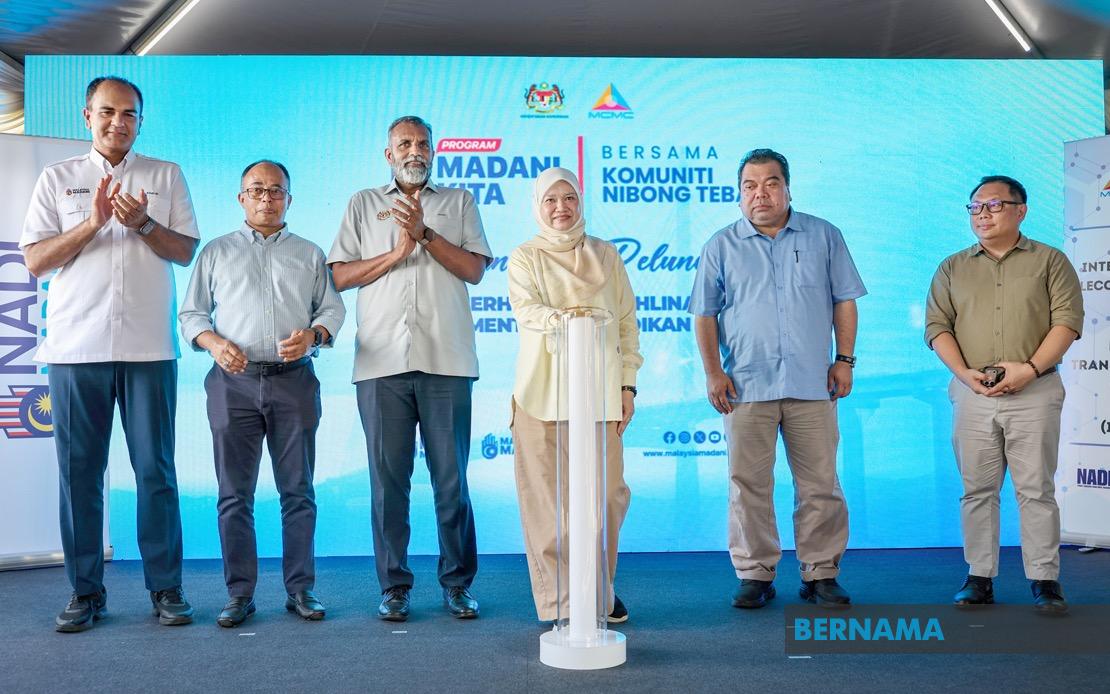
The Malaysian government is intensifying its efforts to bring public services directly to communities through an expanding network of MADANI Kita programmes, with the Communications Ministry having already implemented 41 such initiatives across the country. The latest launch in Nibong Tebal, overseen by Education Minister and local MP Fadhlina Sidek, represents part of a broader strategy to transform how citizens interact with government agencies and access critical services without navigating complex bureaucratic channels.
At the heart of this initiative lies a recognition that modern governance demands more than passive information distribution. The programmes operate through a coordinated framework involving the Community Communications Department (J-KOM), the Malaysian Information Department (JaPen), and the Malaysian Communications and Multimedia Commission (MCMC), working in tandem via the National Information Dissemination Centre (NADI). Communications Ministry deputy secretary-general (Telecommunications Infrastructure) Mano Verabathran emphasised that this multi-agency approach enables comprehensive service delivery while maintaining a human-centric focus that encourages genuine dialogue between officials and the public.
The philosophical underpinning of MADANI Kita addresses a persistent challenge in governance: the gap between policy announcements and citizens' understanding of tangible benefits. Rather than limiting interactions to information sessions, these programmes create spaces where Malaysians can ask questions, seek clarification on policies affecting their lives, and offer feedback directly to implementing agencies. This two-way communication channel represents a departure from traditional top-down messaging, acknowledging that citizens increasingly demand transparency and responsiveness from their government institutions.
Beyond policy discussions, the programmes incorporate experiential learning and community engagement activities that cater to diverse demographics. The inclusion of technology-focused components, educational workshops, and skills development sessions reflects recognition that Malaysia's development depends on fostering digital literacy and economic adaptability. By embedding these elements within public outreach programmes, the government positions itself as an active facilitator of societal progress rather than merely a service provider.
The youth-oriented dimension of MADANI Kita deserves particular attention given Southeast Asia's demographic profile. With activities ranging from e-sports tournaments to team-building exercises, these programmes tap into the interests and aspirations of younger Malaysians while promoting discipline and healthy competition. E-sports, increasingly mainstream across the region, provides an entry point for younger audiences who might otherwise view government engagement as irrelevant to their concerns. This strategic inclusion suggests the government recognises that reaching digitally native populations requires meeting them on familiar platforms and through familiar mediums.
Early participation metrics indicate substantial public interest in these initiatives. The MADANI Kita Permatang Pauh programme attracted over 17,000 attendees during its three-day run alongside the Penang International Halal Expo 2026 in late July, demonstrating that when positioned strategically and promoted effectively, government outreach can mobilise impressive crowds. This success provides momentum for expanding the programme across additional constituencies and regions, particularly in areas where government-citizen relations require strengthening or where service delivery gaps remain pronounced.
The timing of these rollouts reflects Malaysia's broader governance agenda under the MADANI framework, which emphasises prosperity, unity, and accountability. By decentralising government services and bringing officials to communities, rather than requiring citizens to visit scattered government offices, the programmes reduce friction in public administration. This approach has particular resonance in Malaysia's diverse, geographically dispersed context, where distance and access barriers can impede effective service delivery in rural and suburban areas.
From a regional perspective, Malaysia's investment in direct citizen engagement programmes offers lessons for other Southeast Asian democracies grappling with governance challenges. As citizens across the region increasingly demand accountability and responsiveness from their governments, programmes that facilitate direct dialogue and visible service delivery become politically valuable. The MADANI Kita model demonstrates that scale is achievable when multiple government bodies coordinate effectively, suggesting replicable approaches for other nations seeking to modernise public administration.
The integration of community wellbeing initiatives within these programmes also signals recognition that governance encompasses social dimensions beyond formal policy implementation. By combining services, skills training, and recreational activities, MADANI Kita positions government agencies as stakeholders in holistic community development rather than distant bureaucratic entities. This repositioning carries potential long-term benefits for government legitimacy, particularly if sustained and expanded consistently across constituencies.
Looking ahead, the success of this initiative will depend on several factors. Consistent funding and political commitment across electoral cycles ensures continuity; quality of interactions matters as much as quantity of attendees, requiring well-trained staff capable of genuine engagement; and meaningful follow-up on feedback gathered ensures citizens perceive responsiveness rather than performative listening. Malaysian officials and observers will be monitoring whether these 41 programmes represent a lasting institutional shift toward citizen-centric governance or constitute a temporary campaign-related initiative.

