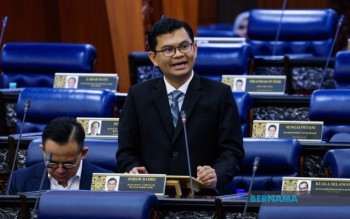
The Malaysian government is accelerating its response to widespread supply chain disruptions affecting the global economy, with Economy Minister Akmal Nasrullah Mohd Nasir announcing the execution of a comprehensive 120-point action plan coordinated through the National Economic Action Council. Speaking in parliament on June 29, the minister disclosed that 27 of these measures have already been fully realised while the remaining 93 are currently in various stages of implementation, underscoring the administration's determination to insulate the domestic economy from external shocks.
The strategic interventions outlined by the minister span both immediate relief mechanisms and longer-term stabilisation efforts designed to protect vulnerable sectors of society. The government's focus extends across measures that directly benefit ordinary citizens, as well as targeted support for micro, small and medium enterprises, which constitute the backbone of Malaysia's private sector employment. The approach also seeks to maintain the continuous flow of essential goods into the market while simultaneously shielding the broader macroeconomic environment from destabilising price volatility and availability crises.
Akmal Nasrullah's briefing to parliament reflected a governing philosophy grounded in pragmatism rather than optimism, acknowledging that current global conditions suggest prolonged disruption rather than a quick resolution. This realism shapes the government's decision not to adopt a wait-and-see posture but instead to maintain active monitoring and continue implementing interventions throughout the expected recovery period. Such an approach recognises that swift normalisation of global trade remains unlikely, necessitating sustained domestic cushioning mechanisms to prevent hardship cascading to households and businesses.
The timeline for meaningful recovery in critical sectors appears extended, with energy markets—a sector intimately connected to Malaysia's own economic interests—not expected to stabilise substantially until the third quarter of 2026 at the earliest. Even this projection carries significant caveats, remaining contingent upon geopolitical stability and the restoration of reliable maritime trade routes, particularly through regions currently affected by regional tensions. For Malaysia, a maritime trading nation dependent on predictable shipping corridors and energy imports, these remain substantial uncertainties that could easily derail recovery timelines.
Beyond energy, the broader uncertainty surrounding commodity prices and supply availability is anticipated to persist for one to two additional years beyond current conditions, creating a volatile operating environment for businesses attempting to forecast costs and plan investment. This extended period of unpredictability poses particular challenges for manufacturing sectors that depend on imported raw materials and components, affecting export competitiveness and investment decisions. Malaysian industries relying on just-in-time supply chains face continued pressure as they navigate alternating periods of scarcity and oversupply.
The minister explicitly acknowledged the serious risks posed by a prolonged global supply crisis, rejecting any suggestion that the government underestimates the threat to economic stability and living standards. However, Akmal Nasrullah moved swiftly to assert that these risks are being managed through structured, evidence-based governance rather than reactive improvisation. This emphasis on systematic, data-driven decision-making is designed to project competence and stability to both domestic stakeholders and international investors monitoring Malaysia's crisis response capacity.
Central to the government's communication strategy is the commitment to maintain transparency with the public through regular information sharing via the National Economic Action Council and other relevant agencies. This pledge addresses a critical challenge in managing supply chain crises, where public anxiety and misinformation can amplify economic disruption through panic buying and hoarding behaviour. By committing to timely, accurate disclosure, the government aims to foster rational consumer behaviour and sustain confidence in institutional management of the crisis.
The minister outlined a sophisticated balancing act that the government is attempting to navigate: remaining sufficiently vigilant to identify and respond to emerging problems without inducing panic, maintaining realism about the duration and severity of challenges without slipping into defensive or alarmist rhetoric, and adopting proactive solutions without abandoning prudent fiscal management. This equilibrium is particularly delicate in Malaysia's context, where public confidence in government economic stewardship directly influences consumer spending, business investment, and the attractiveness of the country to foreign direct investment.
Akmal Nasrullah's appeal for stakeholder cooperation underscores a recognition that government action alone cannot effectively contain the impact of global supply disruptions on a small, trade-dependent economy. Business associations, logistics operators, retailers, and civil society organisations all have roles in implementing the government's strategy and cushioning vulnerable populations from the worst effects. This call for collective action reflects an understanding that supply chain resilience depends on coordination across public and private sectors, from port operations to last-mile delivery and retail distribution.
For Malaysian consumers and small business operators, the practical implication of these 120 measures remains partially opaque, though the government's emphasis on continued implementation suggests that relief through price stabilisation, targeted subsidies, or preferential access to essential goods should become more visible in coming quarters. The measures targeting MSMEs may include credit facilities, labour cost assistance, or exemptions from certain regulations to ease operational burdens during the crisis period. Success in these interventions will ultimately be measured through inflation data, MSME failure rates, and employment stability rather than through government announcements alone.
The government's framing of the supply crisis as a medium-term challenge extending through 2026 and beyond signals that extraordinary support measures should be expected to remain in place for an extended period. This creates both budgetary pressures and political imperatives for the administration to demonstrate tangible relief reaching ordinary Malaysians and struggling businesses. The effectiveness of the 120-point plan will ultimately determine whether Malaysia navigates this global disruption with minimal domestic economic scarring or whether supply chain pressures translate into prolonged unemployment, business failures, and erosion of household savings.

