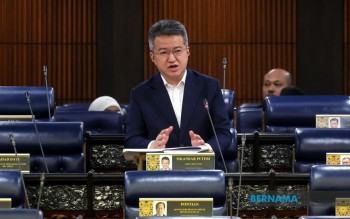
Malaysia has taken a significant step towards securing its long-term financial security with the tabling of the National Trust Fund Bill 2026 in the Dewan Rakyat today. The legislation seeks to create the National Trust Fund (KWAN) as a dedicated sovereign wealth vehicle, incorporating the National Trust Fund (Incorporated) as the administrative body responsible for stewarding and investing the accumulated reserves. This move reflects a broader policy commitment to building enduring financial buffers that will benefit both the current generation and their successors in an increasingly uncertain economic environment.
Deputy Finance Minister Liew Chin Tong presented the bill to Parliament, with the second reading anticipated to occur before the current parliamentary session concludes. Once enacted and operational—a timeline to be determined by the Finance Minister through Gazette notification—the legislation will establish formal mechanisms for accumulating and managing national wealth. The framework represents a maturation of Malaysia's approach to fiscal stewardship, moving beyond annual budget cycles to contemplate multi-decade financial planning and reserve management.
The financial backbone of KWAN rests on three mandatory contribution streams from the Federal Government. First, the treasury must allocate at minimum 0.1 per cent of its projected annual revenue annually into the fund, creating a base contribution regardless of economic conditions. Second, at least two per cent of all dividends received from Petronas must flow into KWAN, capturing a meaningful portion of the nation's petroleum wealth for long-term preservation. Third, no less than two per cent of export duty revenues from depleting natural resources—after accounting for any state allocations—will feed into the fund. These three sources create a diversified income base that ties the fund's growth to the government's fiscal health, energy sector performance, and resource extraction activities.
The contribution structure acknowledges a critical economic reality facing Malaysia: revenues from non-renewable resources are finite and unpredictable. By legislatively requiring a fixed percentage of Petronas dividends and resource export duties to flow into a sovereign wealth fund, the bill attempts to break the historical pattern where energy revenues are consumed in current spending or absorbed into general budgets. This mechanism mirrors global best practices seen in funds such as Norway's Government Pension Fund Global, which has accumulated enormous reserves by consistently directing petroleum wealth into long-term investments rather than immediate expenditure.
Parliamentary oversight remains embedded in the design. The Federal Government must disclose all annual contributions in the financial statements laid before the Dewan Rakyat, ensuring transparency about how much wealth is being accumulated each year. These contributions must actually be transferred to the fund by the close of the relevant financial year, preventing theoretical promises that go unfulfilled. This accountability framework is essential for public trust, particularly given Malaysia's historical challenges with fund management and the political sensitivity surrounding resource wealth allocation.
The bill also contemplates supplementary contributions from state governments that receive royalties from petroleum or other depleting resource extraction within their jurisdictions. This provision creates a potential revenue channel beyond federal contributions, though the practical uptake will depend on individual state fiscal situations and political will. Some mineral-rich states may view contributions as competing with their immediate developmental needs, while others might recognise the long-term value of wealth preservation. This flexibility allows for organic growth as political consensus evolves around intergenerational responsibility.
Capital deployment represents another critical dimension of KWAN's design. The fund's resources will be deployed across investment vehicles selected to generate returns that compound over decades, while simultaneously funding the administrative apparatus required to manage such a large financial entity. The National Trust Fund (Incorporated) board will incur remuneration costs for its members and officers, along with operational and investment management expenses. These administrative costs, while necessary, will represent a drag on returns and thus require careful optimisation to preserve capital growth.
Strategic asset allocation emerges as a central governance responsibility. The KWAN board must formulate comprehensive long-term investment strategies that specify how different asset classes—equities, fixed income, infrastructure, real assets—will be balanced over multi-decade horizons. Such strategies cannot be reactive to short-term market movements or electoral cycles; they demand insulation from political pressure and commitment to disciplined, evidence-based portfolio construction. The success or failure of KWAN will ultimately be determined by whether the board can maintain strategic consistency through inevitable political transitions and market volatility.
Financial transparency and ministerial oversight create an accountability structure. The National Trust Fund (Incorporated) board must furnish the Finance Minister with regular returns, comprehensive reports, detailed accounts, and any other information the minister requires regarding fund assets and activities. This reporting relationship ensures that civilian political leadership retains ultimate control while technical management decisions rest with appointed fiduciaries. The balance between granting professional independence and maintaining democratic accountability will prove critical to KWAN's credibility and longevity.
For Malaysia, the National Trust Fund represents a belated acknowledgment that resource wealth cannot sustain indefinite consumption and that deliberate wealth preservation requires legislative commitment and institutional mechanisms. The Southeast Asian region has witnessed both successful and failed sovereign wealth experiments—Singapore's Temasek and Government of Singapore Investment Corporation have performed exceptionally, while other jurisdictions have squandered windfall gains through politicised spending. Malaysia's experience with funds including the Employee Provident Fund and Employees Pension Scheme underscores both the potential for long-term wealth accumulation and the vulnerability of such bodies to political pressure.
The legislation also carries implications beyond Malaysia's borders. As regional governments face climate transition pressures, declining hydrocarbon revenues, and demographic aging, KWAN's establishment signals that developing economies increasingly recognize the necessity of decoupling current consumption from future security. If successfully implemented with genuine independence and professional investment management, KWAN could establish a model that other ASEAN nations might emulate, demonstrating that resource-rich developing countries can build enduring prosperity through disciplined fiscal management rather than short-term wealth extraction.
The immediate parliamentary pathway appears clear, with the second reading scheduled during the current session. The real test will come post-enactment: whether political leadership genuinely protects KWAN from raids during fiscal stress, whether the board maintains investment discipline despite electoral cycles, and whether contributions actually materialize in the volumes specified by legislation. Malaysia's capacity to answer these questions affirmatively will determine whether KWAN becomes a genuine engine of intergenerational prosperity or merely another administrative entity overshadowed by immediate political demands.

