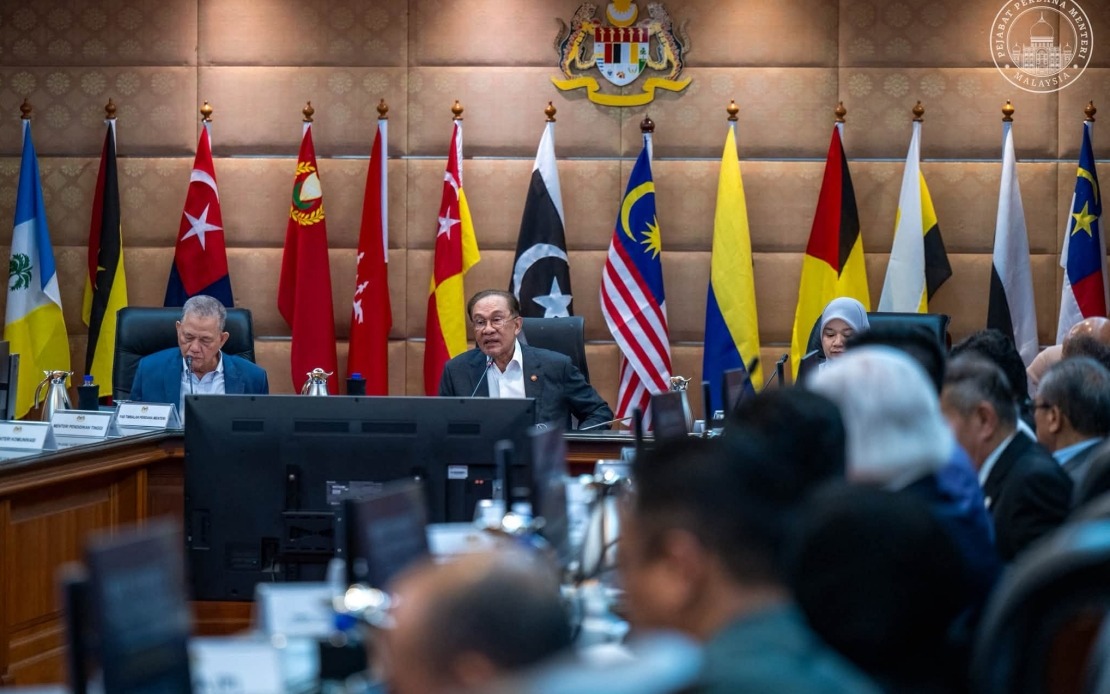
Malaysia has taken a significant step toward transforming its education landscape with the establishment of the National Education Council, according to Prime Minister Datuk Seri Anwar Ibrahim. The council's formation marks a deliberate pivot toward comprehensive reform of the nation's educational infrastructure, reflecting growing recognition that the existing system requires modernization to meet contemporary economic and social demands. Anwar made the announcement following the inaugural National Education Council Meeting No. 1 of 2026, in which he presided over wide-ranging discussions on the country's educational trajectory spanning both primary and secondary schooling as well as tertiary institutions.
The council's mandate extends across multiple critical dimensions of educational development. Beyond merely updating curricula and teaching materials, the governing body will pursue strategic improvements designed to strengthen Malaysia's position in an increasingly competitive global knowledge economy. A central objective involves enhancing English language capabilities among students, positioning the language as a vital second-language competency without compromising the foundational role of Bahasa Malaysia as the national language. This balanced approach reflects the delicate cultural and political considerations that shape Malaysian education policy, ensuring that language reforms align with the broader Malaysia MADANI development framework that emphasizes preserving national values, cultural heritage, and moral character alongside practical skill acquisition.
The discussions held during this foundational council meeting revealed several priority areas that will shape educational trajectory in the coming years. Particular emphasis was placed on elevating educational quality at the district level, suggesting a commitment to ensuring that reform benefits are distributed equitably across the country rather than concentrated in urban centers. The council's deliberations also addressed the Bumiputera education agenda, acknowledging the ongoing importance of policies designed to advance educational opportunities for indigenous and Malay communities. Additionally, significant attention was devoted to constructing a sustainable talent pipeline in science, technology, engineering, and mathematics—fields increasingly recognized as essential for Malaysia's economic diversification and technological advancement.
Anwar's remarks underscore a philosophical approach to reform that rejects incremental adjustment in favor of fundamental reimagining of educational structures. He emphasized that Malaysia must abandon complacency with existing systems and embrace the necessity of bold implementation of reforms. This stance suggests potential tension between traditional stakeholders invested in the status quo and reform advocates pushing for substantial change. The Prime Minister stressed the importance of continuous elevation of educational quality, framing improvement not as a discrete project with a defined endpoint but as an ongoing commitment to excellence.
The governance approach adopted by the new council reflects a commitment to evidence-based policymaking grounded in expert consultation. Rather than imposing top-down directives, Anwar indicated that educational decisions will be informed by objective evaluation of the system's performance and by incorporating perspectives and specialized knowledge from diverse stakeholders. This methodology suggests potential involvement of educators, researchers, administrators, business leaders, and civil society representatives in shaping reform direction. Such inclusive deliberation could enhance policy legitimacy while also creating space for competing interests to influence outcomes.
For Malaysia's education sector, the council's establishment carries implications extending well beyond administrative reorganization. The explicit focus on English proficiency addresses a persistent concern among employers and higher education institutions regarding graduates' communication abilities in the global business language. Simultaneously, the commitment to preserving national language and cultural values responds to concerns that excessive internationalization might erode distinctly Malaysian educational identity. Balancing these objectives presents substantial pedagogical and resource challenges that the council will need to navigate carefully.
The emphasis on STEM talent development aligns with broader Southeast Asian trends and reflects Malaysia's strategic aspirations in high-technology sectors. As regional competitors increasingly invest in scientific and mathematical education, Malaysia's ability to cultivate homegrown expertise in these fields will determine whether the country can sustain competitive advantage in emerging industries such as semiconductor manufacturing, biotechnology, and digital services. The council's focus on building this talent pipeline suggests recognition that current educational output may not adequately meet private sector demands.
The council's attention to district-level quality improvement addresses a significant equity challenge within Malaysia's education system. Rural and less-developed districts often face resource constraints, teacher shortages, and limited infrastructure that disadvantage students relative to their urban counterparts. Targeted elevation of district-level educational quality could help narrow persistent achievement gaps and ensure that educational opportunity is not determined by geographic location. Success in this area would require sustained resource commitment and coordination between federal and state authorities.
The empowerment of the Bumiputera education agenda within the council's framework reflects ongoing political and social importance of policies benefiting indigenous and Malay-Muslim communities. Balancing inclusive advancement of this community with meritocratic principles and national competitiveness represents a persistent policy challenge. The council's approach to this question will signal the government's priorities regarding equity, representation, and excellence in Malaysian education.
As the National Education Council commences its work, success will depend on translating these broad aspirational objectives into concrete policies, resource allocations, and classroom practices. The council's inaugural meeting has established a reform agenda that is simultaneously ambitious and complex, seeking to modernize without abandoning cultural distinctiveness, to internationalize without losing national identity, and to enhance competitiveness while maintaining social cohesion. The months ahead will reveal whether this newly established institution can effectively navigate these tensions and deliver meaningful improvements to Malaysia's education system.

