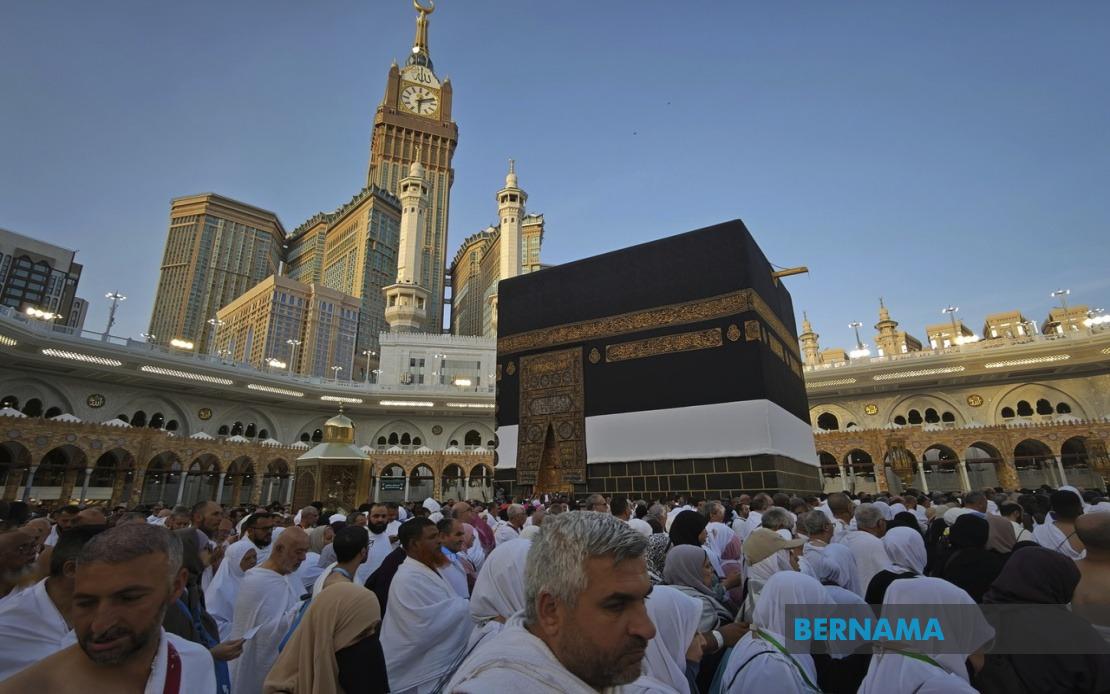
The Malaysian Consulate General in Jeddah moved to quash circulating misinformation on Sunday, issuing a categorical denial of claims spreading across social media platforms that suggested Malaysian haj pilgrims were still stationed in Saudi Arabia. The diplomatic mission stated unequivocally that the entire cohort of Malaysian pilgrims participating in the 1447H/2026 Haj season had concluded their pilgrimage and returned to Malaysia in accordance with the predetermined schedule established by the Pilgrims Fund Board, commonly referred to as Tabung Haji.
The consulate's statement represented an effort to contain what officials characterised as unverified and potentially alarming claims that had gained traction online. In an era of rapid information dissemination through digital channels, such denials from official sources carry particular significance, as false narratives regarding hajj operations can generate unnecessary anxiety among families of returning pilgrims and broader public concern. The consulate explicitly stated that "there are no Malaysian haj pilgrims remaining in Saudi Arabia under the 1447H/2026 Haj operations," leaving no ambiguity regarding the completion of the repatriation process.
The timing and nature of the consulate's intervention highlight the contemporary challenge faced by government agencies in managing public communication during periods when large populations are engaged in significant religious or national undertakings. The hajj pilgrimage represents not merely a religious obligation for Muslims but also a substantial logistical operation involving thousands of citizens, their families, and multiple government agencies. When pilgrims travel abroad in such numbers, any suggestion of delays or complications can rapidly amplify through social networks, creating public anxiety that may be entirely unfounded.
Tabung Haji, the institution responsible for coordinating Malaysia's haj operations and managing the return schedules, had evidently executed its repatriation plan without material deviation. The board's scheduling mechanism typically accounts for the complex choreography required to transport thousands of pilgrims from Saudi Arabia to Malaysia, coordinating flights, ground transportation, and processing at both ends. The fact that all pilgrims returned according to the predetermined timetable indicates the operational framework functioned as designed, a routine outcome that nonetheless warranted official confirmation given the social media assertions.
The consulate's broader appeal to the public reflected an understanding that official communications must compete for credibility in an information environment where unverified claims can propagate rapidly. The diplomatic mission urged Malaysian citizens to exercise caution regarding unsubstantiated narratives and to privilege information sourced directly from government channels, Tabung Haji, and other official bodies. This guidance reflects a recognition that in matters involving public welfare and the safety of citizens abroad, institutional authority and verified information remain essential counterweights to speculative or deliberately misleading content.
The incident underscores the vulnerabilities that exist when critical information regarding national undertakings becomes subject to social media discourse. While such platforms enable rapid communication and can serve legitimate informational purposes, they also facilitate the spread of rumors and misinformation at unprecedented scale. For Malaysian families with relatives among the hajj pilgrims, the circulation of claims suggesting delayed returns would naturally provoke concern, even when such claims ultimately prove baseless.
From a governance perspective, the consulate's swift response indicated an institutional commitment to maintaining transparency and public confidence in haj operations. The Pilgrims Fund Board has long occupied a significant place in Malaysian national life, managing not only the logistical dimensions of hajj participation but also the financial arrangements through which Malaysian Muslims accumulate funds for their pilgrimage. The successful completion of the 1447H/2026 season according to schedule reinforced the reliability of these institutional mechanisms.
The broader context involves Malaysia's substantial participation in the annual hajj pilgrimage, with tens of thousands of citizens undertaking this religious obligation each year. The coordination required across government agencies, private contractors, Saudi Arabian authorities, and the pilgrims themselves represents a complex administrative undertaking. Any disruption to the expected timeline would carry consequences extending beyond the immediate pilgrims to affect their families, employers, and communities awaiting their return.
The consulate's advisory to citizens to rely on official sources rather than unverified social media content carries implications for public discourse more broadly. As Malaysia navigates an era of digital communication, the challenge of maintaining institutional credibility while combating misinformation remains ongoing. Government agencies must balance transparency with the need to correct false narratives swiftly and authoritatively. The consulate's intervention in this instance exemplified such an approach, providing clear factual correction while directing the public toward reliable information channels for future reference regarding haj-related matters.

