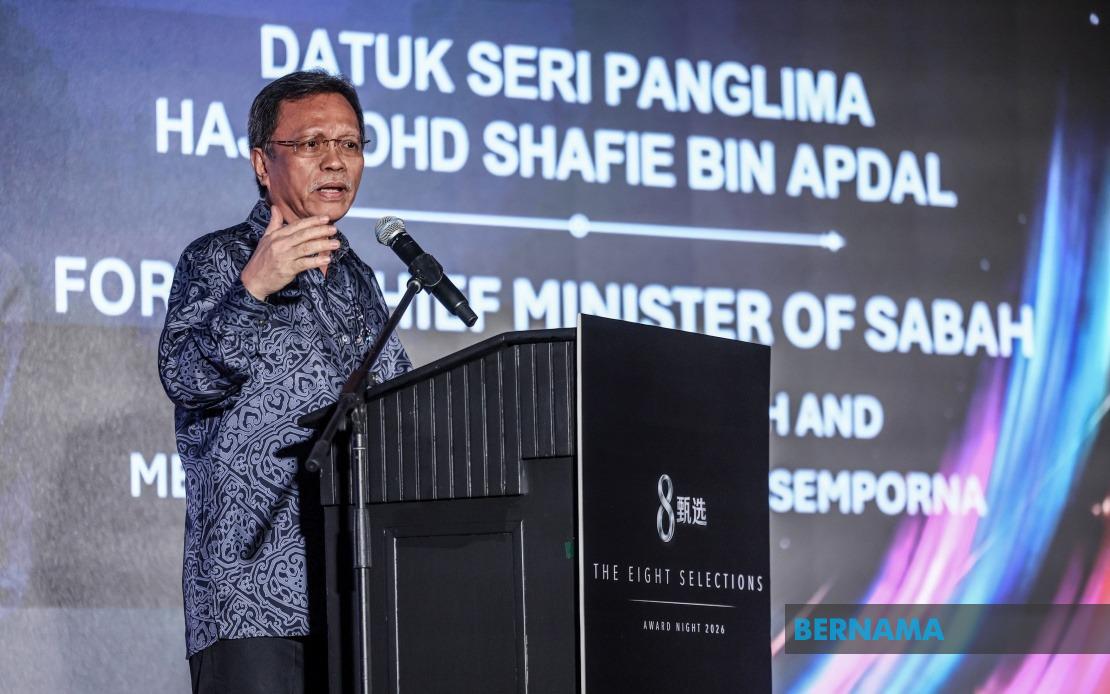
Malaysia's entrepreneurial community came together to celebrate outstanding business achievement when the G Forty Top 40 The Eight Selections Award 2026 ceremony took place in Kuala Lumpur last night. The prestigious event recognised 28 entrepreneurs, brand founders and notable individuals whose work has shaped the nation's commercial and business landscape. Roughly 300 attendees—ranging from established industry figures to emerging professionals across multiple sectors—gathered to witness the celebrations, reflecting the breadth of Malaysia's contemporary business ecosystem.
The awards ceremony, jointly organised by G Media Asia and supported strategically by Media Prima OMNiA, drew considerable prominence through its official proceedings. Former Sabah Chief Minister Datuk Seri Mohd Shafie Apdal officiated the event, while G Media Asia chairman Datuk Wira Dr Calvin Khiu and Media Prima OMNiA Chief Operating Officer of Agency Solutions Stephanie Wong were among the key figures present. This calibre of attendance underscores the growing recognition of entrepreneurship as a cornerstone of Malaysia's economic development agenda.
The awards programme functions as an important mechanism within Malaysia's business culture for documenting and validating the pathways taken by corporate leaders and the brands they have built. Rather than simply distributing trophies, the initiative frames entrepreneurial success as narratives worthy of sustained public attention and historical record. In doing so, it contributes to a broader institutional memory around Malaysia's commercial evolution and the individuals driving transformation across sectors.
G Media Asia Chief Executive Officer Cathy Ooi articulated a vision extending beyond conventional award recognition. She argued that measuring an entrepreneur's or organisation's true impact cannot rest solely upon accolades, but must encompass their wider influence on society and the marketplace. This perspective reflects a maturing understanding within Malaysia's business discourse that commercial success intertwines with reputation, community standing and stakeholder trust.
Ooi emphasised the role that media institutions play in this ecosystem. By documenting business narratives, sharing them widely and establishing their credibility, media platforms like G Media Asia create lasting value that benefits not merely current audiences but future generations seeking to understand how Malaysian commerce evolved. This framing positions journalism and media strategy as active participants in economic development rather than passive observers.
The evolving nature of business competition received specific attention during the ceremony. Contemporary commercial rivalry, according to Ooi's remarks, transcends the realm of product differentiation or service quality. Brand perception, consumer confidence and public trust now constitute equally critical competitive dimensions. For Malaysian businesses operating both domestically and in regional markets, this reality carries particular significance as they navigate increasingly sophisticated consumer bases and information-saturated environments.
G Media Asia's strategic positioning reflects recognition that Malaysian entrepreneurship requires institutional support beyond government policy or financial incentives. By harnessing media's communicative power to chronicle business achievements and highlight entrepreneurial ambition, the organisation situates itself as a custodian of Malaysia's commercial identity. This approach resonates with growing calls for celebrating homegrown success stories as counterweight to international business narratives that often dominate regional media landscapes.
The ceremony structured recognition across eight primary award categories targeting distinct entrepreneurial profiles and business achievements. Young Entrepreneur of the Year and Male Entrepreneur of the Year and Female Entrepreneur of the Year categories acknowledge individual achievement while recognising the importance of gender diversity in Malaysia's entrepreneurial ranks. The Era Influence Representative of the Year category elevates those whose commercial impact extends into broader social and cultural domains. Similarly, the Brand Heritage of the Year and Brand Innovation of the Year awards recognise that business success manifests through different pathways—either through sustained excellence across generations or through pioneering new market spaces.
Brand Influence of the Year and Brand Social Value of the Year categories reflect contemporary expectations that successful commercial enterprises contribute meaningfully to society beyond shareholder returns. This evolution in award criteria mirrors global trends where corporate social responsibility and brand purpose increasingly influence consumer purchasing decisions and investor allocations. For Malaysian companies, particularly those with aspirations toward regional expansion, this shift carries material implications for brand positioning and stakeholder engagement strategies.
Beyond the principal categories, the Icons of the Era Honours programme provided additional recognition through the G Icon Legacy Award and G Icon Award. These distinctions target brands demonstrating sustained excellence, meaningful industry leadership, substantial marketplace influence and enduring business viability. By establishing these special recognitions, the awards framework acknowledges that certain organisations transcend typical achievement measures through their historical significance and ongoing relevance to Malaysia's commercial evolution.
The ceremony's emphasis on documentable brand narratives addresses a gap in Malaysian business discourse. While business journalism exists, systematic celebration of local entrepreneurial achievement remains limited compared to international brand coverage or multinational corporate reporting. This awards programme partially addresses that imbalance by creating occasions for sustained attention to Malaysian-rooted companies and their founders. For emerging entrepreneurs and mid-sized businesses seeking visibility and credibility, such platforms offer valuable opportunities to reach investors, potential partners and consumer audiences simultaneously.
Looking forward, the G Forty Top 40 awards structure signals G Media Asia's commitment to positioning itself as the definitive chronicler of Malaysia's entrepreneurial landscape. This institutional role carries implications beyond immediate award prestige—it influences how business narratives circulate within Malaysia, how entrepreneurs understand their own significance and how younger business figures conceptualise success. By consistently elevating certain achievement categories and entrepreneurial profiles, such programmes gradually reshape what Malaysian business culture valorises and remembers.

