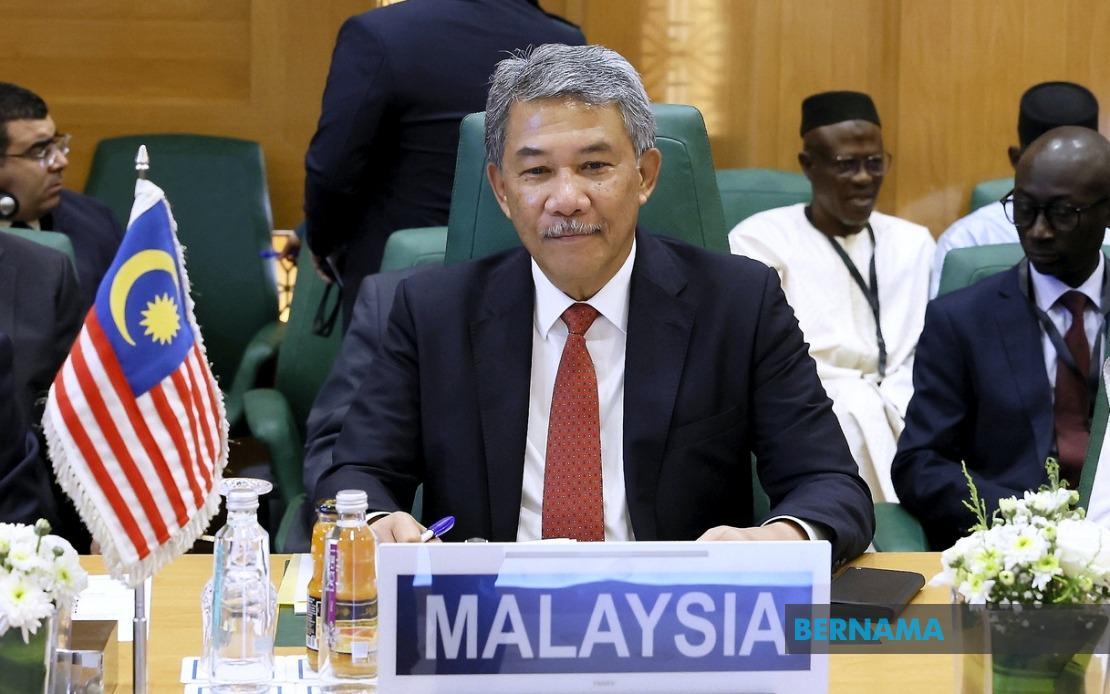
Malaysia has intensified diplomatic pressure on the Organization of Islamic Cooperation (OIC) to take collective action against Israel's settlement expansion programme, with Foreign Minister Datuk Seri Mohamad Hasan delivering a forceful statement at an extraordinary ministerial gathering in Jeddah. The intervention represents a significant escalation in Malaysia's advocacy on the Palestinian issue within multilateral forums, positioning the country as a vocal advocate for Palestinian rights within the Islamic bloc.
At the heart of Malaysia's appeal is a call for OIC member states to ground their resistance in international law, specifically by upholding the International Court of Justice's Advisory Opinion issued on July 19, 2024. Rather than treating the settlement question as merely a political disagreement, Mohamad framed adherence to the ICJ ruling as a legal and moral obligation. This legalistic approach provides a framework through which OIC members can justify coordinated action beyond religious solidarity, anchoring the Palestinian cause in established international jurisprudence that extends beyond the Muslim world.
The US$2.3 billion settlement scheme under discussion encompasses multiple dimensions of Israeli territorial consolidation, with particular emphasis on the E1 settlement plan. Malaysia characterised this initiative as fundamentally incompatible with the establishment of a viable Palestinian state, arguing that such expansion deliberately fragments Palestinian territory and prevents the contiguous landmass necessary for genuine Palestinian sovereignty. The E1 settlement, positioned between Jerusalem and Jericho, holds strategic significance as it would effectively sever Palestinian areas in the West Bank and prevent territorial coherence—a technical consideration that underpins Malaysia's opposition beyond rhetorical condemnation.
Beyond settlement expansion, Malaysia highlighted the broader pattern of what it characterised as systematic undermining of Palestinian territorial integrity and governance capacity. The foreign minister drew specific attention to illegal evictions of Palestinian residents in Jerusalem, restrictions on Palestinian access to their own holy sites, and measures designed to alter the demographic and political character of the disputed city. These grievances extend beyond real estate disputes to encompass what Malaysia views as erasure of Palestinian presence and identity in territories they inhabited for centuries.
The Gaza dimension of Malaysia's statement reflects mounting international frustration with the humanitarian consequences of ongoing conflict. Mohamad cited the death toll of over 70,000 persons and described the territory as devastated, characterising the situation as indicative of broader failures in the international system's ability to protect civilians. His criticism targeted not only Israeli military operations but also the international community's perceived inability or unwillingness to enforce existing humanitarian principles despite nearly three years of diplomatic calls for ceasefire and humanitarian access. This framing presents the Palestinian crisis as a test case for whether international norms retain meaningful force.
Malaysia's emphasis on Israeli settler violence and far-right incursions into sensitive religious sites reflects concerns about grassroots expansion that operates outside formal state structures. The reference to Israeli minister and settler intrusions into the Al-Aqsa Mosque compound on July 23 underscores how Malaysia views the conflict as encompassing not merely state actions but also vigilante efforts to alter facts on the ground. Such provocations complicate diplomatic resolution by introducing unpredictable actors whose actions can rapidly escalate tensions and undermine negotiated settlements.
The foreign minister's reaffirmation of Malaysia's commitment to the two-state solution based on 1967 borders with East Jerusalem as the Palestinian capital represents a consistent position that distinguishes Malaysia's approach from more absolutist regional rhetoric. By repeatedly emphasising this framework, Malaysia positions itself as reasonable and solution-oriented, advocating for Palestinian rights within a internationally-recognised template rather than pursuing maximalist territorial claims. This measured stance may be designed to broaden appeal within the international community while maintaining credibility among OIC members.
Malaysia's call for enhanced support to Palestinian institutions and state-building capacity addresses a practical dimension often overshadowed by security concerns. Rather than focusing solely on opposing Israeli actions, this dimension of the statement emphasises Palestinian institutional development and governance strengthening as essential prerequisites for functional statehood. For Malaysian policymakers, institutional capacity represents the bridge between political independence and practical sovereignty—a concern particularly salient in the Southeast Asian context where state capacity often determines outcomes as much as formal territorial recognition.
The invocation of the Hashemite Custodianship over Islamic and Christian holy sites in Jerusalem signals Malaysia's respect for Jordan's particular role and religious authority, even as Malaysia advocates independently on Palestinian matters. This diplomatic finesse recognises established regional arrangements while advancing Malaysian interests, a balancing act particularly important given Jordan's geopolitical constraints as a neighbouring state.
Malaysia's criticism of UN Security Council paralysis and calls for enforcement of international law implicitly acknowledge the limitations of current diplomatic mechanisms. The reference to Israel's seizure of UNRWA facilities and adoption of legislation targeting Palestinian refugees introduces questions of state conduct toward civilian and humanitarian infrastructure that extend beyond immediate conflict dynamics. For regional observers, these concerns resonate with anxieties about whether powerful states face meaningful accountability for actions violating humanitarian norms.
For Malaysia and other Southeast Asian states, the Palestinian question serves multiple functions beyond humanitarian concern: it represents a test of international order effectiveness, a rallying point for Muslim solidarity, and an indicator of whether regional states can exercise meaningful influence on global affairs. Malaysia's sustained advocacy suggests determination to position itself as a consequential voice on major international issues rather than a peripheral actor confined to regional matters.
The Jeddah statement ultimately reflects Malaysia's calculation that intensified OIC coordination offers potential leverage despite apparent diplomatic stagnation. Whether such coordinated pressure produces tangible results remains uncertain, but Malaysia's willingness to invest political capital in this advocacy indicates assessment that the Palestinian cause remains central to Malaysia's international identity and regional leadership aspirations within the Islamic world.

