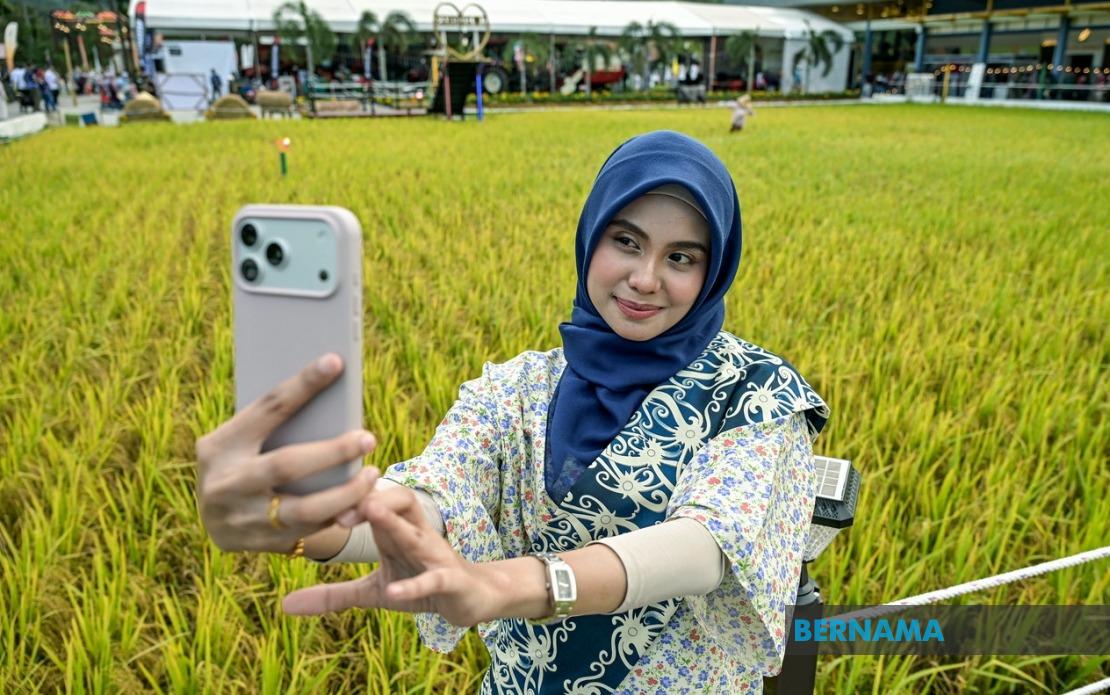
Malaysia's agricultural sector has achieved a fresh milestone with the recognition of Paddy Art at Laman Padi, an ambitious seven-acre agrotourism initiative that debuted at the Malaysia Agriculture, Horticulture and Agrotourism Exhibition (MAHA) 2026 in Serdang. The installation, which depicts the national flag alongside heart and hand motifs and the word 'Jati', has earned the distinction of being certified by the Malaysia Book of Records as the nation's largest paddy art formation. This achievement arrives at a pivotal moment when Malaysian agriculture is being repositioned as a sector capable of delivering experiences and cultural value alongside its traditional role in food security.
The artistic creation emerged through a carefully orchestrated collaboration between government agencies and private-sector partners, utilising the MR284 paddy variety. What distinguishes this paddy art from conventional rice farming is its execution through a staged planting methodology that harnesses natural colour gradations produced by different crop maturity cycles. Rather than relying on chemical additives or artificial alterations, the design leverages biological variation to produce the visual effect—a technique that underscores how agricultural innovation can merge traditional knowledge with contemporary creativity.
Minister of Agriculture and Food Security Datuk Seri Mohamad Sabu has positioned the Paddy Art as emblematic of a broader transformation in how Malaysian society perceives agricultural land. Speaking at the Laman Padi opening at Malaysia Agro Exposition Park Serdang (MAEPS), he emphasised that paddy fields need not remain confined to their conventional purpose of grain production. Instead, they represent untapped platforms for technology demonstration, educational engagement, employment generation, and economic value creation through strategically designed agrotourism experiences. This reframing carries significant implications for rural communities and smallholder farmers seeking diversified income sources amid evolving market pressures.
The Laman Padi complex itself spans seven acres and incorporates seven distinct paddy plots alongside two information centres and galleries, each crafted to tell a different narrative about Malaysia's rice and paddy heritage. This multi-layered approach reflects growing recognition that agricultural tourism requires more than simply opening farm gates to visitors. Instead, successful agrotourism demands deliberate curation, educational scaffolding, and experiential design that resonates with diverse visitor demographics, particularly urban populations and younger generations who possess limited direct exposure to farming activities.
Agrotourism adoption is accelerating across Southeast Asia, driven largely by urbanisation and the corresponding nostalgia many city dwellers harbour for agricultural connection. In Malaysia's context, the model addresses a genuine opportunity: leveraging paddy field assets to generate supplementary revenue streams for farming families and local communities whilst simultaneously educating consumers about the origins and complexity of rice production. During MAHA 2026's inaugural run, Laman Padi recorded 4,000 visitors on its opening day, with Paddy Industry Development Division (PIP) projections suggesting daily attendance could reach 10,000 throughout the 10-day exhibition period.
The initiative deliberately integrates traditional and modern agricultural elements to chronicle the rice industry's evolution from historical practices to contemporary methods. An infotainment framework—combining information delivery with entertainment value—enables visitors to absorb knowledge about paddy cultivation whilst simultaneously engaging in interactive demonstrations, hands-on activities, and product showcases. This approach addresses a critical challenge facing agricultural education: how to make farming knowledge compelling and accessible to generations raised in predominantly urban environments.
Educational programming forms a cornerstone of the Laman Padi experience, with approximately ten schools already participating in paddy-related activities designed to furnish students with practical exposure to cultivation techniques. These school visits represent valuable curriculum enrichment, allowing younger Malaysians to develop visceral understanding of how rice reaches their tables. For the agricultural sector, this youth engagement serves a dual purpose: building future demand appreciation for locally grown rice whilst cultivating potential interest in agricultural careers among students.
The commercial dimension of Laman Padi also merits attention. By functioning as a strategic collaboration platform spanning the paddy and rice value chain, the facility enables private-sector participants—including major players such as BERNAS—to directly showcase their products and innovations to concentrated visitor audiences. This arrangement creates marketplace opportunities whilst allowing companies to strengthen brand connections with consumers. Simultaneously, the facility curates diverse culinary concepts representing regional rice-based dishes from across Malaysia, further enriching the visitor experience whilst demonstrating rice's cultural centrality across the nation's communities.
For Malaysian policymakers and agricultural stakeholders, the Paddy Art's Malaysia Book of Records achievement signals that creative repositioning of agricultural assets can generate measurable outcomes. The record recognition itself functions as marketing validation, attracting media attention and visitor curiosity that extends beyond traditional agricultural exhibition circuits. As regional competition intensifies for agrotourism revenue and experience-based agricultural revenue, Malaysia's capacity to deliver record-breaking attractions may prove strategically valuable in competing for both domestic and regional tourist spending.
The broader implications of Laman Padi extend to rural economic sustainability. Across Southeast Asia, agricultural communities face persistent pressures from commodity price volatility, climate variability, and labour migration. By demonstrating that paddy fields can function as tourist attractions generating direct income whilst maintaining their food production capacity, Malaysia establishes a diversification model potentially relevant to neighbouring agricultural economies. The success or challenges encountered during MAHA 2026 and beyond will provide instructive lessons for other nations considering similar agrotourism development.
Moving forward, the concept's viability depends partly on maintaining visitor flow during non-exhibition periods and establishing permanent mechanisms to sustain the facility's operational momentum. Questions also arise regarding how smaller or geographically dispersed farming communities might adapt the Laman Padi model to their local circumstances, and whether the record-setting Paddy Art might become a rotational installation featuring different seasonal designs. These considerations will shape whether the current achievement represents a singular exhibition highlight or a prototype for expanded agricultural tourism development across Malaysia's paddy-growing regions.

