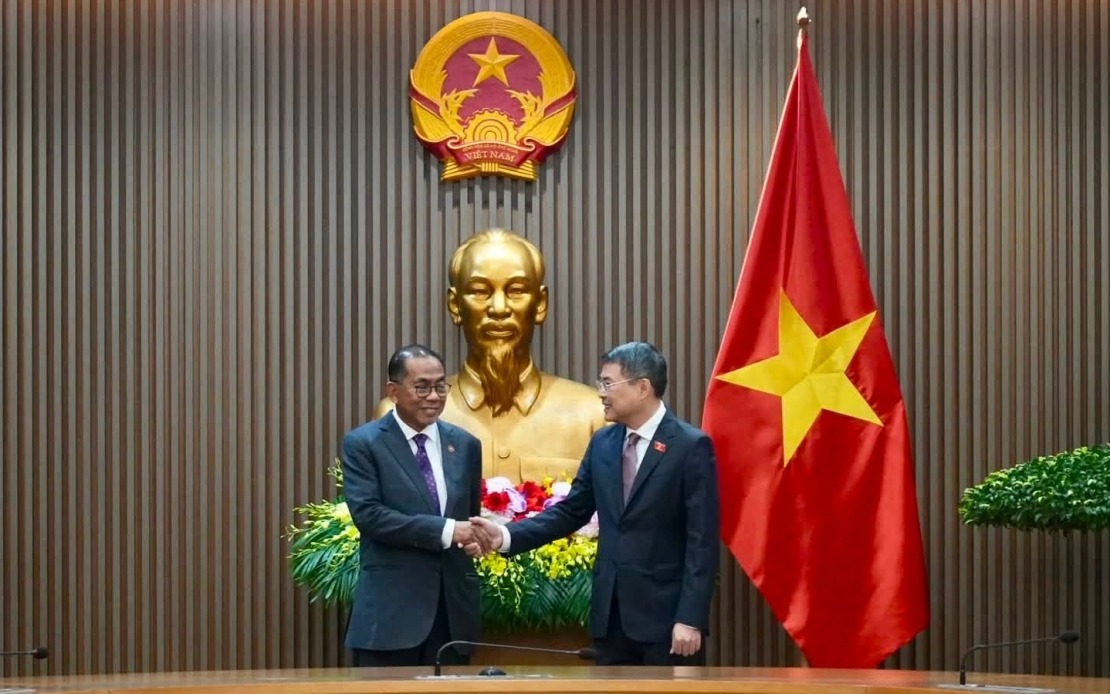
Malaysia and Vietnam have reaffirmed their commitment to building a more robust defence partnership, with plans to extend cooperation across multiple strategic domains including maritime security, advanced technology and defence industry collaboration. The announcement came from Malaysian Defence Minister Datuk Seri Mohamed Khaled Nordin following bilateral discussions with Vietnamese Prime Minister Lê Minh Hưng during an official visit to Hanoi, signalling the deepening military and security ties between the two Southeast Asian neighbours.
The scope of the enhanced partnership reflects broader strategic considerations in a region navigating complex geopolitical pressures. Beyond traditional defence collaboration, the two nations identified several emerging security challenges demanding coordinated responses, including great power competition, grey zone activities that fall short of conventional conflict, cyber threats posed by state and non-state actors, artificial intelligence applications in warfare, and cognitive warfare strategies that target public perception and decision-making. These conversations underscore how Malaysia and Vietnam, despite their historical differences, have converged on recognising contemporary security threats that transcend conventional military concerns.
Crucially, the partnership operates within the framework of shared commitment to ASEAN principles and values. Both countries have consistently positioned dialogue and diplomatic engagement as the primary mechanisms for resolving disputes and maintaining regional stability. This alignment is particularly significant given the diverse interests and power dynamics within Southeast Asia, where smaller nations benefit substantially from maintaining multilateral frameworks that constrain the unilateral influence of major powers. Malaysia and Vietnam's emphasis on these principles suggests both nations view regional cohesion as essential to their individual security interests.
The Memorandum of Understanding on Defence Cooperation signed in 2023 serves as the structural foundation for this expanding relationship. Rather than ad hoc military exchanges, the MoU provides a comprehensive roadmap guiding concrete cooperation initiatives across multiple sectors. This institutionalised approach allows both militaries to plan beyond individual government administrations, ensuring continuity and sustained progress even as political leadership changes. The framework also facilitates transparency and reduces misunderstandings that might otherwise emerge from uncoordinated military activities.
Maritime cooperation emerges as a particular priority, reflecting geographic realities and shared interests in securing vital sea lanes. The South China Sea remains strategically critical for regional commerce, with Malaysian and Vietnamese vessels operating extensively in these waters. Enhanced cooperation in this domain encompasses coordinated surveillance, information-sharing, capacity-building exercises, and potentially joint operations addressing piracy, smuggling, and search-and-rescue missions. For Malaysia specifically, stronger maritime partnerships with Vietnam reinforce its position in managing maritime security concerns without over-reliance on any single major power.
Capability development represents another crucial pillar of the partnership. This encompasses training exchanges, joint military exercises, and sharing of operational expertise. By developing their respective military capabilities through collaborative mechanisms, Malaysia and Vietnam can enhance effectiveness while managing costs more efficiently than pursuing independent modernisation programmes. Such cooperation also builds interpersonal relationships among military officers, fostering mutual understanding and reducing potential for misinterpretation during crises.
Technology cooperation addresses one of the most rapidly evolving dimensions of modern defence. As cyber threats and artificial intelligence reshape security landscapes, Malaysian and Vietnamese defence establishments recognise advantages in collaborative research and information-sharing. This may involve joint development initiatives, technology transfer agreements, or coordinated procurement of systems that can operate interoperably. The emphasis on technology reflects understanding that no single nation, particularly smaller ones, can maintain technological parity with major powers independently.
The defence industry component of the partnership opens commercial dimensions alongside security cooperation. Vietnam has developed substantial defence manufacturing capabilities, whilst Malaysia possesses important geographical positioning and industrial strengths. Collaborative defence procurement, joint ventures, and technology licensing arrangements can strengthen both economies whilst reinforcing security partnerships. This economic interdependence creates positive incentives for maintaining stable, cooperative relations.
Regional context amplifies the significance of Malaysia-Vietnam defence expansion. As great power competition intensifies in Southeast Asia, with major powers seeking to extend influence and secure strategic advantages, smaller nations benefit from demonstrating coordinated responses and institutional solidarity. The Malaysia-Vietnam partnership, alongside their broader ASEAN relationships, helps create a denser network of regional cooperation that constrains unilateral actions and preserves space for smaller nations' agency and autonomy.
For Malaysian policymakers and defence planners, the Vietnam partnership offers multiple strategic advantages. It provides a cooperative relationship with a major regional power that shares maritime interests and ASEAN commitment. It diversifies Malaysia's defence partnerships beyond traditional arrangements with distant powers, creating opportunities for regionally appropriate security cooperation. Simultaneously, it signals to other regional actors that Malaysia pursues balanced, institutionalised relationships rather than aligning exclusively with any particular geopolitical bloc.
The partnership also addresses practical supply chain concerns that extend beyond military procurement. Global supply chain disruptions have impacted defence modernisation worldwide, and regional cooperation can help Malaysia and Vietnam navigate these challenges more effectively through diversified sourcing and coordinated logistics. This proves particularly relevant given ASEAN's geographical position astride critical global trade routes.
Moving forward, the success of this expanded partnership depends on sustained political commitment from both governments, adequate resource allocation, and regular engagement between defence ministries. The emphasis on ASEAN principles suggests Malaysia and Vietnam intend their bilateral cooperation to strengthen rather than undermine the regional architecture. This approach contrasts with partnerships oriented toward containing or confronting particular powers, instead positioning the relationship as contribution to broader regional security and stability that benefits all Southeast Asian nations.

