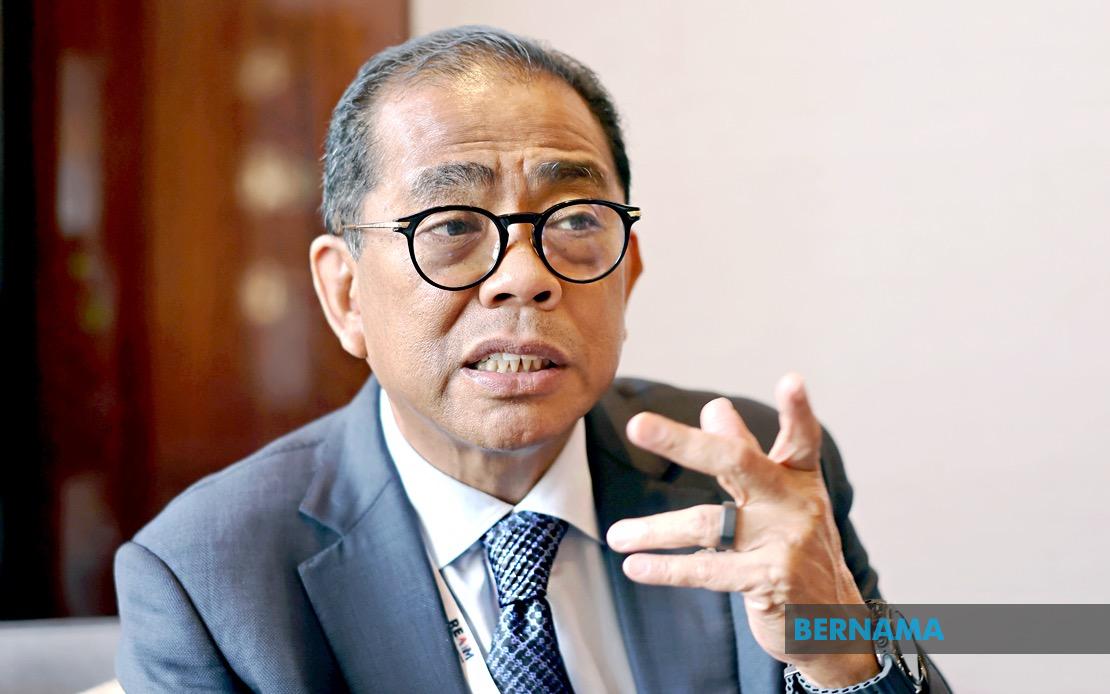
Malaysia and Vietnam have reaffirmed their commitment to broadening defence partnerships at the highest political level, signalling deepening strategic alignment between the two Southeast Asian nations. The commitment came during Defence Minister Datuk Seri Mohamed Khaled Nordin's official visit to Vietnam, where he held bilateral talks with Vietnamese Minister of National Defence Gen Phan Van Giang and paid courtesy calls on Vietnamese Prime Minister Le Minh Hung.
The bilateral engagement demonstrates the steady maturation of defence relations between Kuala Lumpur and Hanoi, built on the foundation of their November 2023 Memorandum of Understanding on Defence Cooperation. This framework has evolved from symbolic agreement into concrete operational initiatives spanning multiple security domains. The timing of Mohamed Khaled's visit underscores how both nations view enhanced military collaboration as essential to navigating an increasingly complex regional environment where traditional security challenges intersect with emerging threats.
The scope of cooperation discussed during the meetings reflects sophisticated partnership architecture. Beyond conventional military-to-military engagement, both sides identified cooperation in intelligence sharing and maritime domain awareness as priority areas, recognising that territorial waters remain a critical flashpoint in Southeast Asia. Discussions also encompassed bilateral military training programmes and joint submarine rescue operations capabilities, indicating practical interoperability measures designed to build confidence and operational effectiveness. The inclusion of artificial intelligence and defence industry collaboration suggests both nations are thinking beyond immediate security concerns towards technological advancement and industrial capacity building.
Grey zone activities featured prominently in the discussions, highlighting mutual concerns about coercive tactics that fall short of conventional military conflict. These ambiguous security challenges—ranging from maritime harassment to economic coercion—have become defining characteristics of competition in the region, and Malaysia's willingness to address them directly with Vietnam signals serious intent to develop coordinated responses. For Malaysian observers, this focus carries particular relevance given the nation's own experiences navigating disputed territories and contested maritime claims.
Mohamed Khaled proposed strengthening the cooperation mechanism through a High-Level Committee structure, a bureaucratic innovation designed to ensure initiatives move beyond announcement stage into genuine implementation. This procedural suggestion reflects learning from past defence agreements across ASEAN that sometimes languished due to coordination failures. By institutionalising high-level oversight, both countries appear committed to transforming goodwill into tangible military capabilities and operational cooperation that can be sustained across multiple government administrations.
The South China Sea featured centrally in strategic discussions, with Malaysia emphasising that peace and stability in contested waters must be maintained through dialogue, diplomacy, and adherence to international law. This framing aligns with Malaysia's traditional positioning as a middle power seeking rules-based resolution rather than confrontation. Both nations expressed support for concluding an effective Code of Conduct in the South China Sea, a long-running negotiation that has tested ASEAN unity and individual member states' strategic patience. Malaysia's emphasis on ASEAN unity and strategic autonomy reflects concern that powerful external actors might exploit divisions among Southeast Asian claimants.
The visit explicitly connected bilateral defence cooperation to broader strategic frameworks guiding Malaysia's security policy. The National Defence Strategic Plan 2026-2030 identifies strengthening international defence relations as core to ensuring national sovereignty, and the Malaysia-Vietnam partnership exemplifies this pillar in action. By operationalising defence diplomacy at the bilateral level while reinforcing ASEAN platforms, Malaysia seeks to position itself as both a capable independent actor and a committed regional player contributing to collective stability architecture.
Both nations reaffirmed commitment to ASEAN Defence Ministers' Meeting platforms and ASEAN Defence Ministers' Meeting-Plus mechanisms, institutions designed to manage regional security challenges through consensus-based dialogue. This multilateral commitment matters because it prevents bilateral partnerships from fracturing broader regional cooperation frameworks. For Malaysia, maintaining both robust bilateral partnerships and strong multilateral commitment requires careful diplomatic balance, particularly when partners hold different strategic perspectives on major issues.
The emphasis on maritime security cooperation carries immediate practical significance for Malaysian interests. The nation's extensive exclusive economic zone and its role as a maritime trader dependent on freedom of navigation make maritime domain awareness and cooperative maritime security arrangements central to national prosperity. Joint training in submarine rescue operations, while presented as humanitarian capability, also demonstrates willingness to develop advanced military interoperability during peacetime that could prove valuable during contingencies.
From a regional perspective, Malaysia-Vietnam defence cooperation contributes to broader Southeast Asian capacity building and reduces power imbalances that might tempt external interference. When smaller nations develop stronger bilateral relationships with each other, they collectively enhance their negotiating position relative to larger powers. This dynamic explains why ASEAN's institutional health ultimately depends on robust partnerships among member states, not just on collective declarations.
The Defence White Paper's emphasis on "Competent Partnership" as a main pillar suggests Malaysia views defence cooperation as integral to national development strategy, not merely security insurance. By investing in military partnerships with peers like Vietnam, Malaysia builds institutional knowledge, technological capability, and diplomatic networks that serve broader national interests beyond defence ministry operations. This strategic thinking reflects sophisticated understanding that security and prosperity intertwine in maritime environments where traditional boundaries between civilian and military domains blur.
Looking forward, the effectiveness of these partnership commitments will depend on implementation rigour. Defence agreements across Southeast Asia have sometimes failed to produce measurable operational benefits, frustrated by bureaucratic delays, resource constraints, and shifting political priorities. The proposed High-Level Committee represents recognition of these historical challenges and suggests both nations are determined to translate bilateral goodwill into sustainable institutional arrangements that survive individual ministerial tenures.

