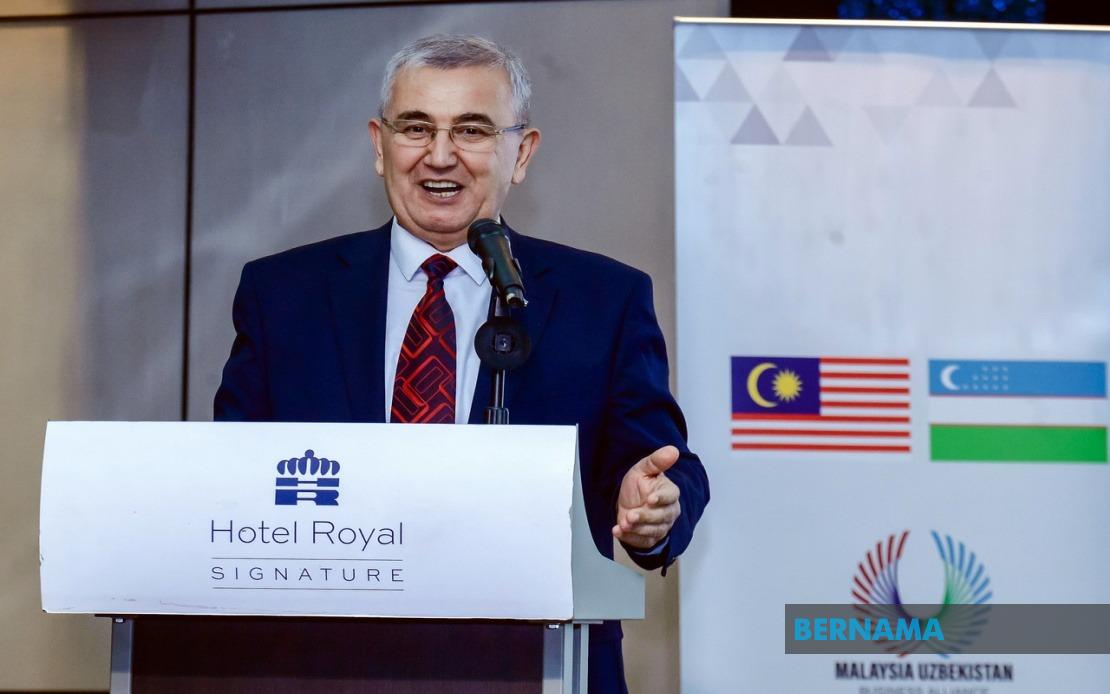
Malaysia and Uzbekistan are positioning themselves to forge a more robust agricultural alliance, leveraging complementary strengths in farming innovation and food production to address pressing regional food security concerns. The two nations have identified agriculture as a cornerstone sector for bilateral cooperation, with recent high-level diplomatic visits cementing commitment to deeper engagement across the value chain. The relationship represents an emerging model of South-South agricultural cooperation in Asia, where Malaysia's advanced technological capabilities meet Uzbekistan's vast farming experience and Central Asian market access.
According to Uzbekistan Ambassador to Malaysia Dr Karomidin Gadoyev, the strategic importance of agriculture has featured consistently in discussions between the countries' leaders, underscoring how both governments view the sector beyond mere trade. The partnership gained particular momentum following Malaysian Prime Minister Datuk Seri Anwar Ibrahim's visit to Uzbekistan in May 2024 and President Shavkat Mirziyoyev's Malaysia visit in February the previous year. These high-level engagements created the diplomatic foundation upon which more specific sectoral initiatives have been built, signalling sustained political will at the highest levels.
A pivotal development came through Agriculture and Food Security Minister Datuk Seri Mohamad Sabu's recent official visit to Uzbekistan, which the ambassador characterised as opening a fresh chapter in agricultural cooperation. This ministerial-level engagement moved discussions from broad principles into concrete operational frameworks, allowing technical experts and business stakeholders to identify specific collaboration opportunities. The visit facilitated direct dialogue between Malaysian and Uzbek agricultural institutions and companies, creating pathways for real investment and knowledge transfer rather than remaining at the level of diplomatic courtesy.
The two countries possess distinctly complementary agricultural capabilities that justify deeper integration. Malaysia brings proven expertise in paddy cultivation, advanced aquaculture techniques, fisheries management, precision farming methods, and agricultural research infrastructure. Uzbekistan, conversely, excels in energy-efficient irrigation systems suited to arid Central Asian conditions, horticulture production, and agri-food manufacturing and processing capacity. This division of strengths creates natural synergies: Malaysia can supply technology and methodologies while Uzbekistan provides land, labour, and production capacity for regional distribution.
Both governments recognise that digital technologies and artificial intelligence represent critical tools for enhancing agricultural productivity and building resilience against global food supply disruptions. Uzbekistan, grappling with feeding a population approaching 40 million in a geographically landlocked region, faces particular food security pressures that make technological solutions especially valuable. The introduction of smart farming, precision agriculture, and data-driven crop management can substantially improve yields and resource efficiency, allowing Uzbekistan to meet domestic demand while developing export capacity in premium products.
Practical collaboration is already advancing on the ground. The Malaysian Agricultural Research and Development Institute (MARDI) is actively engaging with Uzbek counterparts to develop agricultural innovations tailored to Central Asian conditions. Beyond institutional partnerships, Malaysian company Miracule has established Uzbekistan's first agricultural drone showroom, positioning the market for expanded adoption of unmanned aerial technology in farming operations. The ambassador indicated that the next phase involves scaling drone deployment across Uzbek agricultural fields and eventually establishing local assembly operations for advanced agricultural drones, creating manufacturing capability and employment within Uzbekistan.
Aquaculture emerges as a particularly promising collaboration frontier. Uzbekistan's substantial population and landlocked geography create substantial structural demand for seafood and aquaculture products, yet domestic production capacity remains constrained. Malaysia has developed sophisticated biofloc technology—a recirculating aquaculture system that reduces feed costs by approximately 30 per cent while simultaneously increasing productivity and lowering overall production expenses. Malaysian firms have already begun preliminary investigations into shrimp farming and broader fisheries projects within Uzbekistan, suggesting investor confidence in the market opportunity.
Bilateral trade data reflects growing commercial momentum between the nations. Agri-food commerce reached RM338 million during 2025, with Malaysian palm oil and palm oil derivatives comprising the largest export component. However, both governments view this figure as merely a starting point rather than a ceiling. The ambassador articulated an ambitious vision of doubling or even tripling agri-food trade volumes over the succeeding five to ten years, achievable through deliberate expansion of product ranges and market penetration. Malaysia could position Uzbekistan as a regional processing hub for crude palm oil destined for Central Asian markets, while Uzbek enterprises scale exports of premium fresh fruits, dried fruits, and processed food products across Asia.
This bilateral framework carries significance for the broader Southeast Asian agricultural ecosystem and food security architecture. As global supply chains remain fragmented and trade tensions persist, developing reliable agricultural partnerships within Asia offers Malaysian and Uzbek policymakers important hedges against external disruptions. For Malaysia, Uzbekistan represents a foothold for agricultural technology exports and a market for value-added food products. For Uzbekistan, the relationship unlocks access to advanced farming methodologies and investment capital from a more industrialised Asian partner.
The Malaysian Agriculture, Horticulture and Agrotourism Exhibition (MAHA) 2026 represents a critical platform for translating bilateral cooperation into broader commercial engagement. Uzbekistan's participation will expose Malaysian businesses and consumers to Central Asian agricultural products and create networking opportunities for sector professionals. The ambassador characterised MAHA as an essential venue for implementing planned cooperation frameworks and extending commercial reach beyond direct bilateral channels.
Looking forward, the ambassador expressed confidence that Malaysia and Uzbekistan will evolve into genuinely complementary agricultural partners, with each nation's capabilities filling the other's gaps. The partnership transcends simple trade transactions to encompass technology transfer, research collaboration, and joint investment in processing and value-addition infrastructure. As both nations confront pressures to enhance food security for their populations whilst generating agricultural export revenues, this deepening partnership offers a pragmatic pathway toward mutual prosperity and regional food system resilience.

