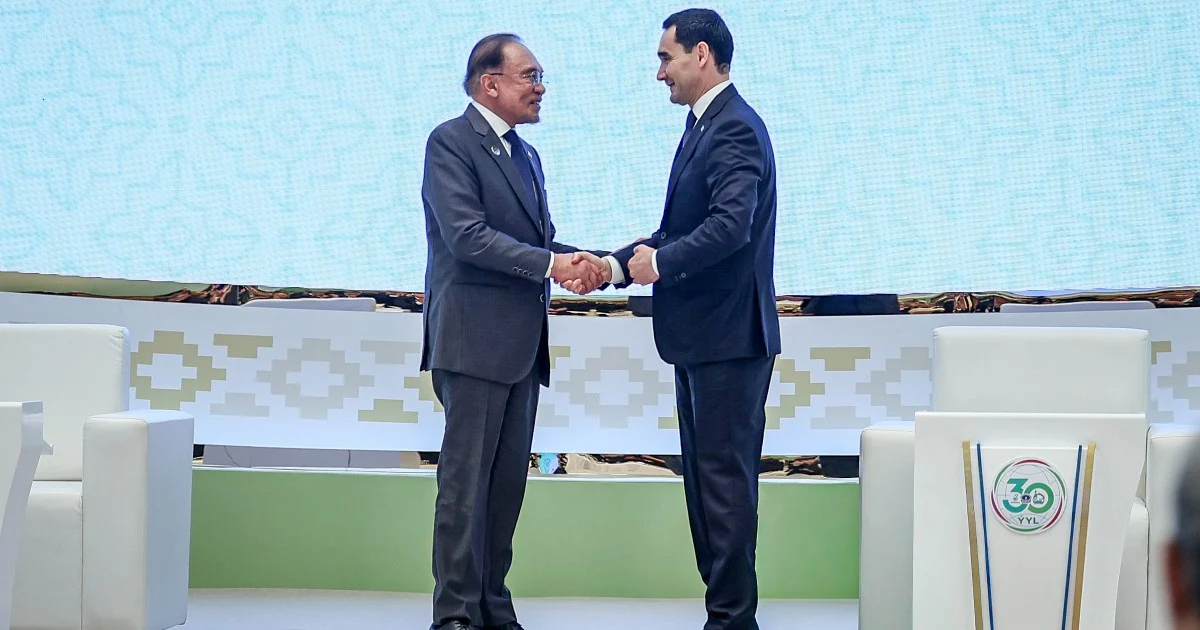
Malaysia and Turkmenistan have committed to substantially broadening their partnership across multiple economic sectors, with particular emphasis on energy collaboration, following Prime Minister Datuk Seri Anwar Ibrahim's official visit to the Central Asian nation. The two countries signed off on an expanded framework for bilateral cooperation that extends well beyond traditional trading relationships and into strategic sectors critical to both nations' medium-term development objectives.
The energy sector anchors this new relationship, representing the cornerstone of deepened engagement between Kuala Lumpur and Ashgabat. Turkmenistan's substantial hydrocarbon reserves and established position as a significant global energy supplier align with Malaysia's ongoing quest to diversify its energy supply chains and secure reliable sources for future industrial development. This alignment creates mutual incentives for joint projects and long-term commercial partnerships that could reshape regional energy dynamics across Southeast and Central Asia.
Beyond energy, the bilateral framework encompasses trade and investment, two pillars that will determine whether this partnership generates tangible economic returns for Malaysian businesses and workers. Expanding trade corridors between the two nations could unlock new market opportunities for Malaysian exporters while attracting Turkmen investment into Malaysia's growing service sectors. The deliberate inclusion of investment alongside trade signals intent to move beyond simple commodity exchanges toward deeper value-creation partnerships.
Transportation infrastructure features prominently in the cooperation agreement, reflecting broader regional connectivity ambitions that extend throughout Central Asia and toward Southeast Asia. Improved transport linkages between Malaysia and Turkmenistan could facilitate not only bilateral commerce but also position Malaysia as a strategic gateway for Turkmen goods seeking Southeast Asian markets. For Turkmenistan, enhanced transportation connections offer pathways to reduce reliance on traditional transit routes through Russia and Iran.
Educational collaboration represents another significant dimension of this renewed partnership. Expanding academic exchanges and institutional linkages between Malaysian and Turkmen universities could build human capital in both nations while fostering long-term cultural and professional networks. Such educational initiatives typically generate sustained bilateral engagement that outlasts any single trade agreement or commercial arrangement.
Technology cooperation rounds out the comprehensive partnership framework. Both nations recognize that technological advancement and digital transformation will determine competitiveness in coming decades. Collaboration in areas ranging from telecommunications infrastructure to artificial intelligence applications could yield mutual benefits while strengthening ties across multiple industrial sectors. Technology partnerships also often serve as gateways for deeper scientific and research collaboration.
Prime Minister Datuk Seri Anwar Ibrahim's official visit to Turkmenistan underscores Malaysia's strategic pivot toward diversifying partnerships beyond traditional regional relationships. The visit signals Kuala Lumpur's recognition that prosperity requires engagement with economically dynamic partners across varied geographies. Central Asia, historically distant from Malaysian foreign policy calculus, now attracts increased diplomatic and commercial attention as countries reassess supply chain resilience and energy security.
For Malaysian businesses, this agreement potentially opens substantial opportunities in a largely untapped market. Turkmenistan's ongoing infrastructure development and economic diversification efforts create demand for Malaysian goods, services, and expertise. Malaysian construction firms, petrochemical manufacturers, and technology companies could find receptive partners in Turkmen enterprises seeking international collaboration.
The timing of enhanced Malaysia-Turkmenistan cooperation carries strategic significance for Southeast Asia's evolving role in global commerce and geopolitics. As major powers compete for influence across Central Asia, Malaysia's balanced diplomatic approach and emphasis on economic pragmatism position it as a credible partner for countries seeking genuine commercial relationships rather than great-power alignment. This positioning strengthens Malaysia's broader claims to middle-power leadership throughout the region.
Turkmenistan's perspective on deepening ties with Malaysia likely reflects its own strategic calculations around diversifying international relationships and reducing dependency on traditional partners. Central Asian nations have increasingly sought partnerships with dynamic Asian economies, recognizing that future prosperity depends on building diverse networks rather than concentrating relationships within narrow geographic or political circles. Malaysia's experience as a successful emerging market holds particular appeal for policymakers in Ashgabat.
The energy dimension deserves sustained attention from Malaysian analysts and policymakers. As Southeast Asia confronts energy transition pressures and climate commitments, maintaining reliable conventional energy supplies becomes increasingly complex. Turkmenistan's proven reserves and production capacity could provide intermediate-term energy security while Malaysia develops renewable energy infrastructure. This transitional energy role may define the most durable aspects of the bilateral relationship.
Implementation of the agreed framework will ultimately determine whether this partnership fulfills its promise. High-level political agreements often require sustained bureaucratic coordination, technical working groups, and genuine commercial incentives to generate lasting results. Malaysian and Turkmen officials must now translate diplomatic commitments into concrete joint ventures and enforceable commercial arrangements that benefit enterprises and citizens in both nations.
%22%2F%3E%3C%2Fpattern%3E%3C%2Fdefs%3E%3Crect%20width%3D%22100%25%22%20height%3D%22100%25%22%20fill%3D%22url(%23ph27o3tg)%22%2F%3E%3Crect%20width%3D%22100%25%22%20height%3D%22100%25%22%20fill%3D%22url(%23ph27o3tp)%22%2F%3E%3Ctext%20x%3D%2250%25%22%20y%3D%2250%25%22%20text-anchor%3D%22middle%22%20dominant-baseline%3D%22central%22%20fill%3D%22rgba(255%2C255%2C255%2C0.95)%22%20font-family%3D%22Georgia%2C%20'Times%20New%20Roman'%2C%20serif%22%20font-weight%3D%22700%22%20font-size%3D%22151%22%20letter-spacing%3D%22-0.02em%22%3ESingapore%3C%2Ftext%3E%3C%2Fsvg%3E)