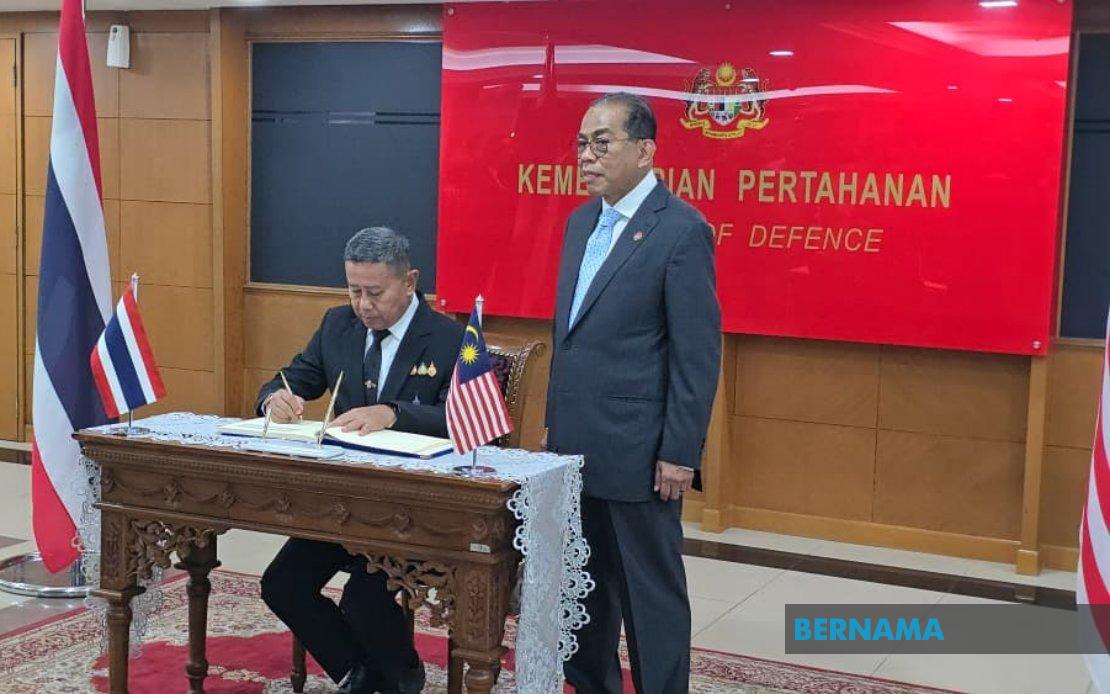
Malaysia and Thailand have signalled their determination to expand defence partnership and jointly tackle security concerns facing Southeast Asia, following high-level talks between the two nations' defence ministers in Kuala Lumpur. The meeting between Malaysia's Datuk Seri Mohamed Khaled Nordin and Lieutenant General Adul Boonthumjaroen, Thailand's newly appointed Defence Minister, underscores the enduring strategic alignment between the neighbouring countries and their shared commitment to maintaining stability across the region.
The encounter, held at Wisma Pertahanan during Adul's inaugural official visit to Malaysia as defence chief, represented more than a routine bilateral engagement. It reflected the personal rapport between the two defence leaders and served as a platform for reaffirming foundational commitments to sustained military cooperation. Mohamed Khaled took the opportunity to extend formal congratulations to Adul on assuming his portfolio, emphasising Malaysia's confidence in Thailand's trajectory under the stewardship of Prime Minister Anutin Charnvirakul.
Thailand's enthusiastic reception of Malaysia's broader regional diplomacy carries particular significance for Southeast Asian geopolitics. The Thai defence establishment explicitly recognised and endorsed Malaysia's active mediation efforts aimed at resolving the protracted border tensions between Thailand and Cambodia. This acknowledgement reflects Thailand's appreciation for Malaysia's constructive role in facilitating dialogue mechanisms that promote peace and understanding in contested areas. By publicly supporting Malaysia's diplomatic initiatives, Thailand effectively reinforced the notion that multilateral cooperation and third-party facilitation remain viable tools for defusing longstanding disputes.
Both countries articulated their shared vision of advancing peace and stability throughout Southeast Asia, a declaration that extends beyond bilateral concerns to encompass the broader regional architecture. This sentiment gains relevance in a context where numerous fault lines—territorial disputes, maritime claims, and transnational security threats—continue to test ASEAN cohesion. Malaysia and Thailand's emphasis on promoting regional equilibrium signals their understanding that security challenges transcend national borders and require coordinated responses.
The defence partnership between these two nations encompasses multiple operational dimensions. Beyond political dialogue and diplomatic coordination, the two countries maintain active military-to-military engagement channels that facilitate intelligence sharing, joint exercises, and capacity building. These mechanisms have proven instrumental in addressing transnational threats including terrorism, cybercrime, and maritime piracy that affect both nations and the broader region.
A substantive element of Adul's visit involved inspecting facilities operated by the National Aerospace and Defence Industries Group of Companies, a prominent Malaysian defence contractor. This industrial component of the visit underscores the economic dimensions underlying defence cooperation, where technological exchange and potential procurement partnerships create mutual benefits. The facility tour provided both delegations with opportunities to explore collaborative ventures in defence manufacturing and technology development, areas where Malaysian expertise and industrial capacity can contribute to Thailand's defence modernisation objectives.
Malaysia's defence sector has increasingly positioned itself as a regional partner capable of contributing advanced capabilities and solutions to neighbouring armed forces. The engagement with NADI during Adul's visit exemplifies this trajectory, offering Thai defence planners insights into available platforms and systems that might enhance their operational capabilities. Such industrial partnerships, when pursued alongside traditional military cooperation, create deeper institutional ties and foster stronger mutual understanding between defence establishments.
The timing of this engagement carries additional weight given regional dynamics. Southeast Asia faces evolving security challenges ranging from traditional state-to-state concerns to emerging threats in cyber and space domains. Both Malaysia and Thailand recognise that addressing these multifaceted challenges requires sustained dialogue, regular military consultation, and willingness to collaborate on innovative defence solutions. Their demonstrated commitment reflects realistic assessment that regional security ultimately depends on strong bilateral relationships built on transparency and shared interests.
From Malaysia's perspective, the dialogue reinforces its positioning as a responsible regional actor committed to conflict prevention and stability maintenance. The country's efforts to mediate Thailand-Cambodia tensions, as specifically praised by Thai defence authorities, demonstrate Malaysia's diplomatic credibility and capacity to broker understanding among disputant parties. This mediatory role enhances Malaysia's soft power and influences how regional powers perceive its strategic value within Southeast Asian frameworks.
Looking forward, the strengthened defence relationship between Malaysia and Thailand is likely to manifest through expanded military exercises, enhanced intelligence cooperation, and deeper integration of operational procedures. These practical measures translate high-level political commitments into concrete security outcomes that benefit both populations. Regular ministerial engagement, such as the visit undertaken by Adul, helps maintain momentum and ensures that defence cooperation remains dynamic rather than becoming ceremonial.
The meeting also reflects broader ASEAN solidarity principles, where member states collectively acknowledge the importance of internal cohesion in facing external pressures. Malaysia and Thailand's proactive engagement demonstrates that despite differing perspectives on certain regional issues, ASEAN nations recognise the imperative of maintaining strong inter-member relationships. This approach contrasts with external efforts to divide ASEAN through competitive engagement strategies, reinforcing the bloc's collective autonomy and decision-making authority.

