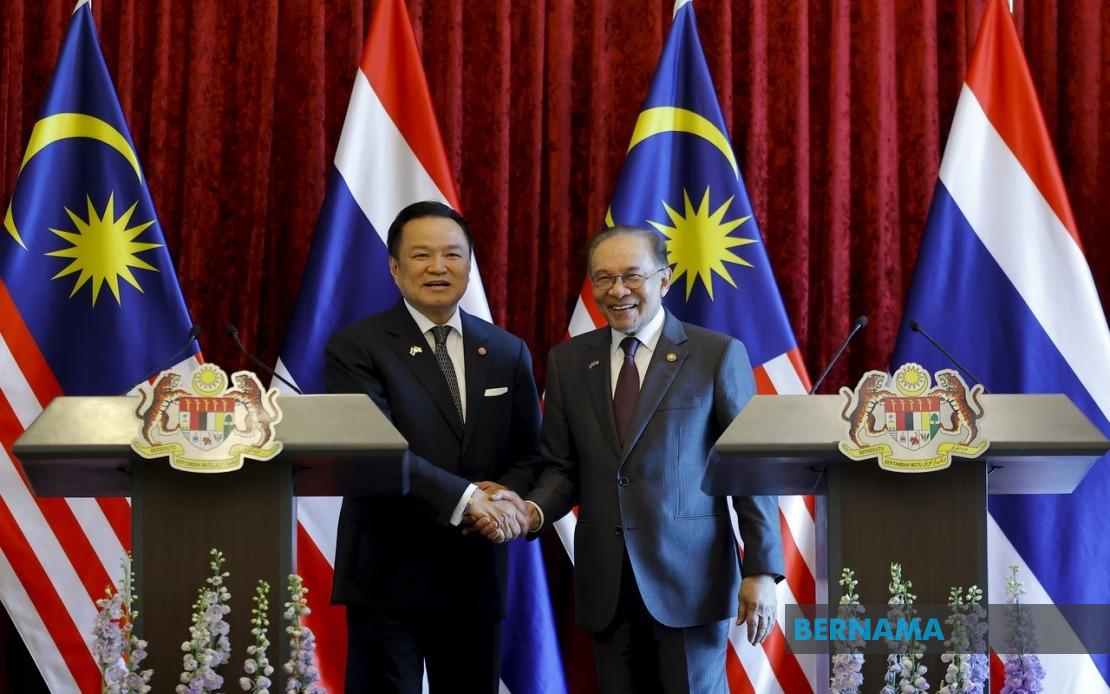
Malaysia and Thailand have committed to accelerating a range of initiatives designed to deepen their economic integration and strengthen cross-border ties, with ambitious plans to achieve bilateral trade worth US$30 billion by 2027. The two nations have charted a course that extends beyond traditional trade negotiations, encompassing infrastructure development along their shared frontier, the establishment of dedicated economic zones, and streamlined border procedures that promise to reduce friction for businesses and travellers alike.
Prime Minister Datuk Seri Anwar Ibrahim outlined the scope of the bilateral agenda during a meeting with his Thai counterpart, Anutin Charnvirakul, in Putrajaya on July 9. The discussions proved substantive, touching on longstanding issues requiring resolution whilst simultaneously exploring fresh avenues for cooperation across multiple economic and social sectors. Both leaders acknowledged the untapped potential that exists within their relationship and signalled determination to translate goodwill into concrete outcomes.
Anwar emphasised the historical and cultural foundations underpinning Malaysia-Thailand relations, noting that the two countries share far deeper connections than their current trade figures suggest. He pointed out that despite decades of proximity, substantial room remains for expansion in commerce, investment flows, and sectoral collaboration. The framing reflects a recognition that bilateral economic ties have plateaued at levels below their true capacity, particularly given the complementary nature of the two economies and their complementary geographic positions within Southeast Asia.
A cornerstone of the renewed partnership involves accelerating several connectivity projects that will physically link the two nations more effectively. These initiatives address longstanding infrastructure gaps that have historically constrained cross-border commerce and people-to-people mobility. By prioritising these projects, both governments aim to reduce transaction costs and travel times, making it more economical and convenient for businesses to operate across borders and for citizens to engage in legitimate cross-frontier activities.
The establishment of special border economic zones represents an innovative approach to harnessing the unique advantages of frontier locations. Such zones typically offer preferential regulatory treatment, tax incentives, and streamlined administrative procedures designed to attract investment and generate employment in regions that might otherwise remain economically marginal. Both nations recognise that border areas, rather than serving merely as dividing lines, can become dynamic engines of regional growth when properly developed with appropriate institutional frameworks.
Facilitating immigration and customs procedures emerged as a practical priority in discussions between the two leaders. Cumbersome border bureaucracy has long acted as a drag on bilateral commerce, particularly for small and medium enterprises that lack the resources to navigate complex procedures. Streamlining these mechanisms through technological upgrades, staff training, and harmonised standards promises to significantly reduce the hidden costs of doing business across the Malaysia-Thailand frontier. Such reforms also benefit legitimate travellers and facilitate cultural exchange.
The planned visit to Bukit Kayu Hitam and Sadao exemplifies the geographic scope of this collaborative initiative. Rather than confining bilateral engagement to capital city protocols, both leaders opted to venture into frontier communities where the practical impacts of improved cooperation would be most directly felt. This approach signals that Putrajaya and Bangkok recognise the importance of engaging border populations in their shared development vision and demonstrating tangible commitment to improving living standards in peripheral regions that often receive less policy attention.
The visit to Malaysia's northwestern border and its Thai counterpart also carries symbolic weight. It underscores Anutin Charnvirakul's personal investment in strengthening bilateral ties beyond formulaic diplomatic exchanges. By travelling to border areas, the Thai Prime Minister signals to his own constituencies that enhanced regional cooperation represents a priority worthy of high-level political engagement. This mirrors similar diplomatic patterns observed in other Southeast Asian partnerships, where leaders increasingly visit frontline areas to demonstrate commitment to transformative regional projects.
The US$30 billion bilateral trade target by 2027 reflects an ambitious but achievable growth trajectory. Current trade volumes between Malaysia and Thailand remain substantial but have not grown commensurately with the expansion of regional integration mechanisms and intra-ASEAN commerce. Achieving this target would require approximately 10-15 percent annual growth in bilateral transactions, a pace that would be challenging but attainable given the combined economic scale and complementarities of the two nations. Success hinges on consistent implementation of the agreed infrastructure and regulatory initiatives.
For Malaysian exporters and investors, these developments create meaningful opportunities. Thai markets offer significant potential for Malaysian manufacturers, agricultural producers, and service providers. Conversely, Thai investment in Malaysian ventures, particularly in border-adjacent regions and complementary sectors, could unlock new sources of capital and expertise. The alignment between Kuala Lumpur and Bangkok on these priorities suggests that both governments will provide institutional support and policy backing for businesses seeking to capitalise on improved cross-border conditions.
The regional implications extend beyond the bilateral relationship itself. Malaysia and Thailand represent two of Southeast Asia's largest economies and significant components of ASEAN's collective weight. Enhanced connectivity and economic integration between these nations strengthens the broader regional architecture and demonstrates that bilateral cooperation can flourish alongside multilateral engagement. Their success in implementing these initiatives may also provide a replicable model for other ASEAN member states seeking to deepen partnerships with neighbouring countries.
Implementation challenges will inevitably emerge as these ambitious plans move from agreement to execution. Bureaucratic coordination, funding mechanisms, and the need to balance border security concerns with facilitation objectives will require sustained political will and technical expertise. However, the public commitment from both Prime Ministers and the specificity of their agreed targets suggest that this initiative possesses greater substance than purely rhetorical pledges. The coming months will reveal whether Malaysia and Thailand can translate their diplomatic momentum into the infrastructure, regulatory, and institutional changes necessary to achieve their bilateral trade ambitions.

