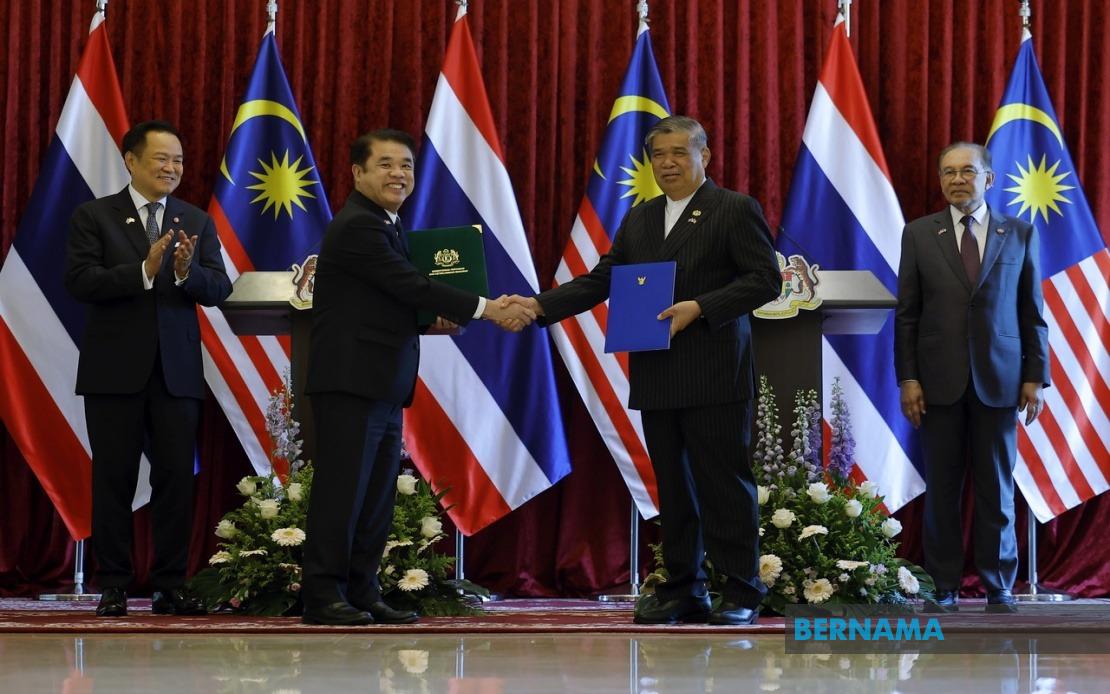
Malaysia and Thailand have cleared a significant hurdle in their bilateral trade relationship by resolving long-standing fisheries market access disagreements and expediting a comprehensive agricultural cooperation framework. The breakthrough came during Thailand's Prime Minister Anutin Charnvirakul's first official visit to Malaysia, with both nations' leaders endorsing the move at a ceremony in Putrajaya attended by Prime Minister Datuk Seri Anwar Ibrahim and Thai Agriculture Minister Suriya Juangroongruangkit.
The rapid deployment of the agricultural Memorandum of Understanding represents a substantial acceleration of regional cooperation timelines. Thailand had initially proposed a one-and-a-half-month implementation window, but Malaysian negotiators secured agreement to activate the pact within seven days instead. This compressed timeline underscores the priority both administrations place on strengthening food security architecture across mainland Southeast Asia and removing bureaucratic obstacles that impede agricultural trade flows.
The agreement addresses a dispute that had simmered since June 1, when Malaysia implemented stricter import protocols on Thai fisheries products. These measures included mandatory Certificates of Analysis for barramundi shipments and temporary restrictions on five designated shrimp species. The controls reflected Malaysian authorities' intent to maintain rigorous quality and safety standards at the border. Through structured ministerial dialogue, both sides found common ground on implementation modalities that satisfied Malaysia's regulatory requirements while preserving market access for Thai exporters.
The MoU establishes a multifaceted cooperation framework extending beyond fisheries into crop production, livestock management, research and development, and biosecurity protocols. Critically, it institutionalises regular coordination mechanisms between agricultural authorities on both sides, converting ad-hoc problem-solving into a transparent, continuous engagement structure. This institutional architecture proves particularly valuable for addressing sanitary and phytosanitary standards—technical regulatory matters that frequently cause trade friction between neighbouring countries with different enforcement priorities.
For Malaysia, the agreement locks in preferential access to Thai agricultural supplies during a period when regional food inflation remains elevated. Thailand stands as a major regional exporter of rice, cassava products, and processed meat, categories that feed into Malaysian consumer prices and industrial food manufacturing. Conversely, Thai importers gain clearer pathways for Malaysian specialty products including premium coffee, cocoa, tea, spices, and sophisticated processed foods that command higher margins in Bangkok's affluent consumer segments.
Bilateral agricultural and agri-food commerce between the two nations reached RM20.33 billion in the 12 months through December 2025, reflecting the substantial economic interdependence underlying this cooperation push. Malaysia's import portfolio from Thailand emphasises meat and animal-based products, reflecting Thai livestock sector competitiveness and Malaysia's substantial food-processing industry. The trade intensity justifies permanent institutional frameworks rather than episodic negotiation cycles that characterise less integrated partner relationships.
The diplomatic choreography of settling these issues during an official prime ministerial visit carries symbolic weight beyond the immediate commercial implications. Anutin's maiden journey to Malaysia as Thailand's leader signals Bangkok's commitment to deepening regional partnerships, particularly with ASEAN's second-largest economy. The joint press conference featuring both premiers underscores that agricultural cooperation ranks among the highest-level bilateral priorities—a positioning that ensures implementation receives bureaucratic momentum from government apex bodies rather than languishing in ministry-level committees.
The timing aligns with broader Southeast Asian concerns about food system resilience. Global supply chain volatility, climate change impacts on crop yields, and inflation in agricultural inputs have propelled food security onto the agenda of virtually every regional government. Malaysia and Thailand's move toward integrated agricultural frameworks responds to this structural context. By harmonising standards, facilitating faster information flows on production challenges, and building research collaboration networks, the two nations reduce their individual vulnerability to supply shocks.
For Malaysian consumers and businesses, the immediate practical benefit lies in maintaining stable, predictable supply chains for imported proteins and processed agricultural inputs. The agreement's emphasis on trade facilitation—streamlining customs procedures, coordinating certificate requirements, and harmonising classification standards—directly reduces transaction costs and delivery timelines. These efficiency gains translate into downstream price moderation and product availability, factors that influence domestic inflation trajectories and business input costs.
The resolution of specific fisheries disputes demonstrates how structured bilateral dialogue can navigate technical regulatory differences without requiring either party to compromise core safety standards. Malaysia's insistence on Certificates of Analysis for sensitive products reflects legitimate food safety governance, not protectionist impulse. The agreement likely incorporates explicit data-sharing mechanisms whereby Thai producers supply comprehensive laboratory analyses that Malaysian authorities reference during approval cycles, converting a binary market-access question into a technical cooperation challenge amenable to collaborative resolution.
Regional observers will monitor implementation progress carefully. Successfully activating the MoU within the agreed one-week window would establish momentum for deepening Malaysia-Thailand agricultural cooperation further. Delays or bureaucratic obstruction from either side would signal that political commitment, while rhetorically strong, faces institutional headwinds when converted into operational practice. The agreement's structured governance mechanisms—provisions for regular ministerial engagement and working groups addressing specific commodity challenges—provide visibility and accountability that increase compliance likelihood.
Looking forward, this agricultural framework potentially becomes a template for Malaysia's cooperation patterns across ASEAN. As regional food security concerns intensify and supply chain regionalisation accelerates, durable institutional mechanisms linking key food-producing nations offer strategic value exceeding conventional free-trade agreements. The Malaysia-Thailand model demonstrates how agricultural cooperation can advance simultaneously at technical, ministerial, and prime ministerial levels, creating overlapping reinforcement layers that sustain implementation momentum beyond initial signing ceremonies.

