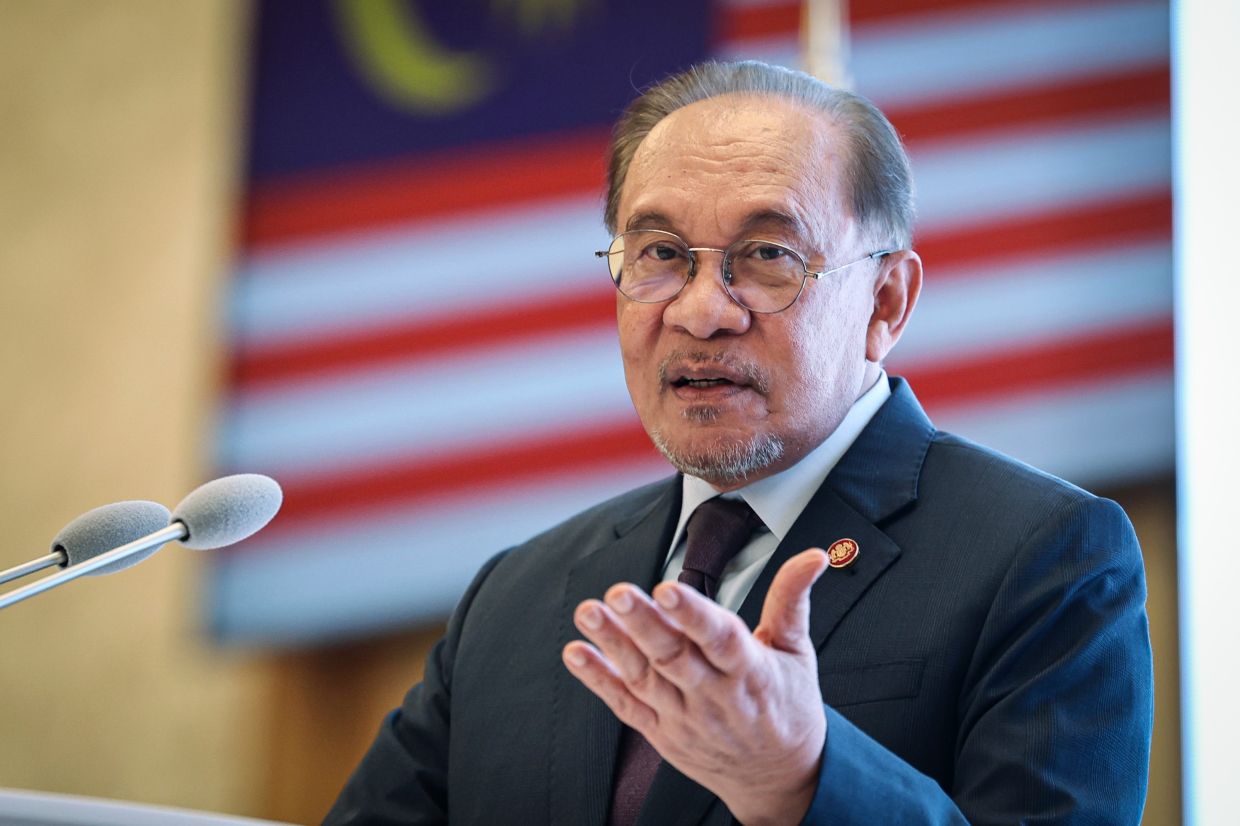
Prime Minister Datuk Seri Anwar Ibrahim has signalled that the long-anticipated master plan for the Johor-Singapore Special Economic Zone will be completed in the coming months, underscoring both nations' commitment to advancing what is shaping up to be one of Southeast Asia's most significant cross-border economic projects. The announcement came during a courtesy call with Singapore President Tharman Shanmugaratnam, who is in Malaysia for a three-day state visit from July 13 to 15 at the invitation of His Majesty Sultan Ibrahim, King of Malaysia. Anwar, who holds the dual portfolios of prime minister and finance minister, expressed satisfaction with the momentum the initiative has gathered, signalling that the comprehensive planning document could unlock substantial trade and investment opportunities for both neighbours.
The JS-SEZ represents an ambitious attempt to deepen economic integration between Malaysia and Singapore by creating a dedicated zone that transcends traditional border constraints. Such special economic zones typically feature streamlined regulatory frameworks, simplified customs procedures, and coordinated investment incentives designed to attract multinational corporations and regional companies seeking to establish integrated operations across both jurisdictions. For Malaysia, the project holds particular significance as it positions Johor as a regional economic hub rivalling established centres in Southeast Asia, while simultaneously strengthening the country's strategic position in the broader regional economy. The zone's successful implementation could catalyse broader development across southern Johor, attracting technology companies, financial services firms, and manufacturing enterprises seeking proximity to one of the world's busiest maritime corridors.
During the bilateral meeting, Anwar and Tharman also reviewed the broader trajectory of Malaysia-Singapore relations, a partnership that, while economically robust, has occasionally been tested by disputes over water rights, territorial claims, and infrastructure projects. Both leaders acknowledged steady progress in resolving several outstanding matters that have complicated the relationship in recent years, reflecting a pragmatic approach to managing differences between neighbouring nations with deeply intertwined economies. The two countries conduct hundreds of millions of dollars in bilateral trade annually, with supply chains and investment flows creating mutual dependencies that incentivise cooperation despite periodic diplomatic friction. The acknowledgement that both sides remain committed to constructive negotiations signals an effort to create a policy environment conducive to long-term economic planning and cross-border investment.
Anwar's emphasis on continuing dialogue grounded in mutual respect and understanding reflects a diplomatic strategy aimed at positioning both leaders as architects of regional stability rather than participants in zero-sum territorial disputes. This framing is significant for Malaysian policymakers, as it demonstrates an attempt to rebalance historical power dynamics in the relationship with the smaller but economically potent city-state. By anchoring discussions in shared economic benefits and regional prosperity, both governments appear to be signalling to investors and businesses that the bilateral relationship has stabilised sufficiently for large-scale infrastructure and economic integration projects to proceed with reasonable confidence.
The JS-SEZ project also carries implications for Malaysia's broader economic modernisation agenda. As the country seeks to diversify away from traditional sectors and establish itself as a competitive destination for high-value manufacturing and digital economy investments, cross-border zones offer a practical mechanism for capturing foreign direct investment while leveraging Singapore's sophisticated financial services ecosystem and global business networks. The master plan's finalisation would represent a concrete institutional achievement following years of preliminary discussions, providing businesses with clarity regarding regulatory frameworks, land allocation, and operational procedures. For Malaysian workers in the Johor region, the project could generate employment opportunities across construction, logistics, and skilled service sectors, though the ultimate job creation will depend on the final scale and sectoral composition of the zone.
The timing of Tharman's state visit also reflects a deliberate effort by both governments to elevate the bilateral relationship beyond technical negotiations. State visits typically reserve their highest protocols for matters of genuine strategic importance, suggesting that leadership in both Kuala Lumpur and Singapore view the JS-SEZ and broader economic partnership as central to their respective national interests. For Singapore, deepening ties with Malaysia offers access to a larger domestic market and manufacturing hinterland, reducing the city-state's geographical constraints and dependence on global supply chains. For Malaysia, the partnership provides access to Singapore's sophisticated governance systems, technological expertise, and capital markets, creating opportunities for knowledge transfer and institutional learning that can benefit Malaysian industries more broadly.
Anwar's characterisation of the discussions as touching on regional developments and mutual interests suggests that both leaders also discussed the evolving geopolitical landscape affecting Southeast Asia, including supply chain reshoring trends, technological competition between major powers, and the region's role in maintaining strategic balance. The JS-SEZ can be understood partly as a response to these global shifts, positioning Malaysia and Singapore as reliable nodes in reconfigured supply chains seeking to move away from over-dependence on any single power. The zone's strategic location along one of the world's most critical maritime routes enhances its appeal to multinational corporations pursuing diversification and risk reduction strategies in their global operations.
As both countries move toward finalising the master plan, attention will likely focus on resolving technical details regarding customs administration, dispute resolution mechanisms, intellectual property protection, and labour regulations that will govern the zone's operations. These elements prove crucial in determining whether the JS-SEZ becomes a thriving economic corridor or merely an aspirational document gathering dust in government archives. The success of comparable initiatives elsewhere in Asia, such as China-ASEAN economic zones and Thailand's special economic zones, demonstrates that well-designed institutional frameworks can deliver tangible benefits, though implementation challenges often emerge once projects move beyond the planning phase.
Looking ahead, the completion of the master plan would represent a significant milestone in bilateral relations and could open new chapters in Malaysia-Singapore cooperation spanning sectors beyond special economic zones. As trade tensions rise globally and countries increasingly turn inward, cross-border economic projects like the JS-SEZ offer a counterweight to protectionist impulses, demonstrating the mutual benefits available when neighbours coordinate their development strategies and harmonise their regulatory environments.

